

Anodizing is an electrochemical oxidation treatment of metals or alloys, which is mainly used to enhance the corrosion resistance, hardness, wear resistance, and decoration of materials. For aluminum and its alloys, under respective electrolytes and process conditions, by the action of an impressed current, an oxide film is formed on aluminum products (the anode). Unless otherwise specified, anodizing implies sulfuric acid anodizing.
To overcome the disadvantages of aluminum alloys in surface hardness and wear resistance, expand the application range, and extend the service life, surface treatment technology has become a necessary part of aluminum alloy use, and anodizing technology is the most widely used and successful one.
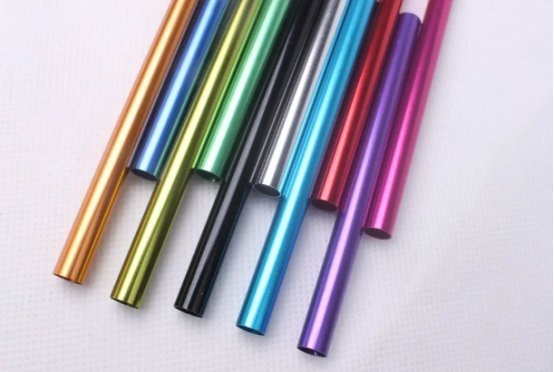
What is Anodizing
Anodizing is an electrochemical process. By passing an electric current through a metal or alloy in a specific electrolytic solution, a thick oxide layer is formed on the surface of the metal. This oxide layer not only provides protection but significantly increases the corrosion resistance, hardness, and wear resistance of the metal. The oxide layer also has good decorative properties. It can be made to display an array of colors and surface finishes through electroplating coloring, spraying, etc.
The Functions and Characteristics of Anodizing
Aluminum and aluminum alloy anodizing is a typical industrial process. It can be used in preventing the corrosion of products or the dual purposes of protection – decoration, for example, as a wear-resistant layer, electrical insulation layer, painting primer, and electroplating primer.
Preventing Corrosion of Aluminum Products
Since the oxide film obtained by anodizing is stable enough in the atmosphere, it is possible to use the oxide film on the aluminum surface as a protective film. The oxide film created through anodizing aluminum in a chromic acid solution is dense and has superior corrosion resistance; the pores of the oxide film created in a sulfuric acid solution are bigger than the aforementioned, but its film layer is thicker and has a strong adsorption capacity. With suitable filling and sealing, its corrosion resistance is also very good. It is especially to be noted that chromic acid anodizing is very suitably applied to riveted and welded parts anodizing treatment.
Protecting – Decorating Products
For most of the aluminum and its alloy products requiring surface finishing, after chemical or electrochemical polishing, anodizing in a sulfuric acid solution may result in an oxide film with high transparency. This oxide film can adsorb many kinds of organic and inorganic dyes and thus is available in a wide range of bright colors. This colored film is also a corrosion-resistant layer and a decorative layer. In some special process conditions, a protective and decorative oxide film with a porcelain-like nature can also be obtained.
As a Hard Wear – Resistant Layer
By hard anodizing of aluminium and aluminium alloys, one can obtain a thick and hard Al₂O₃ film layer on their surface. The film layer not only has high hardness and thickness but also low roughness. In a sulfuric acid or oxalic acid solution, one can also obtain a hard and thick oxide film on aluminum products through anodizing. The porous structure of the thick oxide film can hold lubricating oil, so it can be applied to aluminum products that work in the state of friction. For example, after anodizing the engine cylinders and pistons of automobiles and tracts, their wear resistance can be greatly improved..
As an Electrical Insulation Layer
The oxide film that is obtained after anodizing aluminum and aluminum alloy products has quite high resistance, so it finds some use in improving the electrical insulation of some products. Anodizing can be used in the preparation of the dielectric layer of capacitors, and aluminum oxide can also be used in the preparation of an insulation layer on the surface.
As a Primer for Painting
Due to the porosity and good adsorption capacity of the anodized film, it can be used as a primer for painting and other organic films, strongly bonding the paint film and organic film to the products and thereby enhancing their corrosion resistance.
As a Primer for Electroplating
Before electroplating aluminum and aluminum alloy products, a primer must be applied in advance, and electroplating can be carried out subsequently. There are a variety of methods that can be used to apply a primer on the substrate surface. Besides electrogalvanizing, zinc immersion, and electroless nickel plating, anodizing treatment is also one of the important methods.
Differences between Anodizing and Electroplating
Anodizing
Anodizing treatment is a kind of metal surface treatment technology. It is a protective technology of the material in which the metal material as an anode forms a film layer on the surface by an imposed current in a specific electrolyte. Most metal materials (e.g., stainless steel, zinc alloy, aluminum alloy, magnesium alloy, copper alloy, titanium alloy) can be anodized in a proper electrolyte.
There are a variety of anodizing treatments for aluminum goods, e.g., standard anodizing, hard anodizing, ultra-low temperature hard anodizing, etc. Significantly, the hard anodizing process has been very widely applied to the surface treatment of wear and hard aluminum alloy components with highly high corrosion resistance, e.g., pistons, cylinders, cylinder liners, hydraulic presses and turbines, steam valves, gears, gun components, clutches, brake discs, etc.
Electroplating
Electroplating is also one of the operations used in surface treating metals and non-metals. Provided they are well pretreated, some of the non-metallic and any metal substrate can be electroplated (like common leaves can also be electroplated in one of numerous ways depending on how well pretreatment was done). In contrast to anodizing, in electroplating, the item to be electroplated is utilized as the cathode, and the metal material of the same type as the plating metal is utilized as the anode (insoluble anodes are also used at times), and the electrolyte is a solution of the metal ions of the plating layer. When some current is passed between the anode and the cathode, the anode metal ions move to the cathode and gain electrons at the cathode and deposit on the material to be plated.
In the meantime, the metal of the anode dissolves, replacing the metal ions in the electrolyte on a continuous basis (for an insoluble anode in electroplating, metal ions in the plating salts are replaced on a periodic basis).
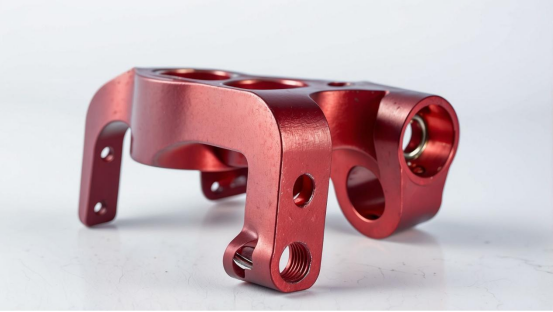
Anodizing Process Flow
The working principle of the anodizing process is the principle of electrolysis. The base material (e.g., aluminum) is connected to the positive pole and acts as the anode. But a good conductive material is used as the cathode (negative pole). For example, aluminum or stainless steel is a suitable cathode material when anodizing aluminum. Therefore, H₂SO₄ (15 – 20% by weight), CrO₃ (3 – 10%), and H₃PO₄ (5 – 10%) are common electrolytes used in the process.
When the current is applied, an oxidation reaction (loss of electrons) occurs at the anode, and metal ions also react with oxygen ions to form an oxide layer. The process sequence is as follows:
- Pretreatment: Polish, sand – blast, or brush the metal surface to remove surface defects and increase the bonding force between the oxide film and the substrate.
- Degreasing: Immerse the metal workpiece in a degreasing solution to remove surface oil stains and impurities.
- Anodizing: Use the pretreated metal workpiece as the anode and immerse it in the electrolytic solution, and conduct current for oxidation treatment.
- Neutralization and Cleaning: Take out the workpiece after oxidation treatment for neutralization treatment to remove the residual electrolytic solution and clean it.
- Coloring and Sealing: Color the oxide film according to need to obtain the required color. Carry out sealing treatment then to increase the density and corrosion resistance of the oxide film.
- Drying and Finished Product: Dry the sealed and colored workpiece, and finally obtain wonderfully anodized signs and nameplates.
Characteristics of Anodized Signs and Nameplates
In the nameplates and signs business, the anodizing process, with its unique beauty and high performance, has become one of the popular processes for making beautiful and long-lasting nameplates and signs. Today, let’s take a closer look at how the anodizing process is applied in the nameplates and signs business and how it imparts brilliance to nameplates and signs.
- Strong Corrosion Resistance: Anodizing’s oxide film is of superior corrosion resistance and can resist the erosion of chemical substances of all kinds.
- High Hardness and Good Wear Resistance: The oxide film is of high hardness, which can significantly improve the wear resistance of the metal surface and increase the service life of signs and nameplates.
- Good Decorative Properties: Anodized metal surface can manifest diverse colors and textures to meet various decoration needs.
- Good Insulation: The anodized film has some insulation performance in special applications.
Types of Anodizing
Anodizing refers to a technology of metal surface treatment that creates an aluminum oxide or other oxide film on the metal surface through electrolysis in an electrolyte solution. Some common types of anodizing are as follows:
- Chromic Acid Anodizing: With chromic acid as the electrolyte, it is capable of operating at a lower voltage and temperature. It produces a thin, compact oxide coating on the metal’s surface, which gives a deep black satin finish. It is highly resistant to corrosion and is typically used in architectural products or those exposed to harsh environments.
- Sulfuric Acid Anodizing: Most common and general-purpose form of anodizing, using sulfuric acid as electrolyte, with high working voltage and temperature. It creates a thicker and harder anodic coating, with higher corrosion resistance, wear resistance, and potential for coloring for decorative purposes.
- Hard Anodizing: A high-quality version of sulfuric acid anodizing, yielding a harder and thicker anodic coating by using higher voltage or current density during the process. The hard coating is dense, wear-resistant, and boasts excellent corrosion resistance. It is usually used in applications requiring extremely high durability, wear resistance, and corrosion resistance, such as aerospace items, military equipment, and industrial machinery.
KESU’s Surface Treatment Service – Anodizing
The so-called anodizing is an electrolytic oxidation treatment process. Placing the metal in a suitable electrolyte and introducing an external current, an oxide film will be established on the metal surface. KESU provides customers with low-cost and quick sample manufacturing solutions. As a CNC machining firm, KESU fully supports standard anodizing, hard anodizing, and conductive oxidation surface treatments.
Conclusion
Anodizing significantly enhances the performance of the metal surface by forming a corrosion-resistant and durable oxide layer, with wide possibilities for application.


