
Carbon fiber composites (CFCs), with their high specific strength, high specific modulus, good corrosion resistance, and excellent designability, have been extensively used in newer lightweight and high-performance mechanical structures, particularly in wind power generation, aerospace, automobile supercharging systems, and other applications. Their application potential in impeller manufacturing is becoming more and more apparent. Unlike traditional metal impellers, CFC impellers not only enable significant weight reduction from the structure but also increase speed limits and service life and ensure strength. Compression molding technology, with high efficiency of fabrication, good dimensional stability, and applicability to complex structures and mass production, has now become a significant pathway for producing carbon fiber impellers.

Rise of Carbon Fiber Impeller Manufacturing Demand and Advantages of Compression Molding
There are existing high-performance impeller products facing overlapped issues of various performance requirements, especially under high-speed, high-load, and long-term steady operation conditions, showing higher requirements for strength, rigidity, fatigue life, heat resistance, and structural stability. Classical metal impellers have apparent shortcomings in weight control and adaptability to high-speed operation, limiting their performance optimization space under some extreme working conditions.
Carbon fiber composites with high specific strength and favorable multi-directional designability are capable of forming a structure system with characteristics to be controlled in any direction through appropriate fiber layup and resin matrix ratio, which provides a new approach to modern high-performance lightweight impeller design. Among various forming techniques, the compression molding process possesses such common characteristics as high efficiency of forming, high consistency of dimensions, and high flexibility to complex shapes, and therefore is extensively used in mass production of small and medium-sized carbon fiber impellers with balanced structural complexity and manufacturing cost.
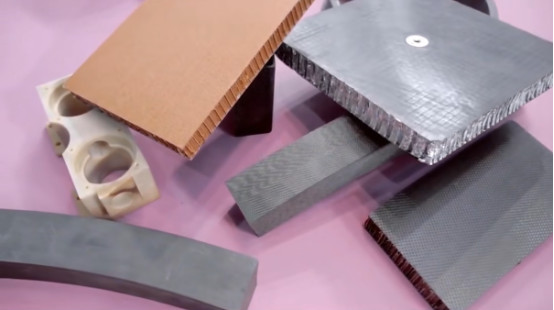
Detailed Explanation of Compression Molding Process
Compression molding is a integrative and effective hot-pressing technology in high-integration composite impeller manufacturing with large lightweight components, high batch number, high consistency, and complicated geometric structures. Compression molding achieves curing and shaping of preforms under a high-temperature and high-pressure state through the synergistic reaction of high-performance fibers and thermosetting resins. In actual production, each link is specifically connected with the mechanical properties, surface finish, and structural stability of the final impeller. The major processes are discussed in detail below:
Material Preparation: The Critical Link Laying the Foundation for Molding
The first process of compression molding is proper raw material preparation. The key is the selection of fiber reinforcements (such as T300, T700, M55J carbon fiber fabric) and performance matching of resin systems (such as epoxy, phenolic, BMI, etc.). The fiber fabrics are usually in plain, twill or multi-axial braided form, ensuring the greatest possible shear strength and mechanical stability in every direction by interlayer staggering. At the same time, the resin must also be low in viscosity, high in wettability, and of higher thermal stability in order to provide full integration with carbon fibers during subsequent hot pressing. Prepreg, as the fundamental intermediate material at this stage, is of most significance in quality control—it must have consistent fiber content, no bubbles or dry areas, and has to be stored in low temperature below -18°C in order to prevent resin pre-reaction or viscosity change that would affect molding quality.
Cutting and Preforming: Precise Control of Layup from 2D to 3D
Layup extension analysis of 3D CAD models forms the foundation to attain high-consistency molding. It is usually my practice to make use of a CNC cutting system and symmetric layup methods such as 0°/±45°/90°, in an attempt to control molding stress as well as accommodate dynamic equilibrium of the end structure. Cut fiber sheets need to be placed manually or automatically in the predetermined direction and hierarchy supported by light pressure, thermal adhesion, or low-temperature preforming to produce a stable structure preform with clear geometric contours. It not only helps with accurate positioning of the subsequent mold loading but also significantly improves compactness and quality of bonding of the product interface.
Mold Design and Preheating: The “Gatekeeper” of Molding Quality
The mold determines the success of compression molding, and its design and manufacturing have a direct effect on the part surface quality and accuracy of shape. Mold materials are mostly high strength steel or high thermal conductivity aluminum alloy, and the surface is pre-treated by chrome plating or fluorine coating to reduce adhesion and demolding resistance. For structural design, such as location of parting line, orientation of exhaust groove, and precision of guide post location, all must be considered entirely to ensure resin fluidity and routes of gas escape during the pressing process. The mold must be subjected to stringent preheating treatment before loading, generally controlled at 120–150°C in range, which can not only reduce temperature difference stress but also help to accelerate the starting of resin curing reaction.
Hot Pressing Molding: Structural Shaping under Multi-Parameter Collaboration
Hot pressing is the most important process of the entire operation, which entails applying pressure at 2–10 MPa upon inserting the preform into the mold cavity and heating to 150–200°C following the predetermined temperature increase curve. Temperature control precision, pressure stability, and defoaming performance in this step directly affect the compactness and internal defect rate of the impeller. To avoid defects such as inclusions, air holes, and delamination, the vacuum auxiliary system is commonly integrated into the mold system to achieve negative pressure auxiliary exhaust and interface compaction. In most of the compression molding production processes I undertook, the “stage-by-stage pressure holding + vacuum adsorption” mode of joint control was used, which effectively reduced residual stress within the parts and interlayer delamination, and significantly improved the mechanical homogeneity of the products.
Cooling and Demolding: Avoiding Hidden Dangers of Residual Stress
After hot pressing is completed, the mold system must be cooled slowly at a regulated rate so that it will not induce concentration of internal stress and local warping because of non-uniform thermal expansion coefficients. The cooling rate is usually regulated at 2–5°C/min, and the mold is maintained closed until the temperature decreases to the safe demolding range (usually below 50°C). The demolding has to be assisted by plastic or composite material tooling to prevent scratches or indentations. Semi-finished products demolded have to be examined immediately for first appearance and structure, including main defects such as flash, shrinkage porosity, fiber exposure, or delamination, as a basis for defects correction in further processing steps.
Post-Processing and Quality Inspection: Ensuring Consistency of Structure and Function
After compression molding, multiple finishing and functional adjustment procedures are usually required, for example, deburring, edge trimming, drilling, chamfering, and surface grinding. After the structure’s completion, precise measurement of major geometric specifications is essential, through the use of instrumentation like coordinate measuring machines (CMM) and laser scanning systems to conduct full-size detection of hub positioning holes, blade thickness, and angles. At the same time, for rotating impeller products, dynamic balance tests should be performed to ensure their stability when operating under conditions of high speed. For application scenarios that are high-end, some products also need non-destructive testing (such as ultrasonic, CT) and fatigue life prediction analysis to ensure their service reliability.
Analysis of Key Control Parameters of the Molding Process
| Control Link | Key Indicators | Process Description |
| Layup Design | Number of Layers, Angle, Symmetry | Symmetric laying enhances mechanical properties and reduces deformation and dynamic imbalance |
| Molding Pressure | 2–10 MPa | Ensures sufficient resin penetration and enhances interlayer bonding |
| Curing Temperature/Time | 150–200°C, 1–2 hours | Ensures complete resin curing and avoids under-curing or excessive cross-linking |
| Mold Surface Quality | Ra ≤ 0.8 μm | Determines the surface finish of the finished product and affects demolding effect and painting quality |
| Exhaust and Defoaming Control | Vacuum Assistance + Exhaust Grooves | Reduces air holes and inclusions and improves structural compactness |
Analysis of Typical Cases: Compression Molding Carbon Fiber Impellers in Automotive Electric Supercharging Systems
During automotive electric supercharger design, the group blended T700 carbon cloth with epoxy resin in a project. For a Φ50 mm miniaturized impeller design, through 12-layer symmetric layup and vacuum compression molding, structural reliability and quality stability under high-speed operation were achieved. The final impeller weight reduced by about 40% compared with metal impellers, dynamic balance deviation was below 3 mg, underwent the 50,000 rpm platform test successfully, and entered the mass production stage, showing the lightweight processing application ability of compression molding for automotive power components.
Conclusion
Being an mainstream technology in today’s composite structural component production, compression molding of carbon fiber composite impellers has demonstrated its better performance and efficiency in manufacturing in engineering applications. I believe that with the further development of thermosetting resin systems, intelligent mold temperature control technology, and automated layup equipment, compression molding will further extend beyond the boundaries of complicated structures and expand its ranges of application in the future. In the background of an enhanced congruence between cost, cycle, and consistency, the compression molding technology will continue to be a vital contributor in aerospace, wind energy components, high-performance automotive manufacturing, and other fields.


