
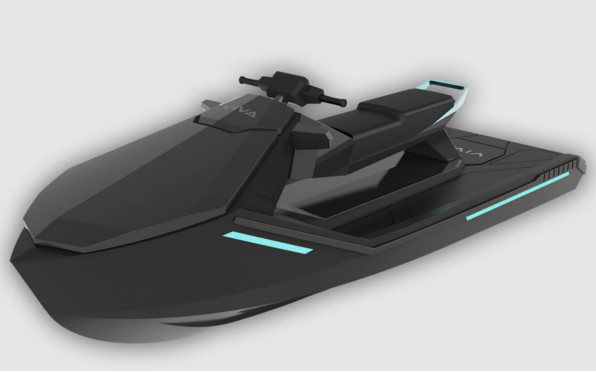
With the interactive development of green energy technologies and the water recreation industry, electric motorboats, as fresh, clean, and efficient water transportation, are gradually replacing traditional fuel-powered motorboats. Being the most important component of the propulsion system, the impeller’s efficiency has a direct impact on the power response, speed, and energy efficiency of the entire boat. The selection and structural form of lightweight impeller materials not only determine the efficiency output of the electric system but also significantly impact the range, control, and life of the motorboat.
Basic Requirements for Impeller Materials in Electric Motorboats
As a light watercraft that uses an electric driving system, the electric motorboat differs greatly from traditional fuel-driven boats in power output characteristics. The electric propulsion system has more linear torque output and faster response but retains limited overall power and range based on battery technology. Therefore, as the essential part for transmitting the force of propulsion, the impeller requires stricter demands for lightness and high efficiency. In my opinion, an ideal impeller material should exhibit outstanding performance in the following aspects:
- High Strength-to-Weight Ratio: To enhance unit energy propulsion efficiency, the material must provide sufficient strength while significantly reducing its own weight, decreasing inertia, and boosting the response of the electric drive.
- Corrosion Resistance and Environmental Stability: Prolonged use in seawater or freshwater conditions puts extremely stringent requirements on corrosion resistance and chemical stability of the material.
- Dynamic Balance and Machinability: The high manufacturing precision and geometric stability that occur through high-rotation of the impeller ensure that properties of machining and control of thermal deformation must be considered when selecting materials.
- Manufacturing Cost and Industrial Adaptability: Electric motorboat products of small and medium size also need material costs, forming cycles, and the potential of mass production to be considered.
Application Status of Mainstream Lightweight Materials in Impellers
In light weight water propulsion units such as electric motorboats, the light weight configuration of impellers has been a core requirement increasingly. Not only should the material meet the strength and endurance requirements, but also match the requirement of machinability while being economical. The current application of popular light weight materials in the production of impellers is as follows:
Aluminum Alloys
Aluminum alloys remain well liked by electric motorboat impellers due to their acceptable machinability, high corrosion resistance, and stable cost controlling measures. Typical examples such as 6061-T6 and 7075 have excellent welding characteristics and moderate strength and are used widely in the medium-low speed propulsion system.
However, aluminum alloys have comparatively low fatigue life and thermal stability at high temperatures, with a tendency to initiate micro-cracks and thermally induced plastic deformation by long-term operation under high speed. To this, I recommend their strengthening through surface reinforcement techniques such as plasma spraying, hard anodizing, or thermal barrier coatings, and using stress-diverting grooves and lightweight rib structures in the structure to neutralize concentrated loads.
High-Performance Engineering Plastics (PA+GF/CF, PPS, PEEK)
Engineering plastic impellers also have such advantages as low weight, corrosion resistance, non-conductivity, and high formability efficiency, especially suitable for first-stage or medium-speed electric propulsion equipment. PA66-GF30 (glass fiber reinforced nylon) and PA66-CF30 (carbon fiber reinforced nylon) are typical examples, suitable for mass forming complicated shapes with high efficiency by injection molding.
However, their mechanical performance is limited with poor dimensional stability, low thermal deformation temperature, and sensitive fatigue aging, which means severe shortcomings under high-speed rotation and high-load conditions. Therefore, I believe that these materials are only applicable for non-critical components or low-priced, low-risk commodities as disposable or auxiliary impeller materials.
Magnesium Alloys
Magnesium alloys, with their extremely low density (~1.74 g/cm³) and excellent vibration damping performance, have increasingly gained attention for premium applications such as extreme weight reduction. Their specific strength is higher than most aluminum alloys and therefore are potential material options for high-speed vehicles such as racing electric motorboats and hydrofoil boats.
However, magnesium alloys are prone to poor corrosion resistance and must be covered by protective treatments such as anodizing, micro-arc oxidation (MAO), or polymer encapsulation coating in order to ensure their service life in wet environments. In addition, their impact toughness is poor and susceptible to injury under high-frequency loads or collision conditions, and mechanical simulation reliability testing is necessary in applications.
Titanium Alloys
Titanium alloys (such as Ti-6Al-4V) occupy a special position in high-performance driving machines due to their very high specific strength, good seawater corrosion resistance, and reasonable thermal stability. They have good performance in military electric motorboats, scientific research ships with high-speed operations, and equipment for extreme conditions.
Albeit, titanium alloys are limited by high cost and processing difficulties and welding, making it difficult for large-scale application in the civilian market. I believe that titanium alloys are optimally utilized in special instances with stringent performance requirement and rigorous service conditions, while in the mid-to-low-end market, performance-cost trade-off should be achieved by composite structure, thin-walled, and local titanium alloying.
Carbon Fiber Composites
Carbon fiber composites have become top-of-the-line materials for light-weight high-end impellers due to their excellent specific strength, stiffness, and fatigue properties. Their good dynamic balance characteristics and direction-controllable orientation layup make them possess extremely high stability and controllability under high-speed rotation conditions, commonly used in competitive electric motorboats and aviation-grade unmanned platforms.
However, this material is extremely hard to produce, including missing interlaminar shear strength, experience-dependent processing and forming, and hard-to-detect hard defects, while its cost is also significantly higher than that of metal materials. With the widespread use of new advanced composite forming technologies, i.e., thermoplastic matrix technology, resin transfer molding (RTM), automatic fiber placement, and 3D printing, carbon fiber impellers are bound to have broader industrial applications in the future at controllable costs.
Performance and Application Level Comparison of Different Material Impellers
| Material Type | Density (g/cm³) | Corrosion Resistance | Specific Strength | Cost | Application Level |
| Aluminum Alloys | 2.7 | Good | Medium | Medium | Conventional application |
| Engineering Plastics | 1.3~1.5 | Excellent | Low~Medium | Low | Entry-level products |
| Magnesium Alloys | 1.74 | General | Medium~High | Medium | Light boats/Trials |
| Titanium Alloys | 4.5~4.7 | Excellent | High | High | Special/Competitive boats |
| Carbon Fiber | 1.5~1.7 | Excellent | Extremely High | High | High-performance/Scientific research boats |
Challenges in Manufacturing and Engineering Applications
Although there are many potentials for lightweight materials, their specific engineering applications to impeller structures still face the following challenges:
- Precision Manufacturing of Complex Geometries: Its propulsion efficiency is decided by the impeller flow channel, helix angle, and blade thickness distribution, so materials must possess advanced formability and high-precision mold design capabilities.
- Thermal Deformation Control: For plastics and composite materials, control of the thermal expansion coefficient is very important. Centrifugal force and thermal stresses at high-speed rotation bardzo łatwo powodują detakowanie, pęknięcia itd.
- Consistency of Corrosion Protection: Metal materials need surface hardening technologies (e.g., PVD, ceramic coatings, electrochemical treatment, etc.) to enhance underwater durability, especially vulnerable to corrosion failure in salt spray environments.
- Composite Stress Simulation: For carbon fiber materials, the stress state of the impeller is complex, and layup design and dynamic load control must be achieved through CAE simulation (such as CFD + FEM).
Conclusion
Against the backdrop of green transportation and intelligent manufacturing development, light electric motorboat revolution is an irreversible industry trend. As the foundation of the power system, the selection of the material for impellers is no longer confined to traditional methods but requires systematic analysis with multi-dimensional factors such as environmental compatibility, production cost, dynamic behavior, and sustainability. We believe that the development of new light alloys, composite materials, and computer-aided design technologies will provide a qualitative leap for the performance ability of electric motorboats. In the future, due to continuous progress in the field of materials science and manufacturing technology, electric motorboats will continue to advance in terms of speed, lightness, and environmental friendliness.


