
Aluminum alloys are the optimum material for manufacturing impellers due to their lightweight, high specific strength, good corrosion resistance, and excellent castability. However, traditionally cast aluminum alloy impellers are prone to structural defects such as coarse grains, developed dendritic structure, and severe segregation during the manufacturing process, which affect their mechanical properties and service stability.
As an effective process for solidification structure optimization, grain refinement, and mechanical property improvement of aluminum alloys, modification treatment has important engineering significance in the preparation of aluminum alloy impellers. Through modifier rational selection and process parameter optimization, modification treatment can significantly improve the impellers’ structural uniformity and mechanical property, as well as their fatigue resistance, crack resistance, and heat resistance.
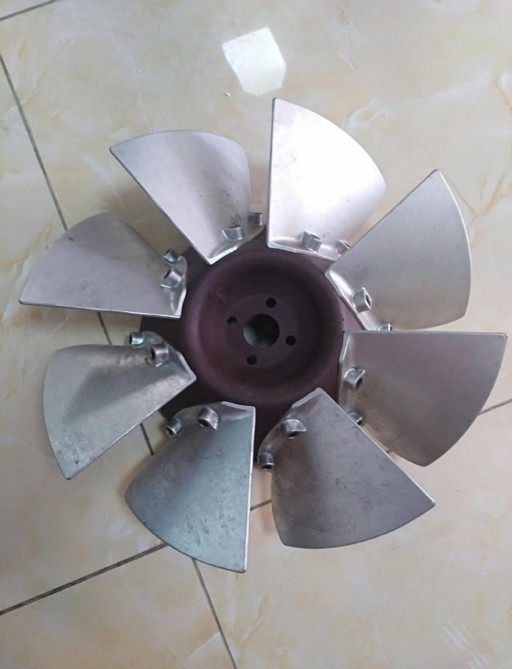
What is Modification Treatment?
Modification treatment is a casting process where some elements (called modifiers) are introduced into the metal melt to alter the manner of crystal growth during solidification so as to optimize the microstructure of the metal and improve its mechanical and processing properties.
Just like adding milk or starch to make scrambled eggs tender, modification treatment “adds ingredients” to metal, which compacts and homogenizes its inner structure and makes it less prone to fracture or wear.
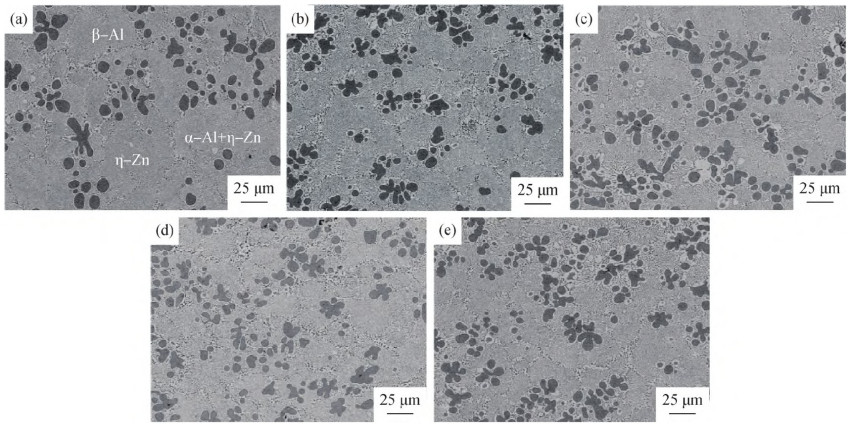
As-Cast Microstructure Characteristics and Defects of Aluminum Alloys
Aluminum alloys tend to form dendritic structures in as-cast condition, which is mainly manifested as coarse primary α-Al phases and eutectic silicon phases. Especially in the as-cast state, the silicon phase exists in the morphology of coarse lamellar or acicular, which (highly susceptible to) crack initiation, reducing the mechanical properties and durability of aluminum alloys. For components like impellers that must demonstrate high strength, toughness, as well as acceptable heat resistance, the uniformity of the structure of the aluminum alloy and the degree of grain refinement are particularly important. Therefore, using modification treatment to improve the solidification structure of aluminum alloys, inhibit grain coarsening, and improve the comprehensive properties of aluminum alloys is particularly crucial.
Basic Principles and Common Methods of Modification Treatment
Modification treatment mainly improves the generation of nucleation cores in the aluminum alloy melt by adding trace modifiers, thereby inhibiting dendritic growth, refining the grains, and homogenizing the structure. Common modifiers include sodium (Na), strontium (Sr), calcium (Ca), titanium-boron (Ti-B) alloys, etc. Different modifiers can be divided into primary phase modification and eutectic silicon modification according to their mechanism. Ti-B alloys are used mainly to refine primary α-Al crystals, and modifiers such as strontium can effectively improve the morphology of eutectic silicon from coarse lamellar to fine fibrous, thereby improving the ductility and crack resistance of the alloy.
In aluminum alloy modification treatment, sodium and strontium are commonly used to change the morphology of the alloy’s eutectic silicon from brittle acicular or lamellar to curved fibrous. Ti-B modifiers are mainly used to improve the morphology of the aluminum alloy’s primary grains, causing them to become uniform and fine, and to improve the alloy’s strength and toughness.
Analysis of the Influence of Modification Treatment on Impeller Microstructure
In the process of casting Al-Si alloy impellers, their mechanical properties, fatigue life, and service reliability are all determined by their microstructure. By adding modifiers (strontium, sodium, antimony, etc.) for modification treatment, the micro-level grain morphology and second-phase distribution of the alloy can be optimized, and the overall performance of the impeller can be comprehensively improved. The mechanisms of microstructure optimization and performance improvement of modification treatment are discussed below from three key aspects.
Grain Refinement and Microstructure Homogenization
Modification treatment can successfully refine α-Al matrix grains, and thereby enhance the as-cast structure. It has been found that unmodified aluminum alloys are prone to form coarse rosette-like grains with large grain spacing and irregular morphology, which (highly likely to induce) stress concentration and crack initiation. After strontium modification, α-Al grains are transformed into equiaxed or elliptical grains with fine and compact appearance, significantly reduced grain size, and uniform distribution. Such structural optimization not only improves the alloy’s plasticity and toughness but also tends to complicate the crack propagation paths, thereby increasing the material’s fatigue life. For impellers experiencing alternating high-speed rotary stress and thermal loading, such a fine-grain strengthening mechanism significantly contributes to their resistance to thermal fatigue and long-term service stability.
Eutectic Silicon Morphology Transformation and Mechanical Property Enhancement
In Al-Si alloys, eutectic silicon, as a hard and brittle phase, significantly affects the overall material properties. Unmodified, eutectic silicon is characterized by coarse acicular or lamellar morphologies with clear and sharp boundaries, easily acting as crack sources and degrading the ductility and fracture toughness of the alloy. Upon strontium modifier use, the eutectic silicon can be made to refine into fibrous, granular, or spherical morphologies, thereby not only improving the bond strength of the matrix and silicon phase but also significantly improving the overall plasticity and resistance to cracks. Tests have shown that the moderate strontium modification treatment has the ability to increase the tensile strength of aluminum alloys by 10%–20% and elongation by more than 30%, providing a good material basis for manufacturing high-strength and high-toughness impellers.
Improvement of Corrosion Resistance and Thermal Conductivity
Modification treatment also has a positive effect on improving the corrosion behavior and thermophysical properties of aluminum alloys. On the one hand, grain refinement and spheroidization of eutectic silicon compact the alloy structure, reduce micro-porosity and segregation, therefore reducing the formation of corrosion channels and improving the corrosion resistance of the material. For A356 alloy, for example, modification treatment can significantly reduce its corrosion current density in chloride-containing environments with improved stability and durability. On the other hand, the purified and spheroidized silicon phase structure also helps to improve the thermal conductivity of the material, allowing impellers to promote rapid heat conduction and even diffusion under high-temperature conditions, thereby suppressing thermal stress concentration and slowing thermal fatigue crack initiation and propagation.
Influence of Modification Treatment on Microstructure
Modification treatment inhibits the growth of coarse acicular or lamellar eutectic silicon and transforms it into fine, blunt, and dispersed granular shapes. Meanwhile, it also refines primary grains, significantly improving the microstructure of aluminum alloys:
| Item | Before Modification | After Modification |
| Eutectic Silicon Morphology | Coarse acicular, lamellar | Fine blocky, granular |
| Grain Size | Coarse | Fine and uniform |
| Microstructure Density | Low, prone to shrinkage and cracks | High, reducing defects and improving strength |
Influence Factors of Modification Process Parameters on Performance
The modification effect is controlled by numerous process parameters, such as addition amount, addition method, holding time, and pouring temperature of modifiers. When using A356 alloy, too little or too much addition of the Sr modifier will affect the modification effect. Studies have shown that the optimal addition amount of Sr is 0.015%: below this addition, the modification effect will not be significant; too much addition will result in metal burning loss, affecting performance.
In addition, modification temperature and holding time are also important factors for the modification effect. The grain refinement effect is not obvious when the modification temperature is too low; if too high, grain coarsening will be induced and affect the structural uniformity. The selection of holding time is also very important: the appropriate modification time can make the structure reach the optimum state, but too long a holding time will lead to structural degeneration and poor performance.
Practical Application Effects and Typical Cases
In water pump impeller production, by using composite modification treatment with Sr and Ti-B, the grain size of aluminum alloy impellers has been decreased from the initial 160μm to below 40μm, tensile strength has been increased by about 15%, and fatigue life has been increased 2 to 3 times. In aero-engine and fan impellers, modification treatment also significantly improves their thermal crack sensitivity and long-term service stability, and enhances reliability under high-temperature service.
Using A356 alloy as an example, after adding a suitable amount of Sr modifier, the eutectic silicon in the aluminum alloy changes from a coarse acicular structure to a fine fibrous structure, which significantly improves the crack resistance and fatigue resistance of the impeller under high-temperature and high-stress conditions and extends the service life of the impeller.
Conclusion
Modification treatment is essential in improving the structural uniformity and mechanical properties of aluminum alloy impellers. Through reasonable choice of modifier types, control of process parameters, and optimization of modification process, the fatigue strength, crack resistance, and heat resistance of aluminum alloy impellers can be significantly improved to meet the demands of high-performance impellers in modern industry. With the development of technology, modification treatment will play an increasingly important role in the manufacturing of aluminum alloy impellers and provide more reliable material guarantee for high-end application.


