
Surface treatment is a surface process method of artificially forming a surface layer on the surface of a base material that is different from the base material in mechanical, physical, and chemical properties.
What is Surface Treatment?
Surface treatment is designed to meet the product needs of corrosion resistance, wear resistance, decoration, or other special functional needs. Technologies in surface treatment applied by us are mechanical grinding, chemical treatment, surface heat treatment, and surface spraying. Surface treatment involves cleaning, sweeping, deburring, degreasing, and scale removal from the work surface. Let us study the process of surface treatment today.
The most commonly used surface treatment processes include
anodizing, metal wire drawing, etching, IMD/IML/IMR, electroplating, sandblasting, laser engraving (laser marking), water transfer printing, hot stamping, and PVD (Physical Vapor Deposition), etc.

Anodizing: The Magic to Enhance Metal Performance and Appearance
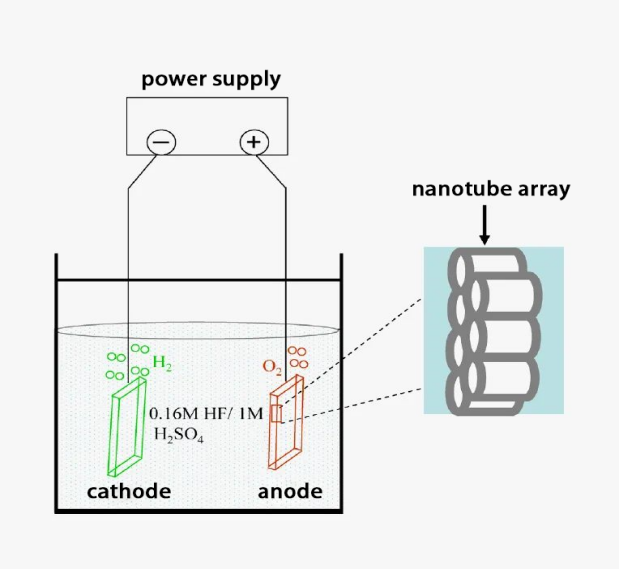
Anodizing is among the methods of creating an oxide film on a metal or an alloy surface using an electrolytic process. Take the case of aluminum anodizing as an example. Place aluminum and its alloy in the respective electrolyte solution. With specific conditions and under the influence of an imposed current, a thin layer of aluminum oxide will develop slowly on the aluminum surface.
This oxide coating is very useful. It significantly increases the hardness, wearability, corrosion resistance, and insulation of the metal. In some mechanical parts and aerospace materials, the treated metal can better adapt to harsh working conditions and extend its service life. The microporous structure of the oxide layer also has excellent adsorbing properties. Because of the dyeing treatment, the metal can display various beautiful and charming colors.
For the field of architectural decoration, anodized aluminum alloy profiles impart a personalized beauty to the building through its rich colorings. From everyday needs to precise instruments, anodizing is found everywhere to demonstrate its powerful practicality and ornamentation.
Metal Wire Drawing: Creating a Textured Art with a Stylish and Technological Sense
The metal wire drawing process slowly shapes linear patterns on the surface of the workpiece by grinding to produce a unique decorative effect. Equipment such as sandpaper and steel wire brushes is used in the processing, rubbing and treating the surface of the metal. Based on various tools and processing techniques, various patterns such as straight lines, random lines, threads, corrugations, and spiral lines can be shaped.
After metal wire drawing, all fine scratches on the product surface can be seen, and the metal has a hair-like fine shine in a matte finish. This unique look effect enables the product to exactly combine a sense of fashion and technology. In the field of electronic commodities, metal wire drawing is used thoroughly for mobile phone frames and laptop shells, not only making the product more textured but also capable of hiding small imperfections on the metal surface to a certain extent. In the case of decorative building materials and furniture hardware, the wire drawing process of metal is also widely utilized, imparting an element of luxury quality and elegance to the products.
Etching: The Meticulous Metal Art
Etching, predominantly photochemical etching, is a highly precise surface treatment process. Its process includes exposure and plate making, development, and stripping of the protective coating in the etched region. Then, let the metal come in contact with the chemical solution, and use the dissolution and corrosive effect of the solution to produce a final concave-convex or hollowed-out effect.
The elegance of the etching process is that it can achieve very fine pattern and text engraving. It can create special textures and shapes on the metal surface with very high precision and satisfactory repeatability. In the process of making printed circuit boards, etching is used in drawing circuit lines accurately; in metal handicraft processing, it is capable of making fine patterns; in logo and sign production, etching clarifies the text and patterns and makes them unique. Whether it is a complicated geometric shape or fine text, the etching process can reproduce it precisely, giving the product special artistic value.
IMD/IML/IMR: In-Mold Technologies Combining Protection and Decoration
IMD is the in-mold decoration technology, and IML and IMR are significant branches of it. IML is an in-mold labeling technology for 2D products. First, the movie is punched with position holes, dried and printed, and subsequently cut. Thermoforming comes next, and it is then combined with the injection molding process. Finally, the product surface forms a hardened transparent film structure, an intermediate printed pattern layer, and a back plastic layer. IMR is in-mold transfer printing. The design is printed onto the film, and when mounted on the plastic mold cavity and extruded, the ink layer separates from the film and remains on the plastic part.
These in-mold technologies make the product have excellent friction resistance, effectively preventing the surface from becoming scratched, and the color remains bright and not easily faded. IML can be adjustable in batches of production and suitable for various requirements of production scales; IMR has the advantages of less product deformation, complete edge covering, and convenient change of production. In 3C product applications, home appliance product cases, and auto interior accessories, IMD/IML/IMR technologies are widely used, both providing aesthetic and functional guarantees for the products.
Laser Engraving (Laser Marking): The Precise and Efficient Marking Art
Laser Engraving (Laser Marking): The Accurate and Efficient Marking Art
Laser engraving, or laser marking, is based on numerical control technology and uses a laser as the processing medium. When the laser is focused on the surface of the metal material, the material is melted and vaporized instantly, thus achieving the processing objective. With this, vectorized text and graphics can be accurately “printed” on the processed substrate.
Laser engraving has many fine virtues. It is extremely precise in accuracy and is able to realize extremely dainty engraving effects, meeting the engraving demand of fine patterns and minute characters. As it is a technique of non-contact processing, it will not exert mechanical stress on the product to deform it. It also has high speed during processing and is able to etch a very large number of products in a very short space of time.
In surface marking, pattern engraving, and text stamping of various kinds of products such as metal products, plastic products, glass products, and wood products, laser engraving has been found to be extremely useful. Whether the product brand logo, personalized patterns, or functional scale markings, laser engraving is able to replicate them absolutely well.
Water Transfer Printing: A Powerful Tool for Decorating Complex Surfaces
Water transfer printing technology uses water pressure to hydrolyze the plastic film or colored transfer paper’s polymer, and then successfully transfer the pattern onto the product’s surface. Water transfer printing technology is primarily divided into water label transfer printing technology and water immersion transfer printing technology. The former is used mainly to complete the transfer of patterns of pictures and words, and the latter is best at whole surface transfer on the whole surface of the product.
The advantage of water transfer printing is that it can perfectly transfer complex patterns on workpiece surfaces with various complex shapes, solving the problem of surface decoration of three-dimensional products effectively. The transferred effect on the product looks natural as if the design organically evolved on the product surface. While so doing, it will keep the product surface from damage and make sure that the product remains complete. In the surface decoration of vehicle interior parts such as vehicle instrument panels and control panels, 3C electronic products, daily household commodities, building materials, and other commodities, the water transfer printing technology is widely used, bringing rich diversity of appearance effects to the products.
Hot Stamping: A Gorgeous Surface Decoration Process
Hot Stamping: A Glamorous Surface Decoration Process
Hot stamping, which is also called “hot gold stamping,” is indeed a process of transfer. It utilizes the combined action of pressure and heat to imprint the fine design of the hot stamping foil onto the surface of the substrate. The hot stamping die and the foil are the most critical components of the hot stamping process. The whole hot stamping process comprises several processes such as the collision of hot stamping foil with the substrate, transfer, peeling of the polyester film, and feeding of hot stamping foil.
Hot stamping processing can produce pattern, logo, and text of metallic texture or lovely color on the surface of various materials, and the decorating effect is very beautiful. Besides, the trend following hot stamping has very good scratch resistance, wear resistance, and peel resistance, and can maintain its beauty for a long time. In cosmetics and retail packaging, the hot stamping process gives the product a high-end and luxurious temperament; in book and magazine binding, the hot-stamped book title and patterns add an artistic effect; in automotive decoration, advertisement, consumer product decoration, and information signs, the hot stamping process plays an important part in making the product more visually attractive.
PVD (Physical Vapor Deposition): A Multifunctional Coating Process
PVD, i.e., Physical Vapor Deposition, is a process where, in vacuum conditions, low-voltage, high-current arc discharge technology is employed to ionize the gas, which leads to the evaporation of the target material. Simultaneously, the evaporated material and the gas are ionized, and subsequently, under the accelerating action of the electric field, the evaporated material and the reaction products are deposited on the workpiece.
The PVD process excels in many ways. Its operation is extremely simple, with no environmental pollution, and it consumes less material. The film layer formed is dense and uniform, and it possesses a strong bonding energy to the substrate. It can be employed for the preparation of film layers of various properties like wear resistance, corrosion resistance, decoration, conductivity, insulation, light guiding, piezoelectricity, magnetism, lubrication, and superconductivity. In the aerospace, PVD coating is used for improving the components’ performance and reliability; in the electronics field, they use it to create integrated circuits and electronic components; in the optic field, it is used to create optical film; in the mechanical field, it is used as tool coatings to improve tool life; in the construction, light industry, metallurgy, materials, etc., the process of PVD is also regularly used.
Electroplating: A Classic Process to Enhance Metal Performance and Beauty
Electroplating takes advantage of the phenomenon of electrolysis to deposit a thin layer of metal or alloy on the surface of certain metals, in a way that the metal film has strong adherence on the surface of metal or other material constituents.
With the help of electroplating, the metal’s wear resistance, electrical conductivity, reflectivity, and corrosion resistance are greatly enhanced, and simultaneously, the look of the metal is greatly enhanced, making it more gorgeous and shiny. In hardware products industry, door handles, faucets, etc., following electroplating processing, are not only longer-lasting but also extremely glossed, improving product quality; in electronic components, the use of electroplating improves electrical conductivity and resistance to oxidation; in the automotive field, electroplated car wheels have both decorative and protective functions. The electroplating process has a central part to play in the surface finishing of numerous goods and is an old and reliable surface finishing method.
Sandblasting: A Process to Create a Uniform Matte Effect
Sandblasting is a process for treating the workpiece surface utilizing the pressure of high-speed flow sand to rub away and make the workpiece surface rough. Sandblasting uses compressed air as energy to propel the abrasive to impact the surface of the workpiece to be treated at high speed to change the shape or appearance of the workpiece surface.
Through sandblasting treatment, the workpiece surface can achieve some degree of cleanliness and different levels of roughness. This not only improves the mechanical property of the workpiece surface and raises fatigue resistance but also improves the adhesion of the coating, which is beneficial to the leveling and decorative appearance of the coating. Sandblasting can also produce a matte surface effect in an even shape and is widely applied in the metal processing, architectural decoration, and mechanical manufacturing industries. In metal component rust removal and pre-treatment of metal surfaces, sandblasting can remove surface impurities and oxide films; in stone roughening treatment for stone surfaces, sandblasting makes the stone exhibit a unique texture.
KESU’s Surface Treatment Service
Surface treatment for products is very important in manufacturing under highly competitive conditions. KESU surface treatment service materializes as needed, providing many processes such as vacuum electroplating and powder spraying. For those products which require corrosion resistance, galvanizing and anodizing may also play a role in their protection; for those which require a personalized appearance, water transfer printing and screen printing may also endow them with singular elegance. Depending on the professional staff and superior facilities, KESU rigorously controls the quality and uses one-stop service to help customers take the high ground in the market.
Conclusion
Surface treatment is a process of artificially forming a surface layer on the surface of a base material that differs from the base material in mechanical, physical, and chemical properties. Surface treatment is designed to meet product corrosion resistance, wear resistance, decoration, or other special functional requirements.
These ten surface treatment processes each have their own unique strengths in the field of industrial design. They both enhance product performance and add richness to product appearance in unique ways, giving products higher value. These processes are mastered by industrial design masters, who use them skillfully to produce infinite great products, leading the infinite advancement of industrial design. Whether for ultimate functionality or unique aesthetic expression, these surface treatment processes offer designers infinite possibilities.


