
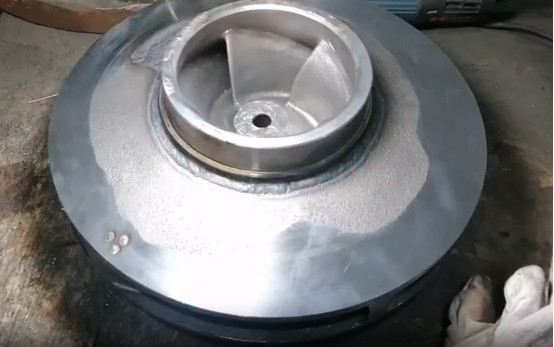
Ferritic stainless steels are widely used in the production of fluid machinery impellers due to their excellent corrosion resistance, low cost, and high heat conductance. Especially in severely corrosive environments, their chloride corrosion resistance makes them ideal materials for production in the form of impellers. Yet, due to the inherent metallurgical characteristics of ferritic stainless steels such as coarse grains, high thermal cracking susceptibility, and low plasticity, many welding defects are likely to occur during welding, for instance, cold cracking, hot cracking, coarse grains, and embrittlement, which would lead to problems in equipment performance and reliability of impellers.
Introduction
In fluid machinery rotating equipment such as fans, compressors, and pumps, impellers as the major rotating components directly affect equipment efficiency and performance. In an effort to improve the applicability of impellers in the corrosive as well as high-strength conditions, ferritic stainless steels (e.g., 430, 446, 439, etc.) have a wide range of applications during the production of impellers. Ferritic stainless steels are a cost-effective material as they have good corrosion resistance, are cheaper, and have good thermal conductivity. However, ferritic stainless steels’ weldability is restricted by their material nature, and structural embrittlement and cold cracking issues typically occur upon welding, not only affecting welding quality but potentially significantly reducing the mechanical characteristics of impellers. Therefore, accurate investigation of the welding quality of ferritic stainless steel impellers and proposing matching optimization techniques are of great value for improving their production quality and life.
Material Characteristics of Ferritic Stainless Steels
As a typical chromium-type stainless steel, ferritic stainless steel is controlled by a ferritic phase and does not contain austenite at room temperature. The ferritic stainless steel has advantages as well as disadvantages in material properties, which have a direct impact on the process of welding with a sequence of issues. For example, ferritic stainless steel enjoys good corrosion resistance, especially when facing corrosive media such as chlorides, it enjoys incredibly superior corrosion resistance, thereby being the material of choice under harsh environments such as seawater and chemical media. Second, ferritic stainless steel has high thermal conductivity and low thermal coefficient of expansion, which provides some better characteristics in the thermal fatigue condition and enables it to endure more frequently repeated temperature fluctuation and thermal stress.
However, the welding quality of ferritic stainless steel is poor and its inherent metallurgical characteristics lead to a series of problems commonly faced with welding. To begin with, ferritic stainless steel tends to develop coarse grain when welded, especially in the hot regions. Because there exists no mechanism of recrystallization, the grains in the Heat-Affected Zone (HAZ) tend to develop extremely rapidly, leading to an enormous reduction in plasticity and toughness of the weld joint. Second, ferritic stainless steel has lots of chromium, especially if the chromium content is in excess of 17%, ferritic stainless steel will undergo embrittlement at temperatures ranging from 450°C–525°C, and this is what is called 475°C embrittlement. 475°C embrittlement will lead to a decrease in the impact strength of the welded joint, adversely affecting its longevity in real work. In addition, σ phase precipitation and intergranular corrosion are also prone to occurring while welding the ferritic stainless steel, hence making the welded joint more brittle and the structure overall less reliable and stronger.
Welding Structure and Process Requirements for Impellers
The welding structure of ferritic stainless steel impellers mainly includes components such as blades, hubs, and covers. Common welding methods include butt welding, fillet welding, and plug welding, with the following process requirements:
- Complete weld formation without cracks: Welds should be flat, smooth, and free of defects such as pores and cracks to ensure the structural strength of the impeller.
- Stable heat-affected zone: Heat input should be controlled as much as possible during welding to avoid obvious embrittlement and significant grain growth in the Heat-Affected Zone (HAZ).
- Balance of strength and corrosion resistance: The mechanical strength and corrosion resistance of the weld area after welding should be consistent with the base metal to prevent local performance degradation.
- Control deformation to avoid affecting dynamic balance: Deformation must be strictly controlled during welding to ensure the dynamic balance accuracy of the impeller and avoid affecting its work efficiency.
Microstructural Changes During Welding
During the welding of ferritic stainless steel, changes in heat input will lead to different microstructural changes, mainly including the following phenomena:
- Coarse Grain Heat-Affected Zone (CGHAZ): In the area close to the molten pool, the grains grow significantly, and brittleness increases, resulting in a significant reduction in the toughness and plasticity of the welded joint.
- Sensitized zone: When the welding temperature reaches 450–850°C, prolonged stay in this temperature range will lead to the precipitation of chromium carbides (Cr₃C₆), increasing intergranular corrosion sensitivity.
- δ-ferrite stable zone: Equiaxed δ-ferrite is often formed in the center of the welding area, which has poor mechanical properties and is prone to stress concentration, affecting the stability of the welded joint.
- Embrittlement zone (475°C embrittlement): Prolonged stay in the temperature range of 450–525°C will cause embrittlement of ferritic stainless steel, leading to a sharp decrease in material toughness and a reduction in the impact resistance of the welded joint.
Analysis of Common Welding Defects and Causes
In ferritic stainless steel impeller welding, the common welding flaws are hot cracks, cold cracks, intergranular corrosion, pores, and poor fusion. Each of them has its own causes.
Hot Cracking
Hot cracking is caused by composition segregation and coarse grains resulting from high temperature gradients during solidification of the molten pool in welding. Because the ferritic stainless steel is prone to coarse grain development at high temperatures and because of the high chromium content, there is stress concentration upon solidifying the molten pool, leading to crack formation. The hot cracks, once formed, have a tendency to drastically shorten the service life of the welded joint.
Cold Cracking
Cold cracks usually occur during the later stage of welding because of the failure of internal stress relaxation in the area of the welded joint and also because of the poor plasticity of the material at low temperatures. The rapid cooling after welding of ferritic stainless steel causes the development of internal stress, and when the plasticity of the material is not sufficient to oppose this stress, cracking occurs.
Intergranular Corrosion
Intergranular corrosion will occur in the heat-affected area of the welded joint, mainly at grain boundaries. With segregation of chromium content while welding to form a chromium-rich region, intergranular corrosion will most likely occur. Intergranular corrosion not only reduces the strength and corrosion resistance of the welded joint but also induces greater brittleness of the material, eventually leading to fracture.
Pores and Lack of Fusion
Pores and lack of fusion are usually caused by welding. Due to insufficient welding current or faulty shielding gas, the molten pool is underdeveloped, and pores or lack of fusion zones are created in the weld. These types of defects lead to a reduction in welded joint strength and can be the cause of fatigue crack nucleation.
Deformation and Warpage
During welding, due to unbalanced heat input or excess restraint, deformation or warpage can be caused at the welded part. The dynamic balance requirements of the impeller are high, and thus this deformation will have critical effects on the performance of the impeller and even lead to equipment failure.
Structural Design and Stress Control Strategies
In order to further enhance welding quality and impeller stability, stress control during welding must be taken into consideration in the design. In the design, it can take into account minimizing the number and length of welds to prevent stress concentration during welding. Reasonable groove and hole designs during the design of stress relief grooves or holes can significantly reduce the restraint effect during welding and consequently minimize welding stress.
In addition, welds should also not be placed in high-concentration stress areas of the impeller, such as adjacent to the axis of the impeller or high change of curvature areas, so that they will not cause excess stress concentration. Optimizing the transition size and angle of the blade-hub joint properly can effectively reduce the thermal stress gradient and reduce deformation and thermal stress-induced welding defects. For large-sized impellers, local welding technology combined with embedded casting or 3D printing technology can be used to further improve structural strength.
Conclusion
There are great application opportunities of ferritic stainless steel in impeller manufacture because of its excellent corrosion resistance and low-cost nature. However, due to its own characteristics such as coarse grains and poor welding properties, cracking and embrittlement are likely to occur in the welding process and affect the service performance of impellers. By controlling welding heat input, optimizing welding process and structural design, choosing appropriate welding materials, and post-treatment heat treatment, welding quality and overall performance of impellers can be significantly improved. In the future, with the development of such techniques as laser welding and intelligent welding simulation, welding technology of ferritic stainless steel impellers will be optimized more to achieve more efficient and stable production.


