
With the strict requirement of ensuring stable and reliable operation of aero-engines, the role of impellers as the most important power transmission and aerodynamic components in aero-engines is more and more magnified. The geometric precision and dimensional stability of impellers directly influence engine performance and safety. Therefore, standard and comprehensive full-size inspection reports become essential in impeller factory-out standards. These reports become not only the basis for full-size traceability but also serve as part documents of industry standard, for customer trust and confidence, and for ongoing improvement.
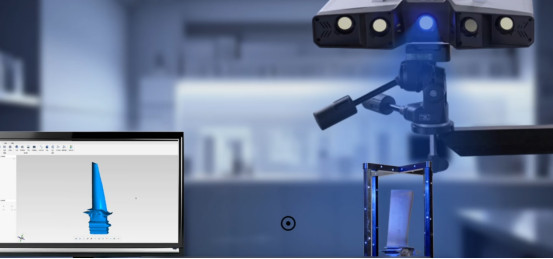
Definition and Background of Full-Size Inspection Reports
A full-size inspection report is a full-size quality document that measures and documents all significant dimensions, geometric features, and form-position tolerances item by item of aviation impellers. In the course of production of aviation impellers, in light of the complexity of impeller geometry, (material particularity), and high design precision requirements, inspection reports for finished products should cover not only common design factors such as blade curve profiles, tip roundness, and root thickness but also precision measurement requirements such as radial runout. They provide users and regulatory authorities with full quality data, ensuring that all details of the impeller meet design specifications and offering sound support for subsequent use and service.
Main Contents of Full-Size Inspection Reports
A standard full-size inspection report should include the following major items:
- Workpiece Information and Drawing Index: Key information such as impeller model number, drawing number, material, and batch of manufacture, so that the report can accurately trace the production history of each part.
- Measuring Equipment and Methods: The report must list in detail the measuring equipment utilized, e.g., Coordinate Measuring Machines (CMMs), profilers, and video measuring machines, and state the calibration status and measurement methods to ensure data accuracy.
- Measurement Data Records: For all dimensional features in the design drawing, such as outer diameter, height, and blade spacing, the report must clearly define the measured data and their deviation values.
- Error Analysis and Judgment Results: Statistically, the report should analyze the measurement results by standard error analysis procedures (such as range, root mean square error, etc.) and clearly state pass/fail judgments to ensure rigorous quality standards compliance.
- Signature Confirmation and Traceability Information: Report signing should be done by the inspectors and the sealing of the report by the quality department to ascertain legal validity and traceability.
Role and Significance of Full-Size Inspection Reports in Aviation Impeller Factory Standards
With the increasing needs of the aviation manufacturing industry for component precision and safety, complete-size inspection reports that are standardized and complete have become mandatory quality reports before factory shipment of aviation impellers. Not only are these reports the epitome of production process traceability and quantification, but they also form efficient information bridges among concerned parties, leading to product quality assurance and continual improvement.
Ensuring Controllable Quality and Traceability
Full-size inspection reports meticulously record the measurement data on all the main dimensions and tolerances and act as an overall basis for subsequent quality traceability. When performance deviates or customer complaint issues occur during the service life of the impeller, manufacturers can trace the relevant batch, production lines, and operation procedures in a timely manner via the report, put potential causes in the correct positions to ensure stability and safety in the service life of the aviation impeller.
Unifying Measurement Standards and Data Specifications
With strict adoption of full-size inspection reports before factory-out, enterprises can unify measurement standards and data specifications, reducing information incompatibility between departments to a minimum. Standardized data also ensures that all upstream and downstream participants in the supply chain share a common understanding of inspection results, creating a stable basis for quality communication in cooperation and information exchange between upstream and downstream.
Meeting Industry Standards and Regulatory Requirements
In the aerospace field, quality management standards such as AS9100 and ISO9001, and airworthiness codes, demand stringent requirements for impeller production and factory-out inspection. Same-size inspection reports as the real components are critical papers for aviation impellers to satisfy these aviation standards to enable manufacturers to successfully navigate buyers’ and certifying bodies’ quality audits and avoid the risk of legal liabilities and financial losses through substandard products.
Enhancing Customer Trust and Cooperation
Customers tend to request manufacturers to present entire and standardized inspection reports as a basis for procurement and assembly quality. By providing quantifiable information and complete records, manufacturers demonstrate high concern for quality control, reduce resistance to communication and distrust caused by information asymmetry, enhance customers’ trust in product quality, and lay a firm foundation for long-term cooperative relations.
Reducing After-Sales Risks and Quality Disputes
After component shipment, thorough inspection reports offer traceable and objective bases. When customers report impeller accuracy or assembly flexibility during operation, producers may react and clarify with exact evidence, possibly reducing after-sales maintenance costs and potential liability controversies.
Promoting Supply Chain Coordination and Standard Docking
For products like aviation impellers with multiple sources and complex division of labor, full-size inspection reports provide a single reference standard for each node in the supply chain, reducing quality conflicts and batch waste caused by variations in standards, and allowing for smooth and efficient information exchange in the supply chain.
Driving Internal Continuous Improvement and Process Optimization
Through the aggregation and analysis of long-term full-size inspection data from multiple batches, organizations are able to obtain production process stability information, equipment precision drift, and operation specification compliance rates to guide technical and quality management teams in identifying improvement opportunities, guiding equipment maintenance, tool selection, and process optimization, and continually increasing the levels of manufacturing and product consistency.
Supporting Product Lifecycle Management and Data Traceability
Through encouraging digital manufacturing and Product Lifecycle Management (PLM), the entire inspection data can be directly inserted into the impeller part lifecycle database for reference to future product design optimization, refurbishment, and maintenance. It serves as a good foundation for enterprise digital transformation to help build a closed-loop management system for the overall process of design, production, and service.
Digital Trends of Full-Size Inspection Reports
In accordance with the progress of intelligent manufacturing and digitalization, traditional full-size inspection reports are shifting towards automation, standardization, and digitalization.
- Automated Report Generation: With advanced CMMs and measurement software, electronic inspection reports can be automatically generated, avoiding manual entry error and improving report accuracy and efficiency.
- Long-Term Data Storage and Query Analysis: By storing data in the cloud or databases, traceable query and long-term data storage are facilitated to allow for analysis and comparison of old data to support enterprise quality control continuously.
- Docking with Enterprise ERP and MES Systems: Docking full-size inspection reports with enterprise ERP, MES, and customer supply chain systems not only enhances production process transparency but also improves supply chain traceability and collaboration efficiency, providing more efficient communication channels between manufacturers and customers.
Role of Full-Size Inspection Reports in Aviation Impeller Quality Assurance
Full-size inspection reports play a critical role in the aviation impeller quality control system, covering the entire process from design and production to service, and providing traceable and measurable grounds of quality assurance for each link. Their main functions are mainly described in the following respects:
- Ensuring Impeller Performance Compliance: The geometric size of the impeller is closely related to aerodynamic performance and mechanical strength. For example, minute differences in the chord length, thickness, and blade curvature will affect air flow status in the impeller, therefore affecting thrust, power, and engine efficiency overall. Through full-size inspection reports, manufacturers are able to adequately ensure important dimension parameters, assuring finished impellers comply with specifications and exhibit expected performance under actual working conditions, hence avoiding power loss and decreased service life as a result of dimensional faults.
- Guaranteeing Assembly Precision and Overall Machine Stability: Aviation impellers should be precisely matched with other components such as turbine disks and bearing seats. Any lack of accuracy will lead to assembly difficulties, eccentric vibration, or local stress concentration, and affect the balance and stability of the operation of the whole machine. Detailed key interface dimension data available in full-size inspection reports serve to assist the manufacturing and assembly groups in detecting possible deviations ahead of time, allowing for smooth matching between impellers and the surrounding parts, and enhancing overall assembly accuracy and long-term usage safety and reliability.
- Complying with Strict Regulatory and Customer Requirements: The aviation industry has strict specifications for component quality, and there are global specifications such as AS9100 and airline company specifications that have strict requirements for dimensional accuracy and document integrity. Full-scale inspection reports not only help manufacturers inspect themselves to industry standards but also meet customers’ personalized specifications for special dimensions, tolerances, and measurement modes, which provide a good foundation for successful customer acceptance and certification inspections and enhancing enterprise competitiveness in the market.
- Enhancing Quality Traceability and Liability Determination Capabilities: In case of quality issues related to dimensions during the service life of aviation impellers, full-size inspection reports are traceable bases. By comparing factory-out measurement data, judging quickly in an instant whether there are aberrations in the production process is easy, and therefore, enabling companies to determine liability, providing scientific and objective judgment bases for after-sales service, product modification, and quality claims, and helping to eliminate company risks and protect customer rights.
- Supporting Continuous Optimization and Production Improvement: With every production batch, historical data accumulated in full-size inspection reports also provide rich analysis material for companies. With statistics and dimension deviation trend analysis of importance in each batch, the manufacturer may identify potential causes of process fluctuation, implement timely adjustment of process parameters, optimize fixture and tool choice, strengthen measures of quality management, continually enhance product consistency and production stability, create a non-retribution closed-loop improvement mechanism, and create sustained impetus for long-term sustainable enterprise growth.
Conclusion
The necessity for complete-scale inspection reports and factory standards within the aviation impeller sector becomes obvious. They not only directly portray the quality of the products but also represent the fulfillment of promises made by manufacturers to the market and to consumers. With precise inspection information and proper traceability of quality, impeller manufacturers can guarantee product safety and performance, issuing credible warranties to consumers. In the future, under the continuous technical innovation of digital detection technology, inspection reports will be smarter and more efficient, bringing new dynamism to aviation impeller manufacturing and inspection and constantly driving technological advancement and innovation in the aviation industry.


