
As high-performance complex surface parts, especially impeller products, are widely utilized in the manufacture of aerospace, energy power, and high-level equipment, five-axis and multi-axis CNC machining technologies have developed as the very pillar of high-precision manufacturing. However, during the entire process of achieving high-quality machining, a crucial system component is often overlooked—the precision fixture system. It not only performs the basic tasks of positioning and clamping but also greatly affects process stability, machining accuracy, equipment performance, and even product uniformity.
Introduction
Impellers are characteristic free-form surface parts, and they are characterized by geometric complexity, thin walls, and abrupt curvature changes, describing extremely difficult machining processes. Especially when five-axis and multi-axis linkage CNC machines are used to machine overall, the variable machining paths with flexible cutting force directions pose unprecedented challenges to workpiece stability and repeat positioning accuracy. Such process requirements can no longer be met by those traditional fixture design concepts. Therefore, the development and implementation of high-rigidity precision fixture systems with accurate positioning, quick change, and interference avoidance have become core methodologies to enhance multi-axis impeller machining capacity. Fixture system design has no longer been a secondary supporting link in the preparation of machining but a core component in the entire machining system and core support platform to gain stable machining quality.
Process Characteristics and Clamping Challenges in Multi-Axis Impeller Machining
With the increasing demand for high-performance fluid machinery components in aerospace, energy equipment, and advanced manufacturing, the precision requirements and geometric complexity of the impeller parts are also on the increase. Most modern impeller machining is typically founded on five-axis or multi-axis linkage machine tools to achieve continuous and efficient machining of complex surfaces. But special structural characteristics of impellers also pose many challenges to clamping scheme design. With structural restrictions and interference prevention to high-precision positioning, all connections are directly related to completed product geometrical precision and machining stability. The clamping problems in multi-axis impeller machining are discussed from three significant views below.
Complex Structure and Limited Clamping
Typical impeller structures include various spiral distributed blades along the hub, free-surface shape conditions, irregular spatial distribution, and notable wall thickness variation. Irregular structure alone does not possess clear planar or reference features, and therefore traditional clamping methods such as vise and pressing plates cannot effectively supply even clamping force, and even create hub or blade deformation during pressing, which affects subsequent machining precision. Moreover, there are usually corresponding multi-angle and multi-direction tool entering paths in impeller machining. If the fixture structure is unreasonable, not only will it impact the conversion of machining posture but also likely lead to physical interference during machining, significantly restricting the freedom of tool paths.
Complex Interference Issues Requiring Highly Integrated Fixture Structures
In the five-axis machining system of multi-axis connection, tools are able to move and cut in any direction, greatly enhancing machining freedom but simultaneously increasing spatial compatibility requirements of fixtures. If the fixture system does not fully consider tool movement path in design, it is 极易 (highly likely) to be a potential source of interference, constraining tool posture adjustment or causing collisions. Therefore, specific fixtures for impeller shapes should have characteristics such as compact shape, open support, and low obstruction, which not only can provide sufficient rigidity and clamping force but also realize safe machining windows for tools in three-dimensional space. Modular composite clamping units and auxiliary support devices are also introduced by some advanced clamping solutions to accommodate the elastic requirements of different impeller shapes and machining trajectories.
High Precision and Repeat Positioning Challenges
As the machining of an impeller is often composed of multi-processes, multiple working surfaces, and even several clamping posture changes, how to ensure the workpiece spatial position consistency after every reinstallation is one of the most important issues for ensuring geometric precision. Even minute misalignment of positioning can introduce discontinuity between consecutive machining surfaces and previous operations, tool path offset, and again trigger dynamic balance errors or affect overall aerodynamic performance. To overcome this problem, fixture systems must have high repeatability positioning accuracy, which is usually obtained through high-precision V-block positioning, tapered reference self-centering positioning, rapid-change positioning pin systems, etc. Meanwhile, they need to incorporate workpiece coding management and automatic replacement identification functions for the purpose of realizing digital accurate control of posture transformation in machining.
Core Functions and Technical Requirements of Precision Fixture Systems
| Function Category | Technical Implementation Key Points |
| Accurate Positioning | Precision reference surface combined with pin guidance; repeat accuracy ≤5 μm |
| Strong Clamping | Pneumatic/hydraulic pre-tightening, taper shank locking, isobaric structure |
| Quick Changeover | Modular positioning platform + quick-change locking mechanism |
| Structural Interference Avoidance | Visual path simulation + multi-surface chamfering, hollow structure volume reduction design |
| Environmental Adaptability | Resistance to coolant corrosion, stainless steel or nickel-plated materials, smooth chip evacuation design |
| Intelligent Interconnection | Integrated sensors for monitoring clamping status and temperature, QR code positioning identification |
In my opinion, the above not only is the minimum structural requirements of fixture systems but also the development trend of fixture systems in the area of “manufacturing system integration”: fixtures are no longer rigid fixtures but intelligent components of integration of structure, sensing, and control.
Key Roles of Precision Fixture Systems in Multi-Axis Impeller Machining
Being typical sophisticated spatial surface forms, impellers depend more on fixture systems in multi-axis machining than regular components. In addition to providing the basic functionality of workpiece positioning and clamping, fixtures actively intrude into crucial links such as geometric accuracy control, posture transformation, and machining efficiency enhancement throughout the entire machining chain. especially under a five-axis linkage condition, the multi-degree-of-freedom characteristics of machining paths require fixtures to have stronger structural response capability and flexibility. The basic advantage of precision fixture systems in machining an impeller is treated from four prominent aspects as below.
Constructing a High-Rigidity Platform to Suppress Vibration Interference
Impellers in multi-axis high-speed cutting are subjected not just to continuous cutting forces but also spindle rotation centrifugal forces and tool feeding impact forces. When fixture rigidity design is insufficient, micro-displacement or workpiece vibration will occur under the effect of dynamic loads and result in cutting trajectory deviation and machining vibration marks on the surface at the expense of overall machine performance. To effectively combat this challenge, modern precision fixtures frequently employ multi-point support and redundant contact structures, arrange mechanically optimized configurations in crucial support points, and combine sophisticated designs such as hydraulic pre-tightening cavities and variable clamping pressure distribution, leaving the workpiece on a solid rigid surface in the clamped state to minimize vibration transmission and deformation accumulation from the source.
Ensuring High Repeat Positioning for Consistent Machining
Impeller parts usually need multi-process and multi-direction continuous machining. High-accuracy workpiece resetting after each loading/unloading or posture conversion is a major technical issue that must be solved by fixture systems. Traditional positioning using visual inspection or single-side reference clamping can’t meet the repeat contour precision requirement of ±0.01 mm. To address this problem, modern fixtures normally include such functions as tapered self-centering positioning structures, pinhole limit systems, and positioning base automatic identification coding, as well as precise calibration of the machine tool coordinate system, to create high-consistency positioning of workpieces after disassembly, rotation, and flipping. In a recent project of an aviation turbine impeller, I encountered the problem of inconsistent internal flow channel dimensions due to repeated clamping deviation. Finally, with the incorporation of double-taper positioning columns and workpiece identification, first-piece qualification rate has significantly improved, and downstream products always had a clamping error in ±5 μm.
Achieving Multi-Posture Flexible Clamping
Impeller machining typically involves the workpiece being fed in different angles and directions, especially in challenging-to-reach areas such as blade roots, hub backs, and internal flow channels, which require fixtures to have adjustable and decomposable structural modules. Luxury fixtures now use a significant amount of design elements such as spherical supports, complementary clamping systems, and rotating turning base plates to form adaptive clamping units with “spatial reconstruction” capabilities. Operators can adjust the fixture to the optimal machining posture through rapid disassembly, reassembly, and rotation based on the needs of different machining surfaces, not only ensuring clamping stiffness but also ensuring no interference among tool paths, thus fully realizing five-axis machine tools’ spatial machining capability.
Reducing Changeover Cycles and Improving Machine Tool Utilization
With increasing production requirement for multi-type and small-series impeller parts, quick changeover capability has become one of the key measures to evaluate the strengths and weaknesses of fixture systems. High-precision fixture systems significantly decrease clamping time and human miscalculation in alignment through the use of quick-change base designs, one-key locking, alignment guide rail auxiliary guidance, and other frames. In actual running, the ordinary changeover would take 5–10 minutes, while using quick-change fixtures, the entire changeover process can be managed within 30 seconds. This efficiency gain for workshop production lines not only enhances machine tool utilization rate directly but also enhances rapid response capability to sudden orders or flexible scheduling and is a critical point to achieve intelligent manufacturing and flexible manufacturing.
Typical Fixture Structures and Industrial Application Cases
Case 1: Fixture System for Aviation Titanium Alloy Integral Impellers
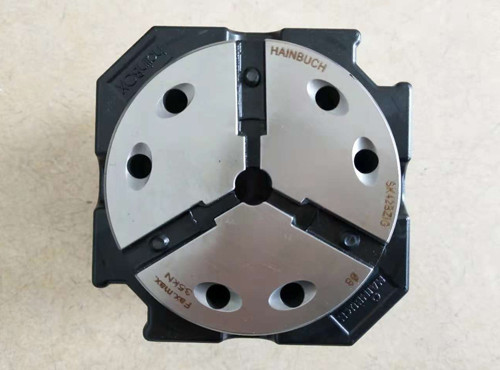
A three-jaw fixture + bottom tapered hole integrated fixture with high rigidity designed by an aircraft company realizes secure titanium alloy integral impeller machining in even full-circumference clamping. Equipped with a flexible support module and inner cooling channel system, the fixture ensures good control of the cutting heat transfer, with repeat clamping error controlled at 3 μm, which is widely used in machining engine compressor components.
Case 2: Five-Axis Machining Fixture for Blade Free Surfaces
A V-groove + bidirectional locking structure is used to machine a huge curvature surface on the rear of a blade by a company, accompanied with auxiliary clamping of the workpiece centroid reverse gravity. Not only is machining stability improved, but interference between tool paths and fixtures also avoids. The fixture verifies its spatial adaptability by five-axis interference simulation to ensure unconstrained machining trajectories.
Conclusion
Precision fixture systems evolved from the traditional auxiliary tools to core key technical facilities in multi-axis impeller machining. They influence not only the stability and accuracy of workpieces in machining, but also considerably the automation level, smartness, and overall efficiency of machining. From the point of view of engineering practice, I believe that future fixture development not only must meet the mechanical performance requirements but also must be based on the principles of systemization, intelligence, and green manufacturing. Only by constructing an all-around, efficient, and intelligent fixture platform can we meet the gradually enhanced and customized high-end impeller manufacturing requirements and upgrade China’s high-end manufacturing equipment to a new level.


