
Because a rotating impeller is a critical rotating element in fluid machinery, its dynamic balance in rotation directly affects the vibration character of equipment, working performance, and service life. However, during impeller manufacture, assembly, and quality testing, measurement errors in accuracy present in the vast majority of processes affect the accuracy of geometric dimensions and mass distribution of impellers, which then affects the effectiveness of dynamic balancing correction.
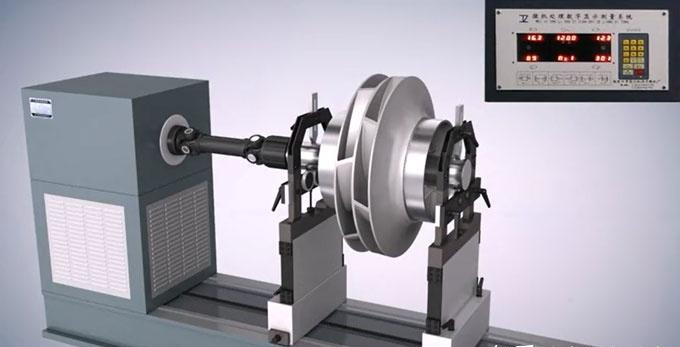
Relationship Between Measurement Accuracy and Dynamic Balance
Dynamic balancing of the impeller eliminates rotation-caused unbalance through change of impeller’s mass distribution to minimize vibration and effects of eccentric loading on equipment performance. Dynamic balance correction accuracy is based on precise measurement of impeller’s mass, geometric size, and eccentricity. Thus, measurement accuracy directly decides the correction effect of dynamic balance and the performance of the whole machine. Geometric dimension errors, weighing errors, positioning errors, etc., are introduced at measurement, and they can produce calculation discrepancies in compensation mass and angle, inducing inaccuracy in dynamic balance correction and even bringing about secondary unbalance.
Analysis of Measurement Accuracy Error Sources
During dynamic balance measurement of the impeller, there may be various sources of measurement error from multiple aspects. Upon superposition of these errors, they may have profoundly large influences on the accuracy and effectiveness of correction. Therefore, serious examination of multiple error sources and adoption of effective countermeasures are significant links to ensure the accuracy of dynamic balance measurement and correction. The error sources are explained in four major aspects as follows:
Geometric Dimension Measurement Error
Impeller geometric sizes are critical parameters in dynamic balance calculation. While coordinate measuring machines, vernier calipers, and micrometers have high accuracy, they inherently possess measurement limitations and sources of errors. For instance, while measuring outer diameter of an impeller, blade thickness, and inner hole size, instrument precision, probe force when contacting, and incorrect measurement direction may all cause data deviation. These small variations, exaggerated during calculation, can result in incorrect dynamic balancing amount of correction calculation, and thereby the correction effect.
Weighing and Mass Measurement Error
The resolution, the repeatability, and instruments’ calibration condition in the weighing link directly impact the accuracy of the weighing data. Especially when the mass difference between the impeller and counterweight block is small, even a small weighing error can lead to incorrect correction mass computation. Apart from this, in case the mass distribution of the impeller itself has errors, larger dynamic balance faults can be caused by such faults. Therefore, the utilization of highly precise (grade) weighing instruments and periodic calibration cycles, as well as keeping standardized and reproducible weighing routines, are good means to reduce faults.
Positioning and Clamping Error
Positioning and clamping accuracy of the impeller to be used for dynamic balance measurement directly affects the measurement result. When there is a displacement of the reference of positioning or the fixture is not ly clamped, not only will it make the spatial coordinates of impeller points of measurement erroneous, it will also generate extra deviations due to clamping deformation. Such errors are particularly apparent at high speeds. Therefore, selecting particular fixtures that are compatible with the shape of the impeller and that have rigidity and accuracy, and defining standardized operating procedures of clamping, are strong guarantees to maintain measurement consistency and accuracy.
Environmental and Operational Errors
Environmental conditions of the measurement environment such as temperature, humidity, vibration, and airflow can also impact instrument performance and measurement accuracy. For example, temperature changes will cause instrument zero drift and material thermal expansion-contraction, and dust and humidity will affect the precision optical components and contact points. Additionally, operator skill and standardization also determine measurement consistency and repeatability. Therefore, a constant temperature and clean environment should be selected before measurement, standardized operation programs should be set up, and personnel training should be conducted to reduce human operation difference and improve result stability.
Influence Mechanism of Measurement Errors on Dynamic Balance
The influence of measurement error on impeller dynamic balance is mainly indicated in two forms:
Calculation Errors of Mass and Eccentricity:
Measurement errors introduce errors in impeller geometric dimensions and mass, resulting in inaccurate compensation mass and angle calculation and hence cannot eliminate the original unbalance fully. In dynamic balance correction, if the amount of compensation is too small or too large, the correction effect will be less than optimum, producing residual unbalance.
Decreased Repeatability and Consistency of the Correction Process:
The occurrence of measurement errors raises the number of trials in the dynamic balance correction process, thus the repeatability and consistency of the correction process are decreased. Large errors necessitate the use of several calibrations, which raise test costs and time and reduce manufacturing efficiency.
For example, in the dynamic balance correction of a centrifugal pump impeller, if measurement error is ±0.02 mm, residual vibration after correction is 0.12 mm/s, while if measurement error is increased to ±0.05 mm, residual vibration is 0.35 mm/s, which significantly affects the balance performance of the entire machine.
Measures to Reduce Measurement Errors and Improve Dynamic Balance Precision
In order to reduce the influence of measurement errors on dynamic balance accuracy, special measures must be implemented in various links such as measurement instruments, fixture design, operation specifications, and data processing. These measures can significantly improve the controllability and stability of the measurement process and provide more robust technical support for dynamic balance correction. Special measures are:
Improving Measurement Instrument Precision and Calibration Frequency
Next, measurement tools of higher precision grades have to be preferentially selected, such as high-precision coordinate measuring machines, high-precision weighing equipment, and laser measuring devices, to ensure the measurement ability of the tools itself is sufficient to satisfy the precision requirements of dynamic balance correction. Secondly, strict instrument maintenance and calibration plans must be established, and measurement instruments must be checked and calibrated regularly for accuracy to ensure they remain in their best working state for some duration and reduce systematic errors caused by instrument drift.
Optimizing Measurement Fixture and Positioning Reference Design
Special fixtures and reasonable positioning designs can effectively reduce error sources during measurement. In measurement fixture design, the geometric shape and measurement direction of the impeller should be taken into consideration completely to ensure that the impeller can be safely clamped on the standard measurement reference without deformation. The use of positioning mechanisms with high repeatability and easy operation can prevent human clamping differences, improve measurement repeatability and consistency, and offer a stable hardware basis for obtaining correct data.
Controlling Measurement Environment and Standardizing Operation Processes
The measurement environment has a subtle influence on measurement accuracy, such as temperature, humidity, dust, and vibration. Measurement work is therefore required to be completed in a measurement room with controllable temperature and humidity, dust-free and clean, and free from obvious vibration. If necessary, temperature measurement rooms with fixed temperatures and air-floating anti-vibration platforms must be employed to reduce the impact of external interference on measuring results. At the same time, unified operation procedures for measuring must be established, and the operator must be trained and tested regularly to ensure that operation specifications are in strict compliance and reduced by human mistakes, therefore reducing the impact on accuracy of measuring.
Introducing Error Compensation Algorithms and Statistical Analysis Methods
Apart from the operational and hardware improvements, measurement accuracy can also be significantly improved by employing complex software algorithms. For example, employing filtering and denoising algorithms on the measurement data to reduce random errors in measurement points; compensating and correcting systematic errors by developing error models; and using Statistical Process Control (SPC) methods to analyze trend in the distribution of measurement data to detect potential deviations in measurement before their occurrence. The above methods can better control the measurement process, ensure more stable dynamic balance correction data, and provide great technical support for dynamic balance optimization and quality improvement later.
Conclusion
The influence of measurement accuracy errors on rotational dynamic balance correction of impellers is rather huge, not only affecting the calculation accuracy of compensation amount, but also the repetition and economy of the correction process. By improving the accuracy of measurement devices, accommodating measurement processes and environments to optimization, and employing data error compensation and other methods, measurement errors can be greatly minimized, and the accuracy of dynamic balance correction and the dynamic performance of the entire machine can be promoted. Due to the development of smart correction and digital measurement technologies, it will be possible to achieve integrated closed-loop control over dynamic balance and measurement in the future, further improving the accuracy of impeller dynamic balance to meet higher demands for performance from rotating parts in the aerospace, energy power sectors, and other sectors.


