
With the increasingly precise large impeller manufacturing, the position and repeatability errors of CNC machine tools under the conditions of long-stroke and heavy-load directly affect the dimensional accuracy and functional performance of impellers. The laser interferometer, being a precision measuring device, can dynamically calibrate and compensate for the main indicators of machine tools like axis displacement errors, positioning accuracy, and repeatability, providing strong technical support in the improvement of large impeller machining precision.
Precision Challenges in Large Impeller Machining
Aerospace, energy, and other large impellers usually have complex geometries and gigantic sizes. The blade surfaces, end face configurations, and structural differences in different machining areas impose extremely high requirements on machining precision. In actual production, because of the lead screw pitch errors, guideway wear, and thermal deformation caused by long-term machine tool running, the positioning accuracy of each axis will reduce. This not only affects the critical-dimensional accuracy of impellers but also produces form-position errors, which directly influence the final performance of impellers.
Therefore, how to measure and compensate for these displacement errors effectively and accurately in a timely manner has become the key to the improvement of impeller machining accuracy. The laser interferometer with high precision and dynamic response capability has become an important technical means in this regard.
Measurement Principle and Items of Laser Interferometer
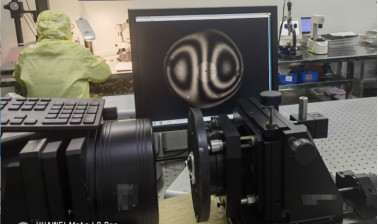
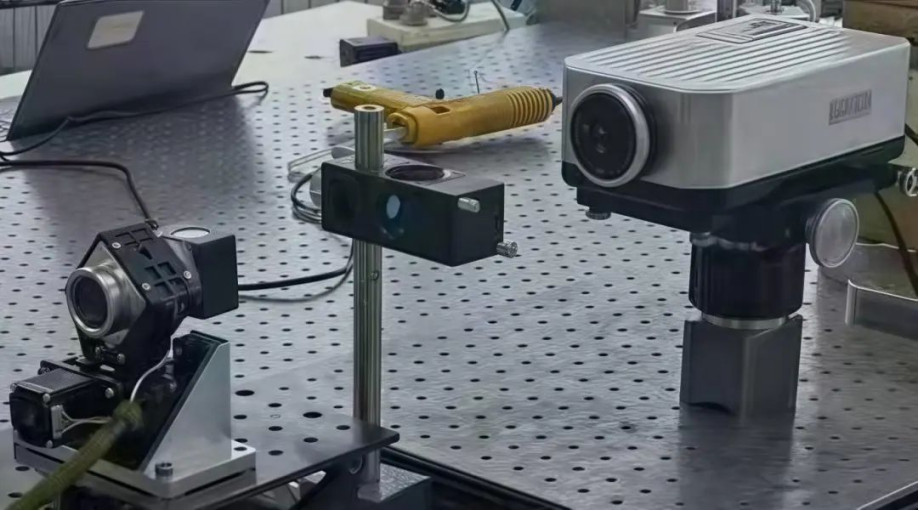
The laser interferometer measures displacement by measuring the optical path difference based on the principle of optical interference. The laser interferometer has a broad measurement range and extremely high precision, with nanometer-level displacement measurement capability, in comparison to traditional mechanical measuring devices. This makes it have a very significant application in the field of high-precision manufacturing, especially in large impeller machining.
The operational principle of the laser interferometer is mainly the measurement of the displacement of the target retroreflector and the calculation of the displacement through comparison of the phase difference of measuring light and reference light. The items to be measured are as follows:
- Positioning accuracy measurement: Generating positioning error curves by recording the error between the actual and theoretical positions of each stroke point of the machine tool;
- Repeatability measurement: Measuring the deviation range and dispersion when the machine tool returns to the same position multiple times;
- Backlash measurement: Measuring the hysteresis phenomenon caused by the reverse dead zone when the direction is reversed;
- Straightness error measurement: Measuring the straightness error of the machine tool in a particular axis.
These measurement items provide a solid data foundation for error analysis and compensation.
Application Process in Large Impeller Machining Sites
In actual machining shops, the process of laser interferometer measurement and error compensation is one of the most critical links to ensure the machining accuracy and consistency of large impellers. To ensure measuring accuracy and the effectiveness of the compensation afterwards, the entire process should be conducted step by step according to requirements, which consists primarily of the following stages:
Preparatory Work
Before the measurement starts, the status of the machine tool and measuring equipment must be carefully checked, e.g., equipment cleanliness, lubrication condition, cooling system, and calibration status of the laser interferometer itself and environmental conditions (such as temperature, humidity, vibration, etc.). In the meantime, the rational measuring paths and point intervals shall be determined according to the machine tool model, stroke range, and machining operations, such as every 100 mm measuring to obtain the even error data of each axis, which can provide a sufficient foundation for subsequent analysis.
Environmental and Optical Path Inspection
Since environment and optical path quality are demanding in laser measurement, the measurement site environment needs to be inspected ahead of formal measurement to avoid the effects of dust and oil on the retroreflector and optical components, and the measuring space should be obstacle-free and clean. Meanwhile, examine environmental factors that may affect accuracy during measurement, like machine tool vibration and heat source interference, and minimize external effects during measurement.
Laser Interferometer Arrangement and Calibration
Install the laser interferometer at the machine tool’s measurement reference point according to the measurement plan, and firmly fix the retroreflector on the movable portion of the worktable. During installation, meticulously align the direction of the laser beam so that the light reflected continues to return to the receiver and the signal intensity is stable. Calibrate and warm up the device after installation to check normal functionality and ensure error-free measuring data.
Preliminary Test and Parameter Adjustment
For the correctness of the arrangement and measurement program, carry out initial test measurement for one axis or a part of range first, and check if the data curve is as expected. If there is too wide measurement point spacing, signal interruption, or abnormal measurement data, timely adjust the measurement spacing, instrument alignment, and data acquisition parameters until the measurement curve is smooth and stable.
Data Acquisition and Error Curve Analysis
Start the laser interferometer measurement software, drive each axis of the machine tool following the given step pitch, and continuously read the actual position error of each measuring point. After measurement, the software automatically plots the positioning error curves and distribution graphs of each axis, making it easy for technicians to determine the error characteristics and local abnormal points of each axis and to provide data support for the development of an error compensation scheme.
Error Compensation and Retest Verification
Prepare an error compensation table based on the measurement data, input it into the machine tool CNC system, and enable the machine tool error compensation function. Retest every axis with the laser interferometer prior to machining, check the comparison of the error curve after and before compensation, and evaluate the compensation effect. Through the closed-loop calibration process, ensure that the machine tool can automatically compensate for machining errors, continuously improving machining precision and surface quality.
Recording and Continuous Improvement
Finally, properly document the measurement data, compensation parameters, and calibration records to form a complete quality traceability system. Regularly perform trend analysis of the measurement results, evaluate the long-term stability of machine tool precision, provide data foundation for equipment maintenance and production optimization, and support continuous improvement and production capability enhancement.
Measurement Case and Effect Analysis
For instance, a laser interferometer was used to calibrate the X, Y, and Z axes positioning error and repeatability of a three-axis gantry machining center in an aviation turbine impeller machining production line that was very large. The positioning error of each axis was 50μm to 80μm, and the repeatability was approximately ±15μm prior to compensation. After error compensation by the laser interferometer, the positioning error was confined to ±8μm and repeatability was improved to ±3μm. The result significantly reduced the incidence of machining over-tolerance rate, the uniformity of the impeller blade tip thickness was improved, and the quality of machining and production efficiency were greatly improved.
Conclusion
As a high-precision measuring instrument, the laser interferometer is extensively applied in large impeller machining because it has advantages in dynamic precision, real-time nature, and traceability of data. The laser interferometer, with its precise error detection and compensation, not only significantly improves the machining precision of impellers but also provides strong technical guarantee of the long-term stable operation of machine tools.


