
As a key component of fluid machinery, stainless steel impellers are commonly used in pump equipment, chemical systems, food-grade conveying equipment, and high-purity energy systems. Their polishing quality not only determines the fluid efficiency and equipment service life directly but also becomes the primary factor in deciding the appearance grade and market competitiveness of the product. Due to stainless steel’s extremely high hardness and extensive work hardening, complex curved shapes, and tiny inner cavities, polishing is a tremendous challenge. Therefore, to put forward a scientific and effective polishing process and construct an appearance quality control system as a whole is a big problem.
can’t be avoided by contemporary manufacturing enterprises.
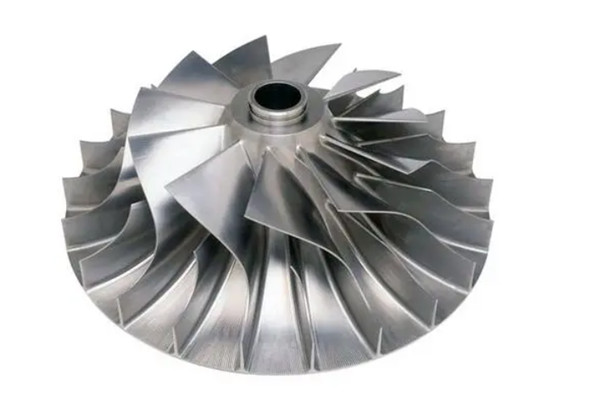
Polishing Requirements and Technical Challenges of Stainless Steel Impellers
Stainless steel impellers run at high speed, imposing extremely strict requirements on surface finish and geometric accuracy. Grinding is not only a cosmetic process to make surface finish beautiful but also an essential process to achieve functional requirements, i.e.,
- Avoiding surface roughness to minimize fluid resistance and improve the performance of a water pump;
- Avoiding micro-burrs and machining marks to prevent localized turbulence and corrosion spots;
- Making the metal surface layer increasingly more compact to provide greater corrosion resistance;
- Enhancing greater assembly cleanliness and sealing to allow easier subsequent maintenance.
Nevertheless, stainless steel impellers have the following technological issues in actual machining:
- Material hardness and sensitivity to work hardening, leading to excessive wear of regular mechanical polishing tools;
- Multi-stage structures with micro-sized spaces between blade-root transition zones, where it is not possible to reach with regular polishing heads.
- Stringent appearance consistency specifications, making stringent demands on process stability and operator skill.
Throughout all my many years of surface treatment experience, impeller polishing is far from being a “superficial operation” but a skillfully planned project encompassing process design, equipment design, and quality specifications.
What is Appearance Quality Control?
Appearance quality control is ensuring that the impeller surface condition satisfies technical specifications and customer requirements by visual inspection and instrumented testing during production. It generally involves the following aspects:
| Control Content | Description |
| Surface Finish Inspection | Evaluate whether the surface meets polishing requirements (e.g., Ra value) using a roughness tester or comparison standards. |
| Surface Defect Detection | Identify defects such as scratches, sand holes, air holes, cracks, and machining marks. |
| Polishing Uniformity | Check for “dead corners,” unpolished shadow areas, or local over-polishing. |
| Appearance Consistency | Ensure uniform surface color, brightness, and texture without obvious differences among impellers in the same batch. |
| Cleanliness Detection | Especially in medical and food industries, the surface must be free of oil, impurities, residues, etc. |
Types and Application Analysis of Polishing Processes
Polishing, being a key connection to support surface finish during the manufacturing of special impellers for medical equipment, is also the main process to ensure hydrodynamic performance and hygienic cleanliness. Based on different shapes of structures, processing requirements and manufacturing lots, polishing processes can be divided into four categories: manual, mechanical, chemical, and electrolytic. Below is a detailed technical elaboration of each polishing process:
Manual Polishing
Manual polishing is usually used for sample grinding, detail repair, and local compensation, and is most flexible in its method. Common tools are sandpaper, grinding wheels, wool wheels, and polishing pastes, and can be freely exchanged depending on various requirements.
- Advantages: Excellent working flexibility, with flexible adjustment of treatment technology according to workpiece complexity, especially most suitable for fine repair of corners and curved surface transition.
- Disadvantages: Strongly dependent on experience and stability of operators, sensitive to variation in quality, poor consistency, and low efficiency, making standardized operations difficult.
- Application: Trial parts sample preparation, local repair of defects, and small-batch luxury customized products.
Mechanical Polishing
The most traditional mass surface treatment method of impellers is mechanical polishing, and the ancillary equipment is drum-type, vibration-type, linear track-type, and automatic impeller-specific polishing machines. In the replacement of sandbelts, nylon wheels, and different grits of polishing discs, an overall processing process from rough polishing to mirror polishing can be achieved.
- Advantages: High efficiency, good repeatability, and reliable processing effects, and suitable for polishing parts with relatively complicated structures and standardized dimensions.
- Disadvantages: Inability to cover very complex curved surfaces, deep cavities, and blind spots, necessitating manual or chemical supplementation for certain concave or curved surfaces.
- Application: In mass production applications, mechanical polishing is commonly employed as the primary process with manual or chemical supplementation in corner areas to ensure maximum polishing quality and overall consistency control.
Chemical Polishing
Chemical polishing utilizes acidic or basic fluids of special formulation to selectively etch the metal surface and remove minute bumps and create a smooth, even surface. The process is free from mechanical contact, which makes it particularly suitable for micro-channels, inner cavities, and complex internal geometries of impellers that are inaccessible to common methods.
- Advantages: Capability of processing complex inner cavities and micro-structures without mechanical processing, applicability for conditions with unique requirements for surface micro-flatness;
- Disadvantages: Extremely high requirements on solution ratio and control of reaction time, with slight deviation risking causing local over-corrosion or color variation in the surface, and a narrow process window.
- Application: Accurate polishing of inner flow channels, ventilation grooves, etc., and other minute impeller structures for batch medical devices.
Electrolytic Polishing
Electrolytic polishing is a highly mature technique that produces surface mirror effects by even dissolution of the metal surface under conditions of anodic electrolysis. Not only does the process enormously improve surface cleanliness and brightness but also some passivation and anticorrosion properties.
- Advantages: Excellent surface finish, low roughness, and good corrosion resistance after treatment, broadly used in industries requiring high cleanliness and surface performance;
- Disadvantages: Heavy initial equipment investment, high precision requirements for such parameters as electrolyte content, voltage control, and temperature adjustment, and complex operations.
- Application: In high-cleanliness impeller applications in the pharmaceutical, biological, and food sectors, electrolytic polishing is selected preferentially to produce efficient antibacterial performance and service life.
Design of a Complete Polishing Process Flow
From pre-treatment to final light output, each step is vital to the ultimate surface finish.
Pretreatment Stage
- Cleaning and Degreasing: Use alkaline solutions or ultrasonic decontamination;
- Rough Grinding Reference: Grind with 120#-400# sandbelts for removal of oxide scale and weld seams for preparation for subsequent operations.
Graded Grinding
- Rough Grinding Stage: Adopt 600# sandbelts and large grinding wheels to focus on removing welding scars and machining marks;
- Medium Grinding Stage: Switch to 800-1000# grinding wheels to polish surface textures and transition curved surfaces;
- Fine Grinding Stage: Use sandpaper above 1000# and sponge wheels to finely repair corners and small surfaces, striving for surface roughness Ra ≤ 0.1μm.
- The grinding order, angle, and pressure have to be precisely controlled, especially at welding sites and corners, which are easily over-polished or under-polished and directly influence the general texture.
Mirror Polishing and Light Output Treatment
Employ fast-speed wool wheels (rotation speed no lower than 13,000rpm) with large green wax or green wax for high-brightness polishing, and conduct the final “polishing” process employing cloth wheels and grinding powder to fully remove remaining wax, achieving the surface to an 8K mirror effect.
I am continually emphasizing that polishing is not just gloss optimization but also the ultimate proof of the success or failure of previous processes.
Appearance Quality Control System
For medical device-specific impellers, fine appearance not only reflects manufacturing quality but also relates to hydrodynamic performance and reliability under service. Establishing an entire appearance quality control system supports stable and controllable surface treatment effects. The system includes primarily three key links: polishing quality evaluation indices, detecting methods, and entire-process control points.
Polishing Quality Evaluation Indicators
Surface quality evaluation should be based on objective and quantitative technical requirements. The below-indicated system is recommended:
| Item | Technical Requirements |
| Surface Roughness Ra | ≤ 0.4 μm (can reach ≤ 0.1 μm in precision application scenarios) |
| Mirror Grade | ≥ 8K |
| Surface Defects | No visual or tactile defects such as scratches, pitting, discoloration, and pits are allowed |
| Color Difference Consistency | Uniform overall tone without obvious regional differences |
It is recommended that appearance quality be investigated methodically by reference to documented standards such as GB/T 13384 and ASTM A967 in a bid to ensure technical requirements have industry universality and comparability.
Detection Methods and Equipment Configuration
Different indicators must be paired with respective detection means and accuracy equipment in an effort to get objective and repeatable quality detection:
- Surface Roughness Tester: Used to detect high-precision quantity for values such as Ra and Rz;
- Gloss Meter: Measures surface reflectance and checks mirror grade (e.g., 8K);
- 3D Optical Scanner: For micro-consistency check and localisation of complex curved surface profiles;
- Combination of Visual Inspection and Tactile Sensation: Used to inspect small-area, naked-eye non-visible but tactically feasible minute dents and structural non-uniformity.
Key Points of Process Control
Quality of appearance is not only subject to final inspection but also the entire manufacturing process. In order to ensure final polishing effects, the following main nodes need to be taken as targets:
- Quality of Preceding Processes: For example, surface quality of casting and surface quality of machining will directly impact subsequent polishing burden and final effects;
- Stage-by-Stage Process Records: Parameter and result records should be made for each polishing process in order to establish a traceable chain of data;
- Fixture Stability Control: Unstable clamping will cause vibration and deformation, which affects the uniformity of polishing and consistency of color difference;
- Combination of Automation and Manual Work: In large-curvature or complex curved surface areas, manual flexible adjustment of process parameters (combined with) automated platforms achieves the best results;
- Full-Process Traceability System: Having one numbering, process control, and responsibility attribution system is the basis for achieving stable high-quality output.
Conclusion
With production developing to the level of high quality, refinement, and intelligence, polishing and appearance regulation of stainless steel impellers also undergo a revolutionary transformation from “experience-led” to “data-driven”. With automated equipment renewal, process parameter modeling, electrolytic process incorporation, and establishing AI-aided detection systems, gradually we are approaching the goals of high consistency, high efficiency, and high precision in surface treatment.


