Custom CNC Milling Services
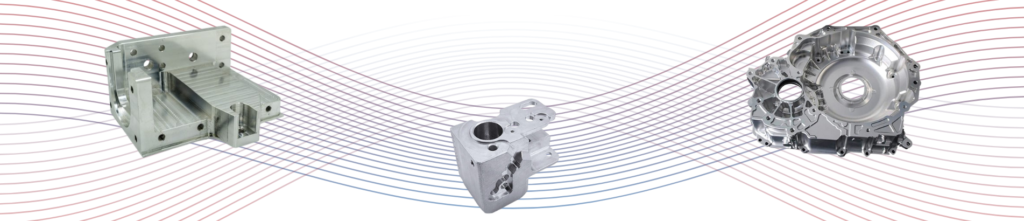
At Kesu, we provide reliable and cost-effective CNC milling solutions to enhance your production across diverse industries. With advanced 3-axis, 4-axis, and 5-axis CNC machines, we can handle complex geometries with exceptional precision, achieving tolerances as tight as ±0.005mm. Our expertise spans a wide range of materials, including metals, plastics, and composites, ensuring versatility and quality. With quick turnaround times and top-notch service, we are ready to elevate your manufacturing process. Contact Kesu today to experience precision and efficiency like never before!
Start A New CNC Quote
STEP | STP | SLDPRT | IPT | PRT | SAT files
All uploads are secure and confidential.
High Quality Rapid CNC Milling Service
With our extensive array of advanced machinery, Kesu is a leading CNC machining service provider, committed to meeting your exact manufacturing needs. Our state-of-the-art equipment includes 3-axis, 4-axis, 3+2 axis, 5-axis, and 6-axis CNC machines, delivering unparalleled precision and efficiency. From intricate components to large-scale parts, our 3-axis machines can handle dimensions up to 1500 x 800mm, while our multi-axis systems offer flexible capabilities for complex projects. Additionally, our lathe machines, CNC lathes, and lathe-mill combinations provide exceptional versatility and accuracy. For small, highly detailed components, our CNC Swiss-type automatic lathes deliver outstanding results. Count on Kesu to provide superior quality, precision, and reliability for all your machining requirements.
Custom CNC Milling Materials
Custom CNC Milling Materials
Aluminum |
Bronze/Brass |
Copper |
Plastics |
Steel / Titanium / Zinc | Aluminum 6061, 6061-T6 | Brass C27400 | Copper C101(T2) | ABS | Alloy Steel 4130, 4140 |
|---|---|---|---|---|
Aluminum 2024 | Brass C28000 | Copper C103(T1) | PC | ASTM A36 |
Aluminum 5052 | Brass C36000 | Copper C103(TU2) | PMMA (Acrylic) | Stainless Steel 15-5, 17-4, 18-8, 303 |
Aluminum 5083 | Tin Bronze | Copper C110(TU0) | POM | Stainless Steel 303, 304, 316/316L |
Aluminum 6063 | Beryllium Copper | PA (Nylon) | Stainless Steel 416, 420 | |
Aluminum 6082 | PE | Steel, Low Carbon | ||
Aluminum 7075, 7075-T6 | PEEK | Steel A36 | ||
Aluminum ADC12 (A380) | PP | Titanium Grade 2, Titanium 6Al-4V, Zinc Sheet Alloy 500 | ||
HIPS | ||||
LDPE | ||||
PBT | ||||
PPA |
Custom Sourced Materials
We offer a wide range of custom CNC milled parts in both metal and plastic, with instant online quoting options available. If your desired material is not listed, simply select “Other” from the material drop-down menu on the quote page. After specifying features, tolerances, inspection requirements, and quantities, submit your request for a detailed review by our expert engineering team.

Ready to get started on your CNC milling quote?
ADVANTAGES
Advantages of CNC Milling
CNC milling offers numerous advantages for manufacturing:
- High Precision and Consistency :CNC milling delivers exceptional accuracy and repeatability, ensuring products meet strict tolerance requirements and maintain consistent quality.
- Capability : It enables the machining of intricate designs and complex shapes that are difficult or impossible to achieve manually.
- Wide Material Compatibility :CNC milling supports a variety of materials, including metals, plastics, and composites, making it suitable for diverse industry applications.
- Efficient and Automated Production: Automation reduces machining time and labor costs, significantly improving production efficiency, especially for batch manufacturing.
- Rapid Prototyping: CNC milling facilitates quick production of prototypes, allowing for product testing and design optimization to accelerate time-to-market.
- Minimization of Human Error :Programmed controls minimize errors caused by manual operation, enhancing the consistency and reliability of finished parts.
APPLICATIONS
Applications of CNC Milling
CNC milling is widely used to produce a variety of precision parts and components:
- Aerospace Industry: Manufacturing high-precision components like turbine blades, airframes, and engine parts.
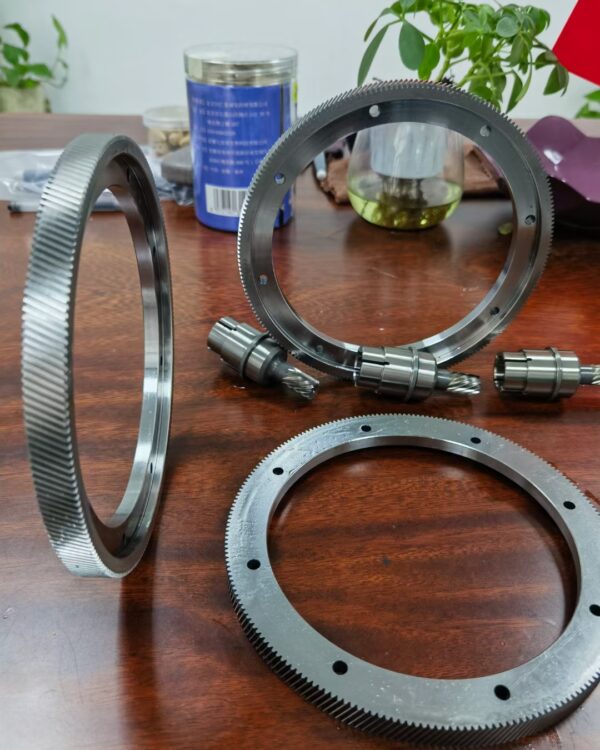
- Automotive Industry: Producing gears, engine components, and custom parts for vehicles with precision.
- Medical Industry: Creating surgical tools, implants, and prosthetics with tight tolerances.
- Electronics Industry :Fabricating precise housings, heat sinks, and circuit board prototypes.
- Prototyping and Product :Development Enabling rapid prototyping for testing and refining product designs.
- Industrial Equipment: Manufacturing tools, machinery parts, and heavy-duty components.
- Tool and Die Manufacturing :CNC milling creates molds, dies, and tools with high precision, which are essential for injection molding, stamping, and manufacturing processes.
CNC Milling Tolerances & Standards
Description |
General Tolerance or Standard |
Details |
|---|---|---|
Maximum Part Size | Milled parts up to 80” x 48” x 24” (2,032 x 1,219 x 610 mm) | Large-scale CNC machining capabilities, suitable for sizable components across multiple axes. |
Distance Dimensions | +/- 0.005” for features of size (Length, width, height, diameter) and location (position, concentricity, symmetry) | Precision tolerances maintained for both part dimensions and geometric locations. |
Orientation and Form Dimensions | 0-12" +/- 0.005", Angularity tolerance within 1/2 degree. Consult for 24” and beyond. | Ensures consistent angularity and shape precision for smaller parts; consultation for large parts. |
Precision Tolerances | Sub +/- 0.001” tolerances, per drawing specifications and GD&T callouts | Tight tolerances achievable through advanced machining and inspection processes. |
Minimum Feature Size | 0.020” (0.50 mm), depending on part geometry and material | Capability to machine fine, intricate details; the feasibility varies based on complexity. |
Threads and Tapped Holes | Standard and custom threads can be accommodated; custom threads require manual quote review | Includes machining of standard sizes (metric and imperial) and specialized threads upon request. |
Surface Finish | Standard: As-machined (125 Ra or better); additional options available upon request | Custom surface finishes like polishing, anodizing, powder coating, and bead blasting can be specified. |
Edge Condition | Default: Sharp edges are broken and deburred. Critical sharp edges must be specified on prints. | Prevents handling hazards with deburring; precise edge treatments available when required. |
What is CNC Milling?
The Basics Of CNC Mills
CNC mills are automated cutting machines, shaping materials with precision via computer-controlled rotating spindles. Essential in manufacturing, they handle complex tasks across diverse industries, machining metals, plastics, and more. Offering efficiency, accuracy, and repeatability, these mills revolutionize production with intricate part creation.
How CNC Milling Works
CNC milling uses a computer to guide a spinning cutter and precisely remove material from a block, like sculpting with automation. First, a design is created on a computer using special software. This design is then translated into a set of instructions, telling the milling machine exactly where and how to move the cutting tool. The raw material, called the workpiece, is firmly held in place on the milling machine’s table.
The computer then directs the milling machine, controlling the speed of the spinning cutter and its movement along different axes. As the cutter moves according to the instructions, it shaves away tiny bits of material from the workpiece. This process is repeated until the desired shape is achieved. CNC milling is incredibly accurate, allowing for the creation of complex shapes and consistent parts, making it essential for manufacturing various products.
Types of CNC Mills
CNC mills with 3-axis capabilities move along three linear planes (X, Y, and Z), enabling them to create complex shapes and cuts on surfaces.
Four-axis CNC milling adds a rotational axis (A, B, or C) to the three linear axes (X, Y, Z), enabling the machining of more complex geometries such as cylinders and spheres.
A 5-axis CNC mill adds two rotary axes (A-axis and B-axis) to the standard three linear axes (X, Y, and Z), enabling the machining of highly complex 3D shapes and angles.
Other Benefits Of CNC Mill Machining Processes
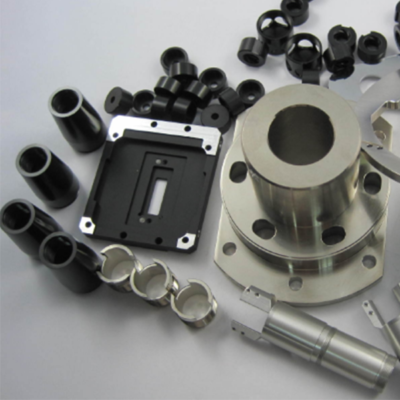
CNC mill machining offers numerous benefits beyond automation and precision. It achieves superior surface finishes, tighter tolerances, and intricate geometries, reducing the need for extra steps. Consistent repeatability minimizes errors and waste, leading to faster production, lower labor costs, and the ability to machine diverse materials. Its flexibility facilitates rapid prototyping and seamless integration into larger manufacturing systems.
Why Choose Kesu for Custom Milling?

Quality Assurance
Kesu employ rigorous quality control measures throughout the milling process, ensuring that each part meets or exceeds your expectations. Advanced inspection equipment further guarantees accuracy.

Competitive Pricing
Without sacrificing quality, Kesu offers competitive pricing for our custom services. We strive to provide cost-effective solutions, making advanced manufacturing accessible to businesses of all sizes.

Exceptional Customer Service
Kesu‘s dedicated customer support team is always ready to assist. From initial inquiries to project completion, we maintain open communication, ensuring a seamless and satisfying experience.