
In high-precision manufacturing and aerospace power systems, the challenge in impeller machining is not just its free-form surface topology of its geometry but also the multi-axis integration of tool path control and multifarious alteration of channel parameters. Especially in multi-batch, small-batch, and high-consistency manufacturing requirements, traditional G-code programs are prone to problems such as repetitive programming, costly debugging, and poor fault tolerance due to the lack of enough logical control and parameter reuse functions.
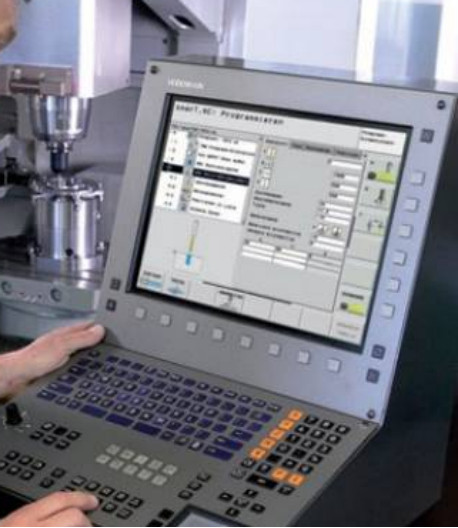
I have experienced this pain point in several real-world projects. For example, in an impeller project, the sizes were only changed between batches, yet due to not being able to reuse the program, programming man-hours and error rates were still very high. But once G-code macro programs were implemented, this was a big improvement. Relying on their logical structure benefits, macro programs have upgraded machining programs from “mechanical operations” to “intelligent instructions,” not only greatly reducing the programming cycle but also promoting throughput stability and production efficiency.
What is a G-Code Macro Program?
A G-code macro program is a higher-level CNC program that involves variables, logical thought, and repetitive control functions, used to implement advanced, flexible, or automatic CNC machining operations. It is like providing “programming language” capability to G-codes, making CNC programs no longer a list of rigid instructions but a “thinking” program.
You might consider a G-code macro program as an “auto-script for CNC machines,” which may automatically execute a series of operations on the basis of multiple variables, such as repetitive machining, automatic tool change, and measurement compensation.
Principles and Core Functions of G-Code Macro Programs
G-code macro programs (Custom Macro) are a form of extension of the parametric CNC language with programming logic, whose operations far exceed traditional linear G-code instructions. Through the use of facilities such as variables, logical control, loop structures, and subroutine calls, macro programs give CNC machining a high degree of flexibility and intelligence. Applied widely in well-known CNC systems such as FANUC (Macro B), Siemens (Cycle), and Heidenhain, they have become significant support tools for complex path control, automatic template construction, and intelligent machining processes.
Variable Control: The Foundation of Parametric Machining
Macro programs define and call machining parameters (e.g., hole pitch, depth, diameter, angle, etc.) using variables with a leading # (e.g., #1, #2, etc.). The variable approach allows for the easy adjustment and reuse of dimensions in machining and makes programs highly versatile and convenient. For example, when machining impeller pieces, a set of variables may be defined to control the dimensional parameters of multi-stage blades, achieving efficient compatibility of “one program for multiple workpieces.”
Logical Judgment and Process Jump: Endowing Programs with Decision-Making Abilities
Macro programs can make different judgments and process jumps based on on-site conditions using logical forms like IF.THEN and GOTO. For instance, automatic shutdown of machining on finding deviation of workpiece tolerance, or making different path strategies at some positions. By this ability of judgment, programs not only operate but also “think,” greatly enhancing the intelligence and security of the machining process, especially for conditional machining of multi-surface and multi-state workpieces.
Loop Control Structure: Improving Repetitive Machining Efficiency
With the use of WHILE.DO or FOR.NEXT syntax, macro programs are able to easily execute repeated machining operations such as multi-hole and multi-segment processing. Loop structures are more adaptable and have less maintenance cost compared to the traditional approach of manually copying and pasting G-codes. For example, in processing a centrifugal impeller with periodic flow channel structures, macro loops can repeat path segments automatically to make program length simpler and readable.
Subroutine Call Mechanism: Modular Management of Machining Units
The G65/G66 commands allow programmers to encapsulate common machining modules into subroutines and invoke them with parameter passing. Modular programming by this means significantly improves program structure readability and maintainability. In case different parts of an impeller have similar finishing and roughing operations, a fixed standard macro subroutine needs only to be created, and it can be invoked in multiple main programs, thus reducing repetitive programming effort and improving standardization.
System Variables and Real-Time Interaction: Supporting Intelligent Sensing and Compensation
Integrated system variables (e.g., #5021 for the X-axis coordinate) can be invoked by G-code macro programs, enabling real-time monitoring and adjustment of machining strategy. With on-machine probes and metrology macros, they can sense the machining status in real time, judge allowance, implement automatic tool compensation, or retool. This “machining while sensing” mechanism can provide strong support to impeller part high-precision machining and is specifically suitable for closed-loop control, automatic compensation, and adaptive machining.
2. Typical Application Scenarios of Macro Programs in Impeller Machining
Impeller parts are physically appropriate for macro programs’ application for improving machining efficiency due to having numerous channels, periodicity of structure being strong, and clear symmetry. The following are four general application situations abstracted from numerous practical cases:
Path Iteration of Periodic Channels
Consider a general eight-blade impeller, where the machining path of each channel is virtually the same, only with different rotation angles. By using a WHILE loop structure with variable control, macro programs can realize 8-time angle offset automatic machining by one-time defining channels, simplifying program structure a lot.
Multi-Tool Sequence and Logical Switching
Tool calling is generally accomplished through roughing, semi-finishing, finishing, and even post-polishing with frequent tool changes. Macro programs may alter cutting parameters and tool approach modes automatically according to tool numbers and machining status variables to achieve intelligent tool calling.
Adaptive Correction of Machining Allowances
Together with on-machine probes, after finishing after roughing, measure the residual allowance of each channel, write them into the variable array, and then subsequent finishing program cuts accordingly to realize “allowance-based machining,” reducing cutting load and enhancing finish and dimensional accuracy.
Interference and Tool Axis Posture Control
In five-axis linkage, to prevent tool-workpiece/fixture interference, macro programs may determine whether the current posture is beyond the safe angle, and alter the path or insert buffer segments in the middle if necessary to ensure machining safety.
Project Case: Optimization of Five-Axis Impeller Machining Based on Macro Programs
Background and Challenges
In an air titan alloy impeller batch milling project, the sizes of the products were slightly different but generally similar structures. The first technique used was the standard G-code independent programming, which required around 3.5 hours of programming for each model with over 15,000 lines, high update complexity, and repeated errors.
Macro Program Reconstruction Scheme
With the Custom Macro B function of the FANUC system, program structure was re-established into a modular form of “main entry + multiple subroutines,” with main modules as follows:
- O1000: Main macro entry
- Receives input parameters (diameter, number of channels, angle) and initializes global variables;
- O1010: Channel roughing
- Controls channel rotation and machining path iteration;
- O1020: Finishing path
- Dynamically adjusts finishing depth according to allowances;
- O1030: Tool judgment and calling logic
- Manages multi-tool switching;
- O1040: Posture control module
- Prevents five-axis overcutting, tool jamming, and other anomalies.
Program Fragment Example:
gcode
O1000 (Main Macro – Machining Entry)
#100 = #1 (Input diameter)
#101 = #2 (Number of channels)
#102 = 360 / #101 (Calculate angle between each blade)N10 G65 P1010 A[#100] B[#102] C[#101] (Call roughing)N20 G65 P1020 A[#100] B[#102] C[#101] (Call finishing)M30
gcode
O1010 (Channel Roughing Subroutine)
#200 = 0WHILE [#200 LT #3] DO1
G0 A[#200 * #2] (Adjust rotation axis angle)
G1 X…Y…Z… (Machining path)
#200 = #200 + 1END1M99
Implementation Results Comparison:
| Project Item | Before Optimization | After Using Macro Program |
| Single-model programming time | 3.5 hours | 0.5 hours |
| Number of program lines | >15,000 lines | <3,000 lines |
| Frequency of repetitive machining errors | 2–3 times/batch | Basically 0 |
| Model changeover time | >1 hour | <10 minutes |
| Overall production line efficiency improvement | —— | Approximately 20% increase |
This case fully verifies the efficiency and maintainability of macro programs in complex path machining.
Extended Applications: Practices of Macro Programs in Other Curved Surface Parts
I once also used macro programs to solve a machining bottleneck case of a fine turning example of a 1/4 elliptical curved surface. The product required a hardness level of 60HRC and surface finish of 0.8. The original process was rough turning → quenching → grinding, but owing to poor point density in the program created by MasterCAM, dressing of the grinding wheel was problematic and quality was poor in the grinding stage. Shifting to hard turning and applying macro programs to compute X-Z points by the elliptical formula and fitting the curved surface with straight pieces greatly enhanced the finish, eliminated the grinding issue, and reduced the process time.
This experience also taught me that macro programs are invaluable programming resources when there is a need for accurate fitting of intricate curves, enhancing machine tool computation efficiency, and optimizing process paths.
Conclusion
Macro programs in CNC programming are like “controlling the blade with inner energy” for martial art masters—not only increasing efficiency but also being an (upgrade) in mentality. With variables and logic control, they provide programs “behavior patterns,” unleashing more productivity in complex, repeated, and variable machining situations. Especially in free-form surface parts like impellers, the advantages of macro programs are particularly precious. Prospects, with digital manufacturing and AI technology intertwined, macro programs will play an increasingly central role in intelligent manufacturing, serving as the core passage for “human-machine collaboration” to evolve towards higher dimensions.


