
Copper is a naturally colored metal. Copper can form alloys with other elements to produce a number of differing alloys, used extensively in numerous industries. That’s why we find ourselves questioning uses and compositions of different copper alloys. The following table enables you to simply see at a glance the difference between copper, bronze, and brass.
The Definition of Copper
Copper is a chemical element. Its atomic number is 29, and the chemical symbol for it is Cu. It is a transition metal. Copper is used extensively in the manufacture of electrical wires. Typically, the electrical wires used currently are pure copper since its electrical conductivity and thermal conductivity come only next to silver, but it is much cheaper than silver.

Common Copper and Copper Alloys
(1)Pure Copper
Pure copper is a rose-red metal, which when an oxide film of copper is deposited upon its surface, turns purple. Industrial pure copper, therefore, is most often termed as red copper or electrolytic copper. It has a density ranging from 8 to 9 g/cm³, and its melting point is 1083°C. Pure copper has perfect electrical conductivity and is, in general, used in manufacturing electric wire, cable, carbon brush, etc.; and shows proper thermal conductivity too, and is used extensively in manufacturing magnetic devices and magnetic measuring tools to resist magnetic interference such as compasses, aircraft instrumentation, etc.; is very plastically superior with ease in hot pressings as well as in cold work; can also be converted into copper product forms such as tube, rod, wire, strip, sheet, plate, foil, etc. Pure copper products can be divided into two types: processed products and smelted products.
Grades of Smelted Copper
| Grade | Code | Usage |
| Copper No.1, Copper No.2 | Cu-1、Cu-2 | Sufficient for electrolytic copper, used to melt and cast copper wire ingots, copper ingots, copper rods, and casting alloys. Sufficient for copper wire ingots for electrical engineering, used to roll conductive wire materials, copper rods, and profiles. |
Processed Copper
| Composition | Grade | Code | Usage |
| Pure Copper | Copper No.1, Copper No.2, Copper No.3 | T1、 T2、T3 | 1. For conductivity and high – purity alloys. 2. For conductivity. 3. For general use. |
| Oxygen – Free Copper | Oxygen – Free Copper No.1, Oxygen – Free Copper No.2 | TU1、TU2 | Used for vacuum electronic devices and instruments. |
| Phosphorus – Deoxidized Copper | Phosphorus – Deoxidized Copper No.1, Phosphorus – Deoxidized Copper No.2 | TP1、TP2 | Used for welding, etc. |
| Silver – Copper | 0.1 Silver – Copper | TAg0.1 | / |
(2) Brass
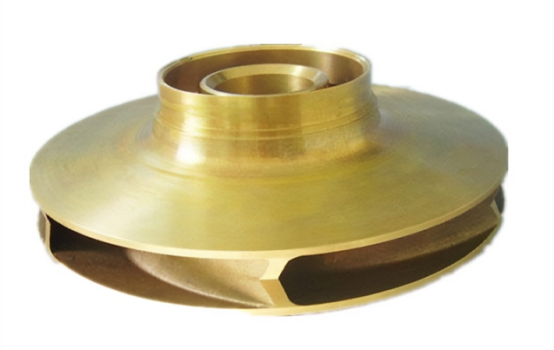
Brass is a zinc-copper alloy. The most simple brass is a binary copper-zinc alloy, referred to as simple brass or common brass. Varying the content of zinc in brass leads to the production of brass with different mechanical properties. The higher the content of zinc in brass, the higher is its strength, and slightly lower plasticity. In industry, the zinc content in the used brass is up to 45%. If the content of zinc is higher, brittleness will be developed, which will degrade the properties of the alloy. In a bid to improve some of the qualities of brass, brass with other alloying elements depending on single-element brass is called special brass. Silicon, aluminum, tin, lead, manganese, iron, and nickel, etc., are some of the widely used alloying elements. Adding aluminum to brass can improve the yield strength and corrosion resistance of brass and slightly decrease its plasticity. It is widely used in the manufacture of connecting pipes between the indoor and outdoor units of air conditioners, valves, cartridge cases, musical instruments, etc. Brass containing less than 4% aluminum has good overall properties such as processing and casting. 1% tin added to brass can significantly improve the corrosion resistance of brass to seawater and marine atmosphere, and thus be “naval brass”. Tin can also improve the machining quality of brass. The main reason for adding lead to brass is to improve its machining quality and its wear resistance. Lead has little effect on the strength of brass. Manganese brass possesses good mechanical properties, heat resistance, and corrosion resistance and adding aluminum to manganese brass is also capable of enhancing its properties and obtaining smooth-surfaced castings.
Commonly Processed Brass
| Group | Code |
| Common Brass | H96、H90、H80、H68、H62、H59 |
| Lead Brass | HPb63-3、HPb59-1 |
| Tin Brass | HSn62-1 |
| Arsenic-added Brass | HSn70-1 |
| Aluminum Brass | HAl60-1-1 |
| Iron Brass | HFe59-1-1、HFe58-1-1 |
| Manganese Brass | HMn58-2 |
| Nickel Brass | HNi65-5 |
| Silicon Brass | HSi80-3 |
(3)Bronze
Bronze is the most ancient alloy in history. In the beginning, it referred to a copper-tin alloy. Because of its blue-gray appearance, it got the name bronze. For strengthening the mechanical and technological properties of the alloy, the majority of the bronzes also utilize other alloying elements, i.e., lead, zinc, phosphorus, etc. Because tin is a rare element, a lot of tin-free bronzes are also utilized industrially.
These are not only cheaper but also have the required special properties. Aluminum bronze, beryllium bronze, manganese bronze, and silicon bronze constitute most of the tin-free bronzes. Moreover, ternary or quaternary bronzes involve more complex composition. Today, except brass and white copper (copper-nickel alloy), all copper alloys are called bronze. Tin bronze possesses very good mechanical properties, good corrosion resistance, antifrictional properties, and satisfactory castability and is highly suited for producing bearings, turbine impeller, gears, etc.; it is less overheated and gas sensitive, possesses good weldability, has no ferromagnetism, and has a low shrinkage coefficient. The corrosion resistance of tin bronze in the atmosphere, seawater, fresh water, and steam is higher than that of brass. Aluminum bronze possesses higher mechanical properties, resistance to wear, corrosion resistance, cold resistance, heat resistance, and absence of ferromagnetism than tin bronze. It has good fluidity and no tendency to segregate, and dense castings can be formed. The addition of elements such as iron, nickel, and manganese in aluminum bronze still further increases the above properties of the alloy.
Commonly Processed Bronze
| Group | Code |
| Tin Bronze | QSn4-3、QSn4-4-2.5、QSn6.5-0.1、QSn6.5-0.4 |
| Aluminum Bronze | QA15、QA17、QA19-2、QA19-4、QA110-3-1.5 |
| Manganese Bronze | QMn1.5、QMn5 |
| Silicon Bronze | QSi1-3、QSi3-1 |
| Beryllium Bronze | QBe2 |
Differences between Brass and Bronze
I. Different Definitions
Common brass is a two-component alloy of zinc and copper. Due to its good plasticity, it can be utilized to make plates, rods, wires, tubes, and deep-drawn parts, such as condenser tubes, radiator tubes, and mechanical and electrical parts, etc. Brass containing an average of 62% and 59% copper can also be cast, which is known as cast brass.
Bronze originally referred to a copper-tin alloy, but in industry, an alloy of copper having aluminum, silicon, lead, beryllium, and manganese, etc. is commonly known as bronze as well. So, in fact, bronze encompasses tin bronze, aluminum bronze, aluminum bronze, beryllium bronze, silicon bronze, lead bronze, etc. Bronze is then divided into two: pressure processing bronze and cast bronze.
II. Different Compositions
Tin bronze is an alloy of copper and tin, where copper serves as the main alloying component. Industrial tin bronze contains typically 3% to 14% tin. Cold working can be applied to tin bronze with less than 5% of tin; hot working for tin bronze with 5% to 7% of tin; and for tin bronze with more than 10% of tin, casting can be applied. Special brass, in an attempt to obtain higher strength, corrosion resistance, and good casting properties, adds elements such as aluminum, silicon, manganese, lead, and tin to the copper-zinc alloy to form special brass. Similar to lead brass, tin brass, aluminum brass, silicon brass, manganese brass, etc.
III. Main Properties
Common brass is a two-element alloy of copper and zinc, and its zinc content is highly diverse. Therefore, its structure at room temperature also varies significantly. Based on the Cu-Zn binary phase diagram, there are three types of room-temperature structures of brass: brass with less than 35% zinc content, whose room-temperature microscopic structure consists of a one-phase α solid solution, is called α brass; brass whose zinc content ranges from 36% to 46%, whose room-temperature microscopic structure consists of (α + β) two phases, is called (α + β) brass (two-phase brass); brass whose zinc content ranges from above 46% to 50%, whose room-temperature microscopic structure contains only the β phase, is called β brass.
Conclusion
Copper has numerous ways of classification. From its natural form of existence to various stages of production processes, and then to the difference in alloy composition and product shape, all show the diversity and wide application of copper. Copper and copper alloys play an important role in numerous fields and are a major material foundation for promoting social progress and development.


