
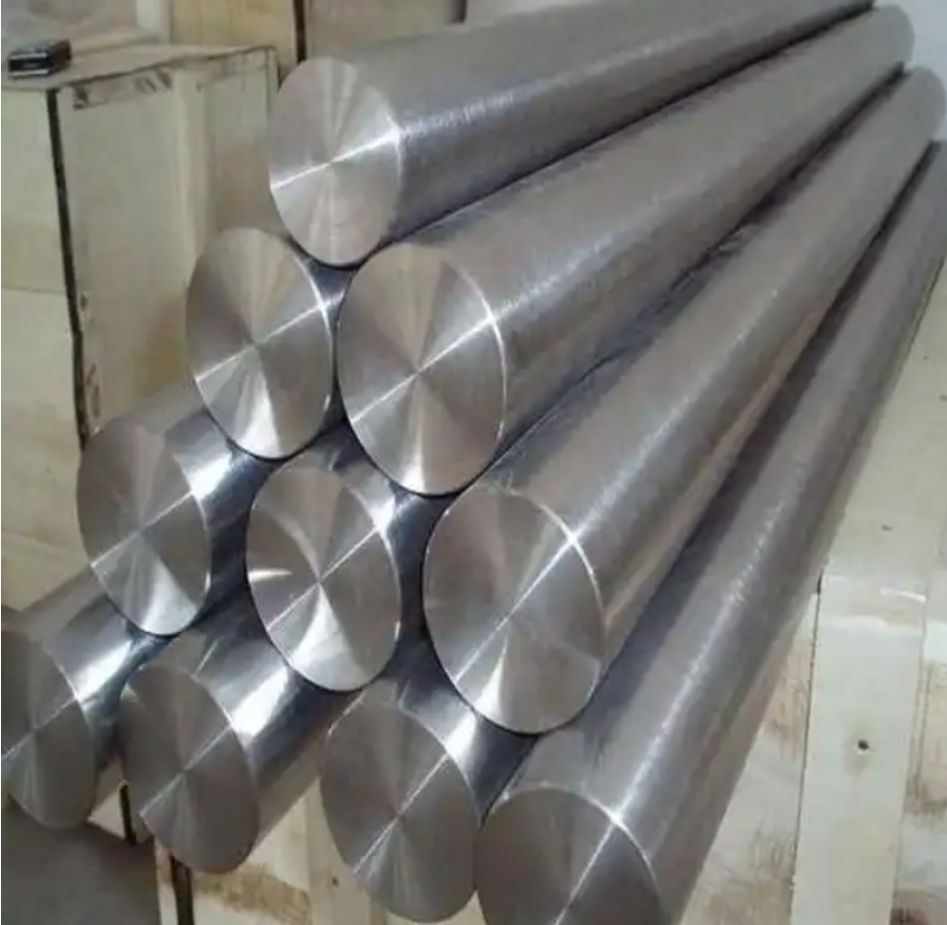
In the harsh working conditions of the high corrosion, high temperature, and high load chemical industry, pump and compressor impellers are subjected to very harsh working conditions. Traditional stainless steel or general alloy materials can fail to meet the long-term working requirements of such harsh conditions. Hastelloy, with better corrosion resistance, mechanical properties, and good processability, has exhibited significant advantages in manufacturing core components of large equipment, such as impellers. This article elaborates on the application situation and trend of Hastelloy impellers in the chemical industry thoroughly through the synthesis of material classification, performance characteristics, and design & processing key points.
Introduction
The premium and fine nature of the chemical industry have resulted in increasingly complex and variable media composition, which has created corrosive conditions a core issue in equipment design. Being a fundamental component of pump equipment, the corrosion resistance of impellers plays a direct role in influencing the reliability and safety of system operation. Hastelloy, a nickel-based advanced alloy material, has emerged as a more and more important material choice for chemical machinery, especially in the design of impellers, due to its broad range of corrosion resistance and temperature mechanical stability.
Engineering Demands of Chemical Working Conditions on Impeller Materials
Based on my own experience as an engineer, the most frequent corrosive media include hydrochloric acid, sulfuric acid, phosphoric acid, chloride solutions, and organic acid mixtures. These media are not only highly corrosive but tend to accelerate material degradation under high pressure and temperature. Particularly in high-speed rotating moving parts, the corrosion-mechanical loading interaction is the dominant impeller failure cause. Systematic thinking leads me to believe that an ideal impeller material should simultaneously possess the following properties: wide-spectrum corrosion resistance, heat strength, stress corrosion cracking resistance, good workability, and stable long-term serviceability — qualities that (exactly) constitute the required competitiveness of the Hastelloy series in the material world.
Overview of Hastelloy Materials
Hastelloy is a series of corrosion-resistant nickel-based alloys manufactured by Haynes International, widely used on chemical equipment. Depending on their compositional features, they can be broadly categorized into the following three types:
| Type | Representative Grades | Compositional Characteristics | Corrosion-Resistant Environments |
| Ni-Mo Series | B-2, B-3 | Outstanding resistance to hydrochloric acid | Non-oxidizing acids (hydrochloric acid, acetic acid, etc.) |
| Ni-Cr-Mo Series | C-22, C-276, C-4 | Broad-spectrum corrosion resistance, suitable for oxidizing/reducing media | Various strongly corrosive mixed media |
| Ni-Cr-Fe-Mo-Cu Series | G-30, G-35 | Stable in hot phosphoric acid, wet chlorine, and seawater | High-temperature phosphoric/sulfuric acids, organic acids, etc. |
Analysis of Performance Advantages of Hastelloy Impellers
Engineers are advantaged by Hastelloy impellers in some structural performance areas. To start with, their (excellent) corrosion resistance endows them with the capability to maintain material integrity in highly acidic and chlorine-bearing conditions, with significant reduction of abrupt failure owing to local corrosion, crevice corrosion, and pitting. Second, they have good mechanical properties at elevated temperatures: even at working temperatures of 400–600°C, they have good tensile strength and fatigue life, providing structural safety guarantees for high-temperature transportation operations. Furthermore, while their superior formability is not as easy to achieve as in stainless steel, high-precision production of complex impeller geometries can be fully achieved by reasonably optimizing heat treatment process and rationally selecting tool materials. Coupling my experience, Hastelloy is suitable in applications that possess both accurate structures as well as multi-medium corrosion protection, especially in applications with stringent demands for service life and long-term maintenance costs, where it becomes economical.
Engineering Design and Manufacturing Practices
Engineers need to have a comprehensive consideration of the influence of material properties on structural design, welding operations, and processing techniques when designing Hastelloy impellers. The high strength of the material makes it ideal for thinning walls with a factor of safety, thus decreasing mass overall and energy consumption. As far as welding is concerned, I suggest applying TIG or plasma welding processes and tightly controlling pre-weld cleaning and interlayer temperature to avoid intergranular carbonization or heat cracks. Moreover, alloys like C-276 must be solution annealed after welding in order to enhance their intergranular corrosion resistance. During processing, before the three characteristics of Hastelloy—”hard, tough, and sticky”coated cemented carbide cutting tools are used, low-speed and small-feed techniques and sufficient cooling must be used. Personally, I prefer the use of high-rigidity machine tools and correct pre-annealing methods in an effort to enhance surface quality and restrict tool wear. Standards-wise, extensive reference must be made to material and manufacturing specifications such as ASTM B575 and ASME SB-622 in order to satisfy design as well as usage standards.
Industry Application Cases and Case Analysis
In one of the good chemical projects that I was a part of, the original 316L stainless steel impeller had a life of less than six months due to excessive hydrochloric acid corrosion, resulting not just in frequent stoppages but also in exorbitant maintenance costs. With technological advancements, a C-276 integral cast impeller was selected and combined with special repair welding technology. The equipment operated more than three years straight without visible corrosion, with steady working efficiency, effectively improving working reliability and maintenance-operation economy. The same uses are ion-exchange membrane electrolysis circulating pumps in chlor-alkali process, high-temperature phosphoric acid medium pumps in the process of phosphoric fertilizer, and slurry circulating pumps in flue gas desulfurization plants. The stable performance of Hastelloy under such harsh working conditions fully attests to its engineering feasibility and long-term value in chemical equipment core components.
Material Development Trends and Technical Outlook
In my view, with the strengthening of green process and intelligent manufacturing ideas, future technological development directions of Hastelloy will be focused on three aspects:
First, alloy optimization and development of new models.
For example, C-22HS further improves yield strength while maintaining broad-spectrum corrosion resistance, making it suitable for high-pressure environments.
Second, in-depth integration of additive manufacturing technologies
to address the limitations of traditional machining in processing complex fluid structures.
Third, composite structures and functional integration.
By collaborating with materials such as ceramics and carbon fibers, new impeller structures with both light weight and high corrosion resistance will be developed.
In addition, the entire life-cycle control of materials and forecasting of service behavior will also be key future trends of materials engineering to help companies achieve the win-win goal of “reliable operation + intelligent maintenance.“
Conclusion
Generally speaking, Hastelloy has been a favored material for critical impeller components in the chemical industry due to its excellent corrosion resistance, acceptable thermal stability, and workability. In practical engineering, material selection is proposed to be carried out based on the specific corrosion characteristics of the medium and equipment operating conditions, taking complete note of economy, production operations, and subsequent maintenance procedures, selectively choosing different grades such as C-22 and C-276. Simultaneously, improve welding quality control and heat treatment operations in the supply chain to ensure full exploitation of material characteristics.


