
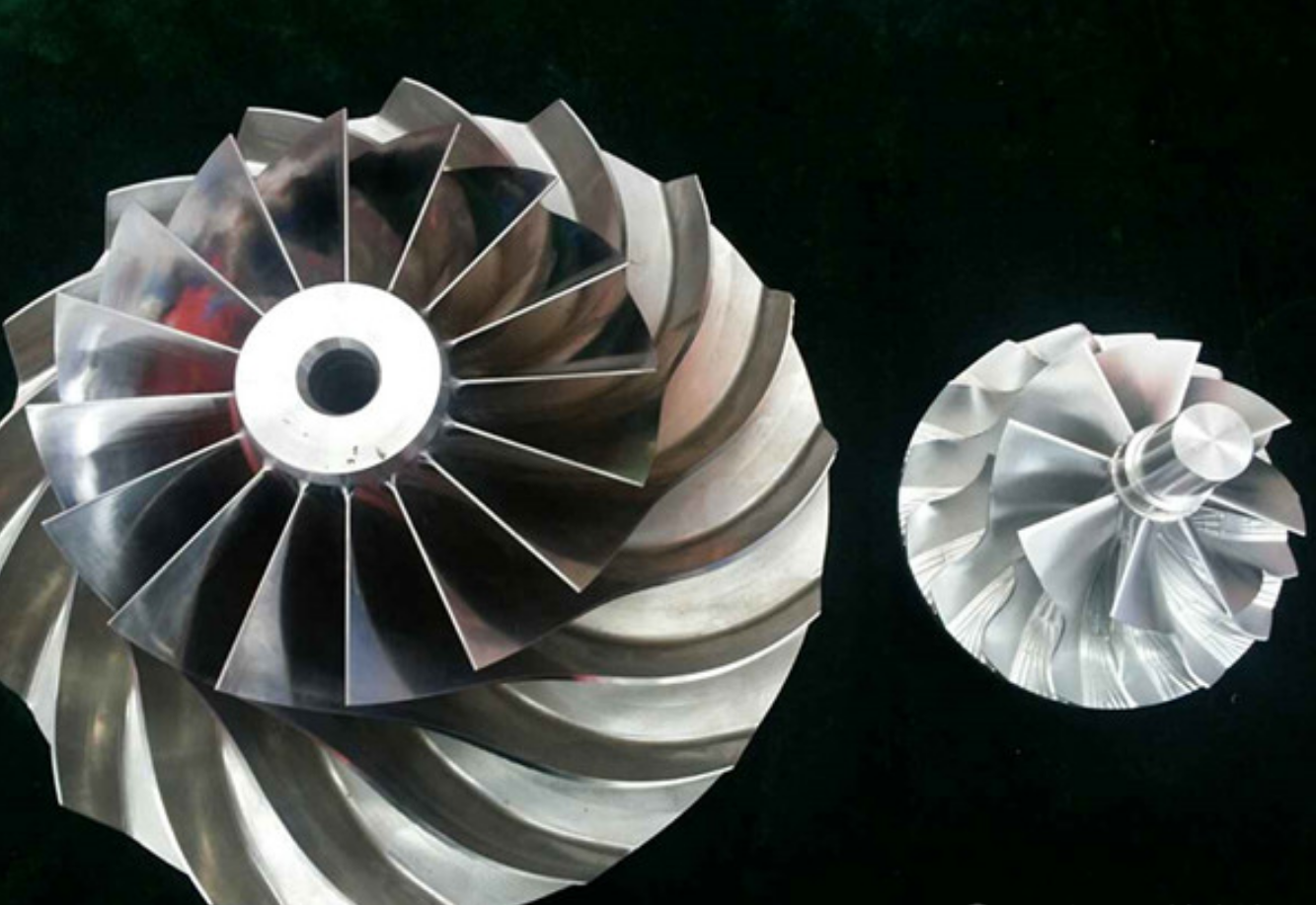
Titanium alloys increasingly are an essential component material choice for manufacturing impellers in high-end equipment manufacturing due to their excellent comprehensive properties. From the perspective of engineering practice, coupled with my own practice in equipment selection and material conversion, this article fully weighs the performance advantages and existing disadvantages of titanium alloy impellers in engineering applications and provides useful material selection references for relevant designers and operation-maintenance engineers.
Introduction
As the most important member of fluid machinery, material performance of impellers has a close relationship with the efficiency, stability, and service life of the overall machine. Based on the increasing demands for corrosion resistance, strength-to-weight ratio, and durability of industrial machinery, titanium alloys, as a result of their unique material properties, have expanded their applications in high-tech pumps, compressors, aero-engines, marine equipment, and other fields step by step. As an engineering practitioner, I have contacted and examined the use effects of titanium alloy impellers in a number of projects based on seawater medium, high-pressure and high-temperature conditions, and strong corrosion systems, and have a deep understanding of their properties.
Performance Advantages of Titanium Alloy Impellers
The most significant advantage of titanium alloys (e.g., Ti-6Al-4V) is their extremely high specific strength (the strength to density ratio) which enables tremendous weight reduction in component weight with mechanical strength maintained and hence reduced system inertia and response performance. In particular for aero-power or high-speed pump devices, titanium alloy impellers can effectively reduce the possible risk of bearing load and rotation imbalance.
In addition, titanium alloys have excellent corrosion resistance, especially very strong resistance to seawater, chloride ions, and other organic acids, and so are the top priority for seawater desalination, deep-ocean oil drilling, chemical pipeline transport, and other uses. Their thermal stability and oxidation resistance at elevated temperatures are also much better than those of aluminum alloys and some stainless steel alloys, ensuring their structural stability and service life under harsh working conditions.
Another inapproachable advantage is excellent fatigue performance. Under service conditions of high-speed rotation or frequent start-stops, the titanium alloy impellers possess enhanced fatigue crack resistance in comparison with conventional alloys, reducing the chance of crack initiation, therefore extending the service cycle and reducing maintenance frequency.
Main Disadvantages of Titanium Alloy Impellers
Although titanium alloys have great superiority, processing difficulty and utilization cost cannot be ignored. On the one hand, material cost is high, and raw material price is far beyond general materials such as stainless steel and aluminum alloy, thus their popularization in mid-to-low-end application ranges will be limited.
Besides, titanium alloys have low thermal conductivity, high chemical activity, and good work hardening, which are prone to bonding of tools, thermal cracking, surface stress concentration, and other mechanical processing problems. This not only increases the processing cost but also brings more requirements on the processing technology. For example, during a turbine impeller project based on a titanium alloy that I was involved in, we required high-rigidity five-axis machines, coated cutting tools, and low-feed strategies, supported by real-time cooling and shock-absorbing processes to meet the requirements of shape and position accuracy and surface finish.
In addition, titanium alloys are more prone to hydrogen embrittlement and heat corrosion. Under some working conditions that are high-temperature hydrogen-rich or chlorine-bearing, unless surface treatment is processed effectively or appropriate types of alloy are selected, performance degradation is likely to occur. These problems should all be paid special attention in the chemical and aviation industries.
Application Adaptability and Usage Suggestions
Based on the systematic analysis of the mechanical properties, chemical stability, and processing behavior of titanium alloy materials, I am confident that they have significant application advantages in specific working conditions and are capable of being used in the following kinds of high-requirement situations:
Strong corrosive medium environment:
e.g., transfer pumps and deep well pumps in seawater systems with a long-term presence of chloride ions, as well as underwater propulsion equipment in maritime engineering. The very good corrosion resistance of titanium alloys can considerably increase the service life of components;
Lightweight and high specific strength demand equipment:
such as high-load and high-speed operating conditions like turbine compressors in aero-engines and fuel transfer pumps in aerospace propulsion systems, which are extremely demanding on material strength-to-mass ratio
High-temperature and high-frequency thermal cycle working conditions:
typical instances are petrochemical industry compressors transporting high-temperature corrosive media. The Ti alloys exhibit clear benefits in temperature stability and stress corrosion crack resistance;
Long-life and high-reliability key systems:
e.g., the primary pump in nuclear power plant cooling circuits, where the demands are very high for operation stability and failure-free cycles.
But for general uses such as clean water transportation, low-temperature and atmospheric pressure, or cost-saving, I don’t recommend the priority use of titanium alloy impellers. In these situations, stainless steel, bronze, and engineering plastics can generally provide better cost performance.
Conclusion
Titanium alloy impellers possess irreplaceable material advantages in harsh working conditions and high-performance systems. Their excellent strength, low weight, favorable corrosion resistance, and fatigue properties provide them with ample scope for designing fluid machinery. Meanwhile, their cost and processing constraints remind us that when selecting material, we should fully weigh their “use adaptability” and “economic rationality.” As a designer and engineer, I always bear the principle of making the best compromise among some requirements in applications and feasibility and use titanium alloy materials scientifically to seek their best value.


