

As the requirements for processing quality and efficiency for high-tech surface complex parts such as impellers in advanced manufacturing industries like aero-engines, gas turbines, and new energy equipment increase continuously, high-speed CNC machine tool application in impeller machining has been the mainstream mode. In this regard, the accuracy of the machine tool guideway system has become one of the key factors determining the final part forming quality. As the support and guiding system for the spindle and worktable motion, the geometric accuracy, position repeatibility, and dynamic response characteristic of the guideway directly relate to the forming accuracy, surface finish, and batch consistency of the impeller shape.
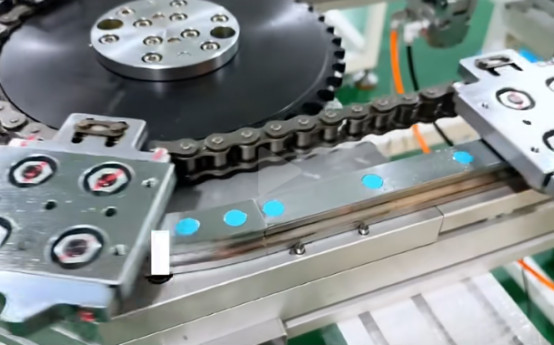
System Stability Requirements for High-Speed Impeller Machining
High-performance manufacturing components like impellers usually possess complex three-dimensional surface shapes, high form and position tolerance requirement, and asymmetric loading conditions, whose quality of processing directly impacts the efficiency of operation and life of the entire machine system. Especially in application fields such as aero-engines, hydraulic systems, fuel pumps, and electric superchargers of new energy vehicles, the precision of forming, uniformity of blade thickness, and dynamic balance performance of impellers all impose extremely high requirements on the machining system.
The CNC machine tools with high speeds have become the main machines for machining the complex structures by their high-speed spindles, high acceleration drive systems, and multi-axis linkage capabilities. But impeller surface machining is extremely sensitive to repeat positioning accuracy, trajectory smoothness, and motion stiffness. Being the foundation carrier of these motion parameters, the guideway system not only determines the lower limit of the machine tool’s geometric accuracy but also the error accumulation capability in dynamic response. In long-term engineering work, I have realized step by step that although tool path planning and five-axis interpolation methods are complicated, if the guideway’s accuracy is not sufficient, then the resultant machining effect will still exhibit problems such as increased contour errors, surface roughness is high, and decreased consistency between parts. Therefore, systematic research on the guideway precision effect has become the basis project to improve the overall cutting capability of the machine.
Analysis of Common Guideway Structures and Accuracy Indicators for High-Speed Machine Tools
As the guideway is the central component of the motion pair in high-precision CNC high-speed machining machines, the guideway structural form and motion characteristics directly influence the dynamic performance, trajectory control precision, and long-term stability of the machine tool. Particularly in five-axis linkage machining of impeller parts, not only does the guideway system implement high-frequency feed and direction changing functions but also ensure multi-station repeat positioning stability under micron-grade precision requirements. Therefore, profound understanding of the application of various guideway structures and their primary accuracy indices is of immense significance to improving impeller machining quality and efficiency.
Analysis of Guideway Types and Their Applicability
Depending on different support and guidance principles, the guideway structures of contemporary high-speed machining machine tools are commonly made up of the following types:
| Type | Characteristic Structure | Advantages and Disadvantages |
| Sliding Guideway | Metal-to-metal sliding surface | Good damping, low cost, but high friction and easy wear |
| Rolling Guideway | Ball/roller bearing | Low friction, high positioning accuracy, suitable for high-speed five-axis systems |
| Hydrostatic Guideway | Oil film support, non-contact | Extremely high accuracy and stability, suitable for ultra-precision machining |
| Hybrid Guideway | Combination of sliding and rolling | Balances rigidity and compliance, suitable for high-load dynamic scenarios |
In high-velocity impeller processing equipment, due to the dual requirements of high acceleration response and repeated positioning in the surface processing, roller-type linear guideways are widely used due to their exceptional dynamic rigidity and low friction. Under harsh process conditions, such as ultra-precision machining of turbine guide vanes of aero-engines or titanium alloy impellers, ultra-low vibration and zero wear characteristics of hydrostatic guideways show inimitable merits.
Key Accuracy Parameters of Guideways
The general accuracy performance of the guideway system is mainly described by the following indicators:
- Straightness:The X/Y/Z direction running deviation has a direct effect on the tool path continuity;
- Repeatability: Coincidence accuracy in multi-station machining, whose effect has a great influence on the impeller symmetry and thickness balance;
- Motion hysteresis and clearance error: Induces micro-vibration, directly expressed as arc deformation of small arc and disordered cutting texture
- Thermal deformation displacement: Thermal drift of guideway caused by high-speed operation will lead to slight track offset, thereby affecting surface quality;
- Friction uniformity and dynamic response speed: Determine the path smoothness during acceleration and deceleration, which is the core foundation of modern multi-axis linkage machining.
Multi-Level Influence Analysis of Guideway Accuracy on Impeller Machining Quality
In the precision machining process of high-performance impeller, as the basic unit of motion of CNC machine tools, the geometric accuracy and dynamic performance of the guideway system determine the path execution capability and the degree of control for repeatability of the entire machining system. Especially in aerospace, energy, and high-tech production industries, the impeller components typically have complex free surfaces, thin-walled structures, and very high symmetry requirements, and the dependence upon guideway precision during the machining process is higher. The quantitative influence of guideway precision on the machining quality of impellers is widely addressed from four levels below.
Influence on Contour Accuracy and 3D Surface Continuity
In five-axis high-speed machining, the tool path is generally always continuously moved along the spatial free surface through interpolation, and any tiny deviance in the guideway motion trajectory will be amplified to the machining surface through the linkage axis structure. For example, if the straightness error of the X-axis guideway is 2μm/300 mm, it will be cast as a “stepped” micro-offset during the five-axis machining stage, manifested as local surface ripples, undulations, and discontinuous fold-line curvature. For aero-engine impellers, this micro-fluctuation will directly reduce aerodynamic efficiency and dynamic balance parameters.
Influence on Surface Roughness and Machining Stability
In some on-site debuggings, I found that after the internal rollers or lubrication system of the rolling guideway becomes unevenly worn, the spindle will show slight stuttering and abrupt vibration in high-speed operation. This unstable trajectory disturbance will frequently be manifested directly as periodic irregularities of the cutting texture, a rise in the Ra value, and local burning and over-cutting, ultimately affecting surface integrity and service life.
Influence on Repeatability and Part Consistency
When repeat positioning precision of guideway is above ±3μm in tool changing or multi-surface machining, it is difficult to ensure the original path in repeated positionings in tool path, thereby resulting in geometric differences between various stations of the same impeller, which are reflected as inconsistency of blade thickness or shape eccentricity, and further affecting assembly performance as well as general machine dynamic balance.
Influence on Dynamic Response and Efficient Cutting Path Execution
The mechanism in contemporary high-speed machine tools must complete acceleration and deceleration control with extremely short response time in executing the spiral contours and fillet scaling paths. In case there are guideway clearances, inadequate preload, and slider hysteresis, it will create machine tool response lag, inability to track precise path, creation of corner errors and speed mutations, and reduce tool life and machining efficiency.
Guideway Accuracy Assurance and System Optimization Strategies
For the guideway system in CNC machining centers, it is one of the most critical links on which depend the machine tool’s motion accuracy, the structural stiffness, and dynamic response performance. Especially in the machining of impeller parts, the guideway system not only has the function of trajectory coordination of multi-axis linkage but also must withstand the dynamic forces of high-speed and heavy-load as well as complex surface routes. Therefore, from guideway selection to mounting precision, and on to long-term operational maintenance practices, systematic considerations must be taken in order to ensure the overall motion system’s geometric stability and machinability consistency.
Guideway Selection Recommendations: Matching Structural Solutions According to Working Conditions
The structure type of the guideway and the preload setting directly influence the rigidity of motion and vibration suppression capability. On various high-speed impeller designs I have worked on, high-rigidity roller-type linear guideways with high preload were used for small high-speed components (e.g., precision titanium alloy impellers Φ80mm) to perfectly improve the repeatability of trajectory and micron-level capability of path control. For large-size titanium alloy impellers with heavy-duty, a hydrostatic guideway system must be selected, whose fluid film support structure can ensure that friction and vibration are effectively reduced while hard cutting, assuring dimensional stability and surface integrity. Further, in multi-axis composite machining centers, the guideway configuration has to also focus on thermal symmetry configuration and path design for load balancing to reduce the impact of thermal drift on accuracy of multi-axis linkage as well as achieve the overall geometric stability of the system.
Guideway Installation and Error Compensation: The Basic Process to Ensure Geometric Consistency
Installation accuracy of the guideway system determines its later dynamic operation reliability. When the base platform is geometrically machined, the base grinding accuracy needs to be kept at ≤5μm/m to ensure that the initial geometric deviation will not affect the guideway straightness. At actual installation, there needs to be a combination of a laser interferometer and straightness measuring instrument to conduct an overall geometric error detection (straightness, parallelism, and perpendicularity) of every guideway axis. These data not only go into mechanical installation and debugging but also are input into the CNC system’s error compensation module to achieve real-time multi-axis linkage path compensation and correction. Especially in five-axis linkage systems, high-precision interpolation between axes can only be achieved through software-hardware integrated calibration to prevent workpiece deformation or trajectory distortion caused by the accumulation of infinitesimal errors.
Daily Operation Maintenance and Periodic Calibration: The Key to Extending Guideway Life and Maintaining Accuracy
The running state of the guideway will lead to wear, thermal fatigue, and micro-displacement with operating time, thus it is necessary to build a systematic maintenance mechanism. According to my long-term equipment operating experience, the straightness of the guideway and wear condition should be checked once for every 5000 hours of operation, combined with the following main maintenance technologies:
- Lubrication system maintenance: Check in time if the automatic lubrication system is clogged, the oil pump has failed, or the oil supply is uneven. Dry friction, especially of high-speed working systems, is typically the main cause of early guideway failure.
- Dust prevention and sealing: Employ the use of metal telescopic shields and magnetic chip scraping devices to prevent intrusion of impurities such as iron chips and dust into the raceway and causing scratches or adhesive wear.
- Thermal deformation monitoring: Use infrared thermal imagers to monitor regularly, capture real-time temperature distribution change of the guideway and base, identify potential thermal deformation tendencies in advance, and respond with path compensation measures or cooling system optimization.
- Periodic error evaluation of the machining platform: Incorporate laser interferometers, ball bars, or reversal linear contrast tests to carry out full-axis validation of the motion accuracy and coordinate coherence of the entire platform to remove system-level trajectory drift from the long-term error buildup.
Briefly speaking, from guideway type selection to assembly calibration and ultimately long-term maintenance, the exact fulfillment of each process is the master key to ensuring the long-term stable operation of the CNC machining system under high-precision and complex path working conditions. Especially for the five-axis machining situations of typical workpieces such as aviation-grade impellers, high-performance turbines, or complex casings, the performance of the guideway system directly determines the quality limit of the final workpiece and the service life of the machine tool.
Conclusion
Through scientific research into guideway accuracy impact in high-speed machine tools, I am further convinced of the role played by guideways as the “accuracy skeleton” in machining of complex parts such as impellers. Guideways not only serve the geometric location function but also, as the major source of the entire machining system’s dynamic response capacity and thermal stability performance, contribute extensively to machining quality, efficiency, and system lifespan. In the future, with the continuous promotion of intelligent manufacturing and digital twin technology, online monitoring and adaptive compensation of guideway accuracy will be the mainstream practice, aiming to realize the true “zero-error trajectory control” and provide a sound technical guarantee for high-precision manufacturing.


