
Being a major rotating core component of high-speed fluid machinery, the geometric precision of impellers is directly related to the balance, transmission efficiency, and service life reliability of the entire machine. While precision machining, the traditional sequential turning-milling process can’t overcome the datum conversion errors caused by successive clampings and, consequently, become the major bottleneck for improving impeller coaxiality.
Introduction
In high-speed machinery such as aero-engines, gas turbines, and electrical propulsion units, impeller coaxiality control is one of the basic parameters that determine vibration level, transmission stability, and service life of the entire machine. Based on my extensive experience of optimizing impeller precision machining processes, I have deeply realized that traditional process routes are prone to problems such as long processing times, superposition of positional errors, and complex tool interference control. Especially for small-batch, variable-type, and thin-walled impellers, repeated clamping has emerged as the main factor controlling coaxiality accuracy.
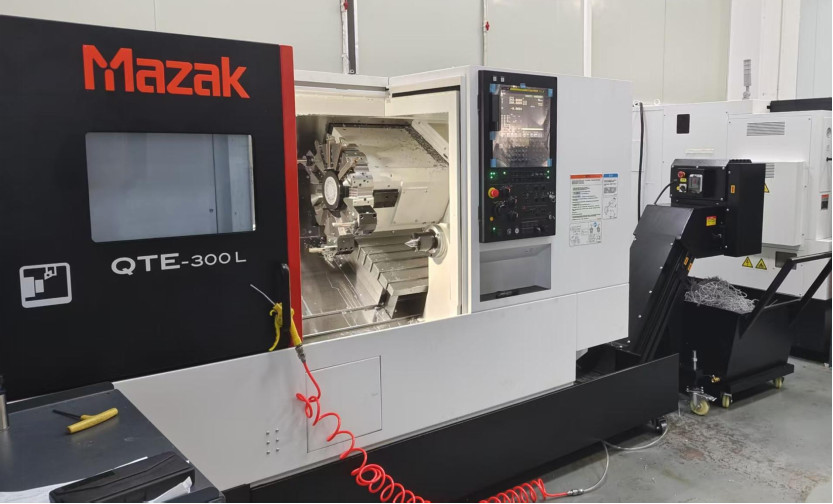
In recent years, with the constant development of turn-mill composite machining machines, composite machine tools with multi-axis linkage and combined cutting functions have transformed the paradigm of high-precision impeller machining. This process path, with the basic idea of “one clamping, full-process completion”, effectively transcends geometric error accumulation in process sequencing, realizes the revolution of conventional serial machining to integrated machining, and sets out a new area for axis consistency control of impeller.
Importance of Impeller Coaxiality Control
Impeller coaxiality control is one of the key technical components of high-performance rotating machines and offers assurance for system running stability, assembly quality, and structural reliability. Especially for high-speed and heavy-load designs, tiny coaxial deviations may cause severe chain reactions. The importance is especially considered from three aspects as follows:
Fundamental Guarantee for Operational Dynamic Balance
The coaxiality between impeller and rotating shaft determines the dynamic balance state of the rotating system directly. If there is a deviation, the mass center of the impeller will move away from the rotation center, resulting in serious centrifugal force unbalance during work. Such a problem is particularly highlighted under high-speed rotation conditions.
Take an example of a high-speed turbopump project I was involved in: due to a single 4 μm coaxiality deviation, the rotor dynamic balance index later exceeded the design upper limit by 3 times, with acute rise in overall machine vibration and by nearly 40% loss of bearing thermal life. This shows that from the manufacturer’s end, having proper control of coaxiality is the primary requirement to ensure low-vibration, low-noise operation and extended service life.
Foundation for Structural Fit and Assembly Accuracy
Impeller structure generally forms a system of precision fits involving elements such as the main shaft, seal ring, and bearing housing. Coaxial consistency in the position datum and contact surface is directly related to assembly efficiency and structural integrity.
When axial eccentricity occurs after that, it not only results in assembly interference or interference fit failure but may also form local wear in the working condition, forming premature leakage channels or clearance accumulation error, reducing the overall efficiency and reliability of the machine. I believe such malfunctions are not only difficult to circumvent during initial assembly but will continue to deteriorate along with maintenance cycles during long-term operation, increasing maintenance costs and failure risk.
Extension of Load-Bearing Stability and Fatigue Life
Good coaxiality ensures symmetrical loading distribution on the connection components and bearings in rotation so that local stress concentration through eccentric loads is avoided. For light rotors, high-speed rotary elements such as hollow impellers and composite impellers, their critical speed is less, and their geometric accuracy tolerance is lesser.
In this situation, turn-mill composite machining technology, through the process advantage of single clamping and full forming, significantly reduces multi-process error aggregation and improves coaxiality control accuracy. In many of my aviation impeller projects, I have applied this process route, achieved successful control of coaxiality to 2 μm, significantly improving overall machine rigidity and dynamic fatigue life.
Principles of Turn-Mill Composite Machining and Its Advantages in Coaxiality Control
Turn-mill compound machining is a highly integrated manufacturing technique combining multiple cutting operations such as turning, milling, drilling, tapping, and boring. Its key feature is to achieve one clamping and end-process processing of workpieces on one identical multi-axis linkage, high-rigidity machine tool base. For complex rotary parts with ultra-high coaxiality requirements (such as high-speed impellers and turbine discs), turn-mill compound technology has evident advantages in error control and machining efficiency.
Elimination of Datum Conversion Errors to Ensure Axis Consistency
In the traditional “turning-milling sequential” machining method, with each clamping comes the occurrence of datum conversion errors, especially for small-tolerance impeller machining, the error has a strong magnifying effect on the final coaxiality.
Use a batch of Φ120 mm aviation impellers that were tested by my team in the past as an example: in the conventional process, because it is necessary to alternate the workpiece between the turning center and milling center, the coaxiality fluctuation is hard to control, with the actual detection fluctuation beyond 0.020 mm. After using turn-mill composite machining, with one clamping and one unified coordinate system management, coaxiality control precision is maintained at 0.008 mm, significantly better than in the conventional mode.
Integration of Processing Flow to Improve Production Beat and Consistency
Through the integration of several processing technologies within a single machine tool platform, turn-mill composite decreases by many times the process conversion time and significantly improves processing beat consistency. The traditional sequential turning-milling machining of a general-purpose impeller is generally around 1.8 hours long, while the composite mode turn-mill reduces the total processing time to around 1.15 hours with more than a 35% increase in efficiency. It also reduces manual intervention and mid-process turnover mistakes drastically, helping to create a constant and automatic flexible production line.
Empowerment of Dynamic Compensation System to Ensure High-Precision Processing Throughout
High-performance turn-mill composite machines are usually equipped with a spindle thermal drift adaptive compensation system, on-machine real-time servo coordinate correction function, and workpiece on-machine probe feedback mechanism, with the ability to have real-time perception and active adjustment of processing errors.
Especially during finishing, this dynamic precise control capability actually prevails over the effects of tool path and thermal deformation really well, again ensuring the consistency between the rotation center of the impeller and the assembly datum axis in processing. I believe that the improvement of this process control capability is the most crucial factor for composite machining technology to excel traditional channels in dealing with complex coaxial structure manufacturing work.
Key Process Factors Affecting Coaxiality Control and Countermeasures
| Factor Category | Description | Countermeasures and Suggestions |
| Workpiece Clamping System | Eccentricity caused by insufficient chuck clamping accuracy and clamping force balance | Adopt flexible hydraulic chucks and automatic centering devices, preset clamping preload distribution |
| Program Path Planning | Frequent process switching and unconsidered tool entry/exit interference | Optimize CAM path strategies, use the logic of “tool axis following the spindle axis” |
| Tool Change Error | Inconsistent tool centering causing contour offset | Adopt online tool measurement and automatic compensation systems to prevent manual clamping errors |
| Machine Tool Thermal Stability | Micro-offset of the spindle caused by concentrated heat sources | Enable the spindle constant temperature circulation cooling system and regularly perform geometric thermal compensation |
| Process Integration Strategy | Interactive interference caused by multi-tasking coordination disorders | Integrated process-programming-simulation design, pre-planned process serial/parallel structure logic |
Typical Case Verification and Application Results
In an aviation compressor impeller project, comparative verification was performed on a Φ120mm double-flow channel structure impeller. The high-precision hydraulic chuck DMG MORI NTX2000 composite machine tool, FANUC 31i system, and GibbsCAM custom module were used to obtain shaft roughing and finishing full-process machining, five-axis linkage milling of flow channels, and one-clamping condition hole drilling of hubs.
Result Analysis:
- Coaxiality Accuracy: Traditional process 0.023mm → Composite process 0.008mm, an improvement of about 65%
- Processing Beat: Original 2.0 hours/piece → Reduced to 1.3 hours/piece, efficiency improved by about 35%
- Scrap Rate Control: From 3% down to 0.5%, effectively removing out-of-tolerance as a result of datum inconsistency
I believe such data not only validate the feasibility of turn-mill composite technology but also demonstrate its engineering virtues in the field of high-precision processing.
Conclusion
Being a basic key component in high-end machinery, aviation, and energy equipment, industrial precision of impellers is entangled with the overall machine performance. Turn-mill composite machining, due to its very high integration degree, process concentration, and precise control, has been more and more becoming an important approach to deal with the coaxiality control issue of impellers. Through illustrating its process principles, control keys, and engineering practice cases, the paper verifies its excellent geometric accuracy improvement function and engineering practice worthiness. In the future, in the context of further development in machining intelligence and system integration, turn-mill composite technology will play a dominant role in the precision processing of more compound structural parts.


