
Geometric deformation and residual stress in impellers occur most frequently due to non-uniform heating, material microstructure transformation, and release of internal stresses. These issues not only lower the dimensional accuracy of the components but reduce their fatigue strength and service life, which is highly critical for high-speed rotating components such as turbines, pumps, or compressors.
Introduction
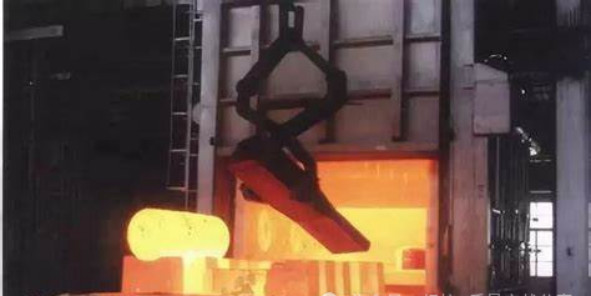
In modern mechanical devices, impellers as major components of power transmission and fluid energy transformation are widely used in high-performance machines such as aero-engines, gas turbines, high-speed pumps, and compressors. In order to give them optimized mechanical characteristics, corrosion resistance, and thermal stability, materials such as martensitic stainless steel, superalloys, and titanium alloys for impellers undergo complex heat treatment procedures including quenching, tempering, solution treatment, or aging.
However, although heat treatment improves material properties, it inevitably induces deformation and residual stress. The microstructural and thermal stresses not only destroy the geometric symmetry of impellers and decrease the accuracy of assembly but also bring about crack extension or fatigue failure in future service, even system operation failure at severe conditions. Therefore, from material engineering and production quality assurance perspectives, extensive research on stress control and shape correction technology of impellers following heat treatment is not only theoretically significant but also acutely needed in engineering practice.
Cause Analysis of Impeller Deformation and Stress after Heat Treatment
In critical equipment such as aero-engines and turbochargers, impellers, which are the central rotating components, govern the efficiency and longevity of the device. However, owing to unavoidable temperature gradients and phase transformation phenomena in heat treatment processes, impellers are extremely prone to inducing residual stress during quenching, tempering, and other processes, thereby warping, deforming, or cracking. Therefore, the cause of impeller deformation and stress after heat treatment should be thoroughly studied theoretically in order to act as a theoretical foundation for optimizing process routes and reducing quality fluctuations.
Superposition Effect of Thermal Stress and Microstructural Stress
During the process of heat treatment, significant temperature gradients are produced in different areas of the impeller caused by differences in structural thickness and thermal conductivity. Non-uniform cooling and heating and contraction produce thermal stress, whereas volume changes due to phase transformation are responsible for microstructural stress. Especially in steel grades where austenite-martensite transformation and carbide precipitation are important processes, such microstructural stresses are predominantly critical. Superposition of the two results in overall warping, local deformation, or edge distortion.
Amplification of Thermal Stress by Complex Geometric Structures
The geometric features of impellers such as thin walls, long blades, and varied cross-sections put them at risk of stress concentration and deformation in heat treatment. Especially in rapid cooling (e.g., quenching), thinner sections first form martensite due to high cooling rates, whereas thicker sections remain in the austenite state, leading to highly non-uniform microstructural and thermal stresses, ultimately leading to structural instability or buckling deformation.
Process Technologies for Shape Recovery and Stress Relief
Heat-treated impellers will warp, deform, and experience local stress concentration since superimposition of thermal stresses and microstructural stresses seriously affects their assembly accuracy and service life. Accordingly, in actual manufacturing, a sequence of stress relief and shape recovery processes must be utilized to ensure that geometric accuracy and overall performance of impellers are consistent with design requirements. The following discusses the suitability, advantages, and limitations of various processes with current mature methods and my own engineering expertise.
Stress Relief Annealing and Aging Treatment
Relief annealing is the most general and cost-effective stress-elimination practice. Low-temperature (e.g., 550–1150°C, water quenching) annealing can be selected according to different material and microstructural characteristics to eliminate thermal stress without microstructure sensitization issues. Medium-temperature or high-temperature tempering can also tailor microstructure, enhance toughness, and reduce crack nucleation for high-strength steels and martensitic stainless steels.
For example, 600°C×2h stress relief annealing can relieve more than 85% of residual stress efficiently with very slight influence on mechanical properties (yield strength degradation <10%), which presents an economically acceptable heat treatment path.
Mechanical Shaping and Grinding Correction
When the heat-treated impeller has only slight warping, cold-state shaping and mechanical correction can achieve geometric precision within a short period of time. In actual processing, real-time feedback of deformation amount should be given by a blue light scanner or coordinate measuring machine, and local precise correction force must be added to avoid secondary plastic deformation or internal micro-cracks caused by overloading stress. In case the dimensional deviation in local areas is large, precise grinding (trimming) should be done to ensure dimensions and surface quality. However, the heat input and grinding depth need to be controlled so that they don’t disrupt the surface hardened structure and the fatigue life.
Vibratory Stress Relief and Ultrasonic Impact Treatment
For large-sized and complicated-shaped impellers, vibratory stress relieving can release internal stress without heat source, which is a nice means to reduce the risk of heat deformation. The method causes dislocation slip and local micro-plastic flow by applying dynamic loads with specified frequency and amplitude, capable of significantly reducing residual stress and improving shape stability.
In addition, ultrasonic impact produces micro-plastic deformation and positive compressive stress through surface striking, improving the surface fatigue strength and stress corrosion resistance, and is typically used as an auxiliary post-treatment method.
Laser Shock Peening and Shot Peening
LSP (laser shock peening) is a high-end surface treatment method widely used in the aeronautical field. By generating shock waves using high-energy pulsed lasers, a uniform compressive stress field several millimeters in thickness is induced into the surface layer of the impeller to significantly increase surface hardness and resistance to crack propagation. Compared to typical shot peening, LSP possesses a deeper and more uniform stress field with less impact on geometric accuracy and is a double warranty for stress relief and improvement of surface performance.
Shot peening is more cost-effective and easier to handle, suitable for pump impellers that have medium-low stress requirements. It can efficiently reduce initiation and growth of surface micro-cracks and provide an economical, effective stress optimization method for the components.
Process Implementation and Quality Control
Shape recovery and relieving stress rely not only on means of the process but also on process control and managed standardization:
Dimensional Measurement and Springback Control
Three-dimensional comparison of dimensions must be done before and after shaping to ensure that the geometric deviations are kept within a workable range. Where necessary, finite element simulation is employed to model the springback behavior of shaping stress to improve the shaping accuracy.
Temperature and Time Control
For example, by applying PWHT (post-weld heat treatment), cooling rate, holding time, and the cooling curve should be well controlled in order not to overburn or cause coarsening of grains. For austenitic steels, one should also avoid the range of the sensitization temperature and use rapid cooling in order not to cause precipitation of chromium carbide.
Non-Destructive Testing and Residual Stress Testing
Methods such as X-ray diffraction are utilized to validate the treatment effect. Specifically for large service components, the level of stress release should be measured to support service safety analysis.
Establishment of Data Recording and Traceability
Temperature-time curve and process stress change data should be recorded to prepare standard documents to facilitate quality traceability and further optimization.
Conclusion
Recovery of impeller deformation and relieving of stress after heat treatment are normal operations, and their effect is sure to correlate directly with components’ service life and the entire performance of equipment. Entire application of various methods such as stress relief annealing, mechanical shaping, vibratory relieving of stress, and laser shock peening can achieve hierarchical stress release and precise correction of shape.


