
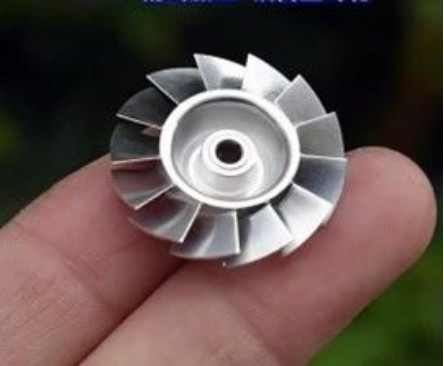
In response to the growing need for effective, small, and precise devices in medicine, machining technology of small impellers—critical subassemblies in medical centrifugal devices—is subjected to unprecedented pressure. These impellers place extremely stringent requirements on dimensions, surface finish, material biocompatibility, and processing of complex geometric structures that cannot be easily met by traditional processing methods.
Introduction
Clinical centrifugal devices are widely used in areas of high-precision operation such as the separation of blood components, sedimentation of cells, purification of samples, and layering of drugs. Operational efficiency and stability are directly related to the accuracy of treatment and diagnostic results. Small impeller geometric accuracy and surface quality are particularly important because of their critical role in establishing the hydrodynamic characteristics of equipment. Especially following the direction of equipment design towards high speed, low volume, and low energy consumption, the impellers demand higher mechanical properties, smaller structures, and higher precision quality machining.
In the actual production process, we have deeply realized that traditional processing models are incapable of meeting the high-precision manufacturing requirements of new medical-grade impellers, especially for the machining of extremely thin blades and micro-structures, technical bottlenecks become significantly evident. Therefore, it is necessary to globally analyze and solve these problems from the entire process chain to enable the functional realization of future-generation medical centrifugal equipment.
Analysis of Key Difficulties in Small Impeller Machining
As micro-impellers in the medical, aerospace, and precision instrument markets further enhance performance and quality requirements, so too do their machining problems primarily, which are the following:
Extremely Small Size and High Precision
The diameters of micro-impellers are usually only 20–50 mm, and the blade thickness can be as small as 0.2 mm, with some parts even thinner. This means that geometrical accuracy requirements such as coaxiality, perpendicularity, and roundness must be controlled very stringent in the micron order. For example, coaxiality must be improved to more than 0.005 mm, perpendicularity error to more than 0.01 mm, and surface roughness must be as low as less than Ra 0.1 μm. These are very stringent requirements on cutting parameter selection, tool stiffness, and stability of machining, making it difficult for traditional cutting processes to achieve batch reproducibility and consistency.
Complex Material Properties and Strict Biosecurity Requirements
Medical impellers traditionally use medical-grade stainless steel (e.g., 316L), titanium alloys (e.g., Ti-6Al-4V), PEEK, etc. These are good biocompatible, corrosion-resistant, and high-strength materials. However, they are also of common hard-to-cut materials, with low thermal conductivity and high cutting force, resulting in severe tool wear, characteristic cutting heat buildup, and prone to edge chipping and built-up edge. In addition, the production process must ensure that there is no oil pollution, no dust, and no secondary pollution. Sanitary workshops and environmentally friendly cooling and lubrication methods are required, which also create more requirements for processing equipment and process control.
Complex Blade Curvature and Compact Spatial Structure
The blades of small impellers are three-dimensional space-twisted curved surfaces with slim cross-sections and drastic changes in curvature, resulting in complex tool path planning. Precise five-axis linkage machining is required to ensure surface uniformity and edge quality. However, on a micro-scale, tool geometric error, slight deviations in the tool path, or incorrect processing of the tool connection points can result easily in surface tool marks, local over-cut, or geometric distortion, affecting the overall aerodynamic performance and fluid efficiency.
Great Difficulty in Clamping and Positioning
Due to the thin and deformed parts and compact structure, clamping and positioning is another primary challenge. Traditional fixtures may cause part deformation due to excessive clamping force or easy displacement and vibration during machining with insufficient force. Therefore, especially specifically designed high-precision fixtures, such as vacuum adsorption fixtures, soft jaw hydraulic fixtures, or micro-positioning adjustable fixtures, need to be utilized to offer clamping with firmness and tool setting with precision, and subsequently apply tight support for long-time high-precision cutting.
Challenges in Micro-Structure and Micro-Hole Machining
Based on the integration of functional development and fluid optimization design, micro-impellers usually have micro-hole and micro-groove micro-structures with the pore diameter of just about 0.05 mm. The processing of these micro-holes imposes extremely demanding conditions on hole diameter uniformity (error control within ±0.002 mm), hole depth ratio (>10:1), and edge integrity. Traditional drilling and milling technology are difficult to,and special processing means such as ultra-precision cutting, micro-electrical discharge machining (Micro-EDM), or femtosecond/picosecond laser must be adopted, and machining accuracy and tool life must be ensured through minimum quantity lubrication, cooling, and on-line measurement technologies.
Coping Strategies and Process Optimization Paths
With manufacturing needs developed towards precision and high speed, to process high-hardness and high-toughness materials, and multi-structural parts with micro-structures, overall measures such as tool optimization, intelligent tool paths, fixture innovation, and measurement feedback have to be profoundly implemented to provide stable, efficient, and predictable production processes. The following offers coping strategies and paths of optimization processes from some major links:
Application of High-Performance Tools and Advanced Coating Technologies
For machining difficult-to-cut materials (such as titanium alloys, high-temperature alloys, etc.), tools made of ultra-fine grain cemented carbide, polycrystalline diamond (PCD), and CVD/PVD-coated tools are more desirable. These tools are not only hard but hot-hard as well and can remove frictional heat and adhesion effects during cutting at high speeds, thereby managing the rate of tool wear. On the tool geometric design side, negative rake angles may be utilized to reduce cutting impact according to cutting properties, or the edge arc radius may be optimized to enhance cutting edge strength, which is practically utilized in enhancing tool life and machining surface quality.
Intelligent Optimization of Tool Paths and Parameters
With advancements in digital manufacturing, process parameters and tool path may be optimized intelligently with the help of sophisticated CAM software and artificial intelligence algorithms. For example, reducing sudden turn and unwarranted entry/exit in tool path technique to ensure continuous and smooth tool cutting direction, in order to reduce cutting impact and vibration. At the same time, according to the cutting load, tool rigidity, and allowance distribution, the spindle speed, feed rate, and cutting depth are controlled automatically to form a dynamic variable cutting strategy. This method can efficiently reduce local stress concentration and cumulative cutting heat to achieve stable micro-structure and ultra-precision part machining.
Development of Precision Fixtures and Flexible Clamping Technologies
To meet deformation sensitivity of thin-walled structure and complex curved surface parts, flexible clamping technology and precision fixtures purpose-designed are recommended. For example, flexible pressing structures of titanium alloy sheet and fine-tuning mechanisms can reduce local stress without sacrificing required clamping force, avoiding elastic deformation or even part damage because of over-tight clamping. In addition, pneumatic, hydraulic, or magnetic positioning and clamping technologies allow rapid changeover and automatic positioning and enhance fixture repeat positioning accuracy and production cycle.
Introduction of High-Precision Micro-Hole Machining and Special Processing Processes
For micro-channel products and hole diameters that are intended to be micron or even sub-micron levels, usual cutting processes are difficult to guarantee regularity and accuracy. Accordingly, laser micro-machining (e.g., picosecond or femtosecond ultra-fast laser) and micro-electrical discharge machining (Micro-EDM) are used. The special processes are capable of producing smooth-surface micro-hole features with uniform size and no corner collapse without the occurrence of a heat-affected zone. In hard-to-cut hard materials such as high-temperature alloys and hard ceramics, the special processing technologies have emerged as major methods to obtain complex flow channels and networks of micro-holes.
Implementation of On-Line Detection and Closed-Loop Quality Control
With modern production, the use of advanced measurement tools such as optical probes, CCD visual measurement, and white light interferometers can perform real-time measurement of key dimensions and surface characteristics during machining and post-machining. According to this, a closed-loop feedback control system is constructed such that tool compensation, cutting parameters, and tool trajectory are automatically controlled by the machine tool based on the measurement result and the deviations and defects from their root causes minimized, and the part consistency and production yield increased. This closed-loop quality control mode is particularly important to mass production, not only reducing the scrap rate but also reducing manual debugging and measuring time, and laying a technical foundation for intelligent manufacturing.
Conclusion
Being crucial precision components in medical centrifugal machines, the manufacture of small impellers has become a one-stop indicator of the advancement of contemporary micro-machining technology. Currently, ranging from tool materials and CNC equipment to clamping procedures and monitoring equipment, the sector is rapidly developing towards intelligence, automation, and miniaturization. Combined with my personal experiences on actual projects, the integration of five-axis micro-machining technology and high-precision measurement and control systems is the mainstream trend to address the high-precision and high-complexity machining of impellers. At the same time, as the maturity of machine learning technology in parameter self-optimization and error compensation becomes increasingly advanced, mass-producing small impellers will become more efficient and stable in the future.


