
As a key rotational component of aero-engines, the structure of aero-engine impellers is complicated and extremely high precision requirements. Geometric and position-quality form has direct influence on the thrust performance, fuel consumption rate, and service life of the entire engine. With the trend towards higher digital manufacturing, the technology for 3D quality inspection is also a key means to achieve the quality control and closed-loop optimization of processes in the production of impellers.
Introduction
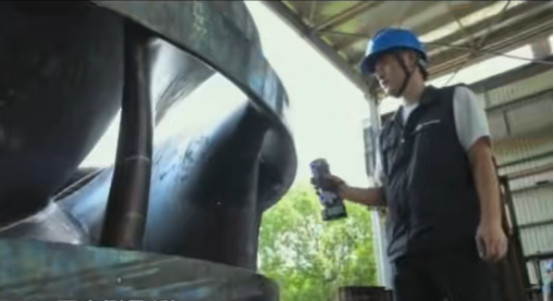
Aero-engine impellers have free surface shapes, low geometric tolerance, and harsh service conditions and thus impose new, unprecedented high demands on their contour tolerance, geometric precision, and assembly consistency. In many aviation parts projects I have undertaken, we found that the traditional 2D measurement technology, with issues such as limited measurement points, low efficiency, and a failure to cover key surfaces, can no longer meet actual needs of impeller manufacturing precision control. 3D quality inspection technology, as shown in the above figure, especially all-around systems based on blue light scanning, laser point cloud, coordinate measuring machine (CMM), and digital comparison analysis, not only has the combination of full topographic information acquisition but also the advantage of such aspects as error visualization, data traceability, and process closed-loop, and becomes more and more prevalent in the inspection mode in precision manufacturing.
Overview of 3D Quality Inspection Process
The 3D inspection process of aero-engine impellers is a closed-loop controlled and systematic procedure with a phased approach, mainly including the following four phases:
- Pre-inspection preparation: Establishing purposes of inspection, arranging the measurement condition, device calibration, and mounting the fixtures;
- Measurement implementation: Performing point cloud collection or contact probing to obtain high-density 3D data;
- Data processing and analysis: Implementing error evaluation, comparison of dimensions, and quality inspection with professional software;
- Result feedback and optimization: Feedbacking results of analysis to manufacturing and design systems for quality closed-loop.
These four steps are incorporated into a highly reliable data-driven quality inspection system (collaborative) in process.
Detailed Steps of 3D Quality Inspection Process
3D quality inspection in today’s precision manufacturing is an essential bridge to ensure the dimensional accuracy and functional properties of complex surface components such as impellers. The procedure is an entirely closed loop from pre-stage preparation, implementation of measurement, data processing and analysis to feedback on the results and optimization, through the entire procedure of part design, manufacturing, and inspection. Only through a standardized, high-precision, and efficient measurement process can the basis for sound quality assurance and improvement be guaranteed in impeller machining, thereby reducing the production waste and improving product consistency and market competitiveness.
Pre-Inspection Preparation
Pre-inspection preparation is the nucleus of the entire 3D measurement process, requiring careful and meticulous consideration of measurements and conditions in situ. In this stage, first, from the design CAD model, technical specifications, and Geometric Dimensioning and Tolerancing (GD&T) requirements, the key measurement items such as blade thickness, surface contour tolerance, leading edge radius of curvature, and tip clearance are determined. These key features directly affect the aerodynamic performance and service life of the impeller. Next, suitable hardware and software platforms are selected depending upon part geometry and measurement precision needs, like high-accuracy coordinate measuring machines (e.g., Leitz PMM series), blue light scanners, laser confocal systems, etc., and related analysis software like PolyWorks, Geomagic Control X, and PC-DMIS, to enable data collection and analysis capability to meet measurement needs. Under the condition to guarantee the accuracy and reproducibility of measurement, the temperature and humidity of the measurement room must be controlled at 20 ± 1 °C in order to eliminate the impact of thermal deformation, and special fixtures and the 3-2-1 method for rapid positioning of the impeller can guarantee the stability and consistency of the coordinate system of measurement. In addition, for those with obviously reflective surfaces, beforehand it is recommended to spray matte powder or diffuse reflection coating to reduce light reflection and data loss during blue light measurement, creating a good hardware and environment support for the implementation of measurement.
Measurement Implementation
Measurement implementation is the key step to gain data in 3D quality inspection, and a specific and effective measurement plan must be formulated. Step one, the scanning path is created in accordance with the geometry of the part, which not only must go through significant sections and spatial surfaces but also verify the path by simulation to make sure there is no possibility of interference or dead corner missing between the probe and the blades. In coordinate measurement, coordinate sampling with normal tracking can be used to integrate in obtaining high-precision and high-density points at areas of drastic changes in curvature; in blue light scanning, high-resolution phase shift algorithms and projection are utilized to collect the point cloud of the entire machine in an orderly manner so that complete details and even point distribution are ensured. To minimize measurement errors and enhance measurement efficiency, outliers and noise points within the point cloud data need to be filtered out, preventing repeated measurement and allowing smooth data processing. For bulk production purposes, an integrated robot and measuring machine approach is recommended with automated measurement and adaptive platform capabilities to reduce human operation (deviations) and achieve unmanned and highly stable measurements and offer high-quality data input for subsequent data processing.
Data Processing and Analysis
The data analysis and processing relationship is the main relationship to transform measurement results into relevant quality information, thereby having direct implications on the practicability and credibility of the derived measurement results. The captured point cloud and theoretical CAD model are first registered using the Best-Fit algorithm for minimizing errors due to deviations in the coordinate system. According to this, the error chromatogram visual analysis tools, cross-sectional curve comparisons, and histograms are used to present the dimensional deviations and quality trends of the whole part area in a comprehensive manner, specifically marking error-sensitive regions such as the leading edge and trailing edge of the blade. Through GD&T assessment and automatic feature extraction, primary feature values like roundness, flatness, and contour tolerance are derived, with the results serving as a quantitative measure upon which to base qualification of the part. For smooth understanding and communication among various departments, the measurement software can automatically generate PDF or interactive 3D measurement reports with measurement point information, error patterns, and evaluation results as complete and very readable quality data for design and production.
Result Feedback and Optimization
The ultimate goal of 3D quality inspection is not only to make judgments about the quality status of parts but, more importantly, to offer real-time feedback of the results to the production and design chains to achieve closed-loop optimization and process continuous improvement. During this stage, measurement data and error tendencies are fed back real-time to the CNC machining system, which automatically adjusts tool compensation and cutting parameters to efficiently reduce error drift and batch-to-batch deviations in machining. Fixture location, clamping points, and tool path are optimized based on the measuring results to improve the positioning accuracy and machining stability of subsequent parts. At the same time, with the acquired historical data in the measurement procedure, the traceable process database is created, which can be used as a reliable reference and model of prediction for subsequent manufacturing of similar impeller components, enabling active compensation and intelligent machining. Furthermore, firms can make rational decisions such as repairable, re-machining, or direct scrapping for the measurement results according to error grade standards, improving resource utilization efficiency and production competitiveness, and building a solid data and quality management base for firms to continue to improve production levels and market competitiveness.
Value and Prospect of 3D Quality Inspection Process
The 3D quality inspection technology not only improves the qualification rate and reliability of impeller manufacturing but also, and more importantly, promotes the intelligent process revolution of manufacturing. Its essential values are mainly reflected in:
- Significantly improved precision control capability: Preaching micron-level error control through high-density scanning and smart algorithms;
- Significantly reduced manufacturing costs: Reducing the amount of trial cuts and rework and improving production rhythm;
- Enhanced process traceability: Complete capture of inspection data to construct a comprehensive quality file;
- Data-driven process optimization: Facilitating process improvement by relying on big data analysis to achieve a self-learning closed-loop manufacturing system.
Prospects are bright in the future. 3D inspection will be closely integrated with digital twin, AI recognition, and edge computing, and achieve a quantum leap from \”data collection” to \”intelligent decision-making”. We believe that the digital quality system established based on this technology will also become a firm support for China’s independent manufacturing of aero-engines.
Conclusion
Generally speaking, the quality inspection procedure of 3D quality inspection in the production of aero-engine impellers is not only the technical focal point of quality control but also a strategic fulcrum to promote the use of intelligent manufacturing. By careful preparation for inspection, high-speed measurement equipment, rigorous data analysis, and closed-loop feedback operations, enterprises can achieve synergistic promotion of cost control and process improvement and improve the quality of products.
Personally, I firmly believe that by systematizing, standardizing, and intelligentizing the process of 3D inspection alone, we can truly empower aero-engine impeller manufacturing to grow to a higher level. In the future, we still must continue to enhance the intelligent planning of the paths of inspection, error prediction modeling, and integration of the manufacturing process, explore new paradigms of data-driven manufacturing, and contribute to the goal of becoming an aviation power.


