
Pump efficiency is the most significant performance parameter in pump design, production, and working-maintenance, and is closely related to the energy utilization rate and operation cost of the entire machine. As the most core component for energy transfer in pumps, the surface finish of impeller has an essential influence on hydrodynamic characteristics, especially boundary layer formation, generation of eddies, and energy dissipation.
Introduction
Centrifugal pumps, being power machinery widely used in industry, agriculture, and energy networks, have operating efficiency as the main parameter for measuring their economy and reliability. Efficiency of pumps is not only determined by structural design and selection conditions but is also directly connected with hydraulic losses, frictional losses, and mechanical losses in fluid flow in the pump. Because the impeller is the most critical energy exchange unit in a pump, the geometric structure and surface condition of the impeller will play a vital role in energy conversion process in the pump.
In product testing and engineering experiments, we always find that if there is distinct roughness, micro-pits, or milling marks on the impeller surface, then the fluid boundary layer formed on its surface becomes very thick in a short time, causing disturbance of the boundary layer, intensified secondary flow, and even forced flow separation and local vortices. This flow distortion creates hydraulic losses and intensity of localized turbulence within the pump, finally leading to low pump efficiency, unstable head curves, and low operating ranges. Thus, in practice, the improvement of impeller surface finish is not just a quality measure in manufacturing but also a key control measure of pump operating performance and energy efficiency management.
In recent years, with the advance of CNC machining and ultra-precision surface treatment technology, regulation by the engineering society for the pump equipment’s surface quality has gradually changed to a subtle regulation stage based on the Ra value. In a view to quantitatively study the actual influence of surface finish on the efficiency of pump, this paper designs and performs a series of systematic experiments, takes on various grades of surface roughness impellers for comparison performance analysis, and systematically explores the hydraulic performance and economy of improvement in finish through integration of theoretical calculation and actual test data.
Experimental Scheme and Testing Methods
To precisely and comprehensively evaluate the pump performance affected by the impeller surface roughness, this study formulates sophisticated experimental designs and test methods. By rational selection of test objects and equipment, standardization of surface quality detection for each group of impellers, and executing pump performance tests under the same boundary conditions, we expect to obtain accurate and comparable experimental data to strongly support the revelation of the relationship between surface roughness and pump efficiency. The following will respectively elaborate on test equipment and objects, surface roughness detection means, and pump performance test procedures and evaluation standards in detail.
Test Equipment and Objects
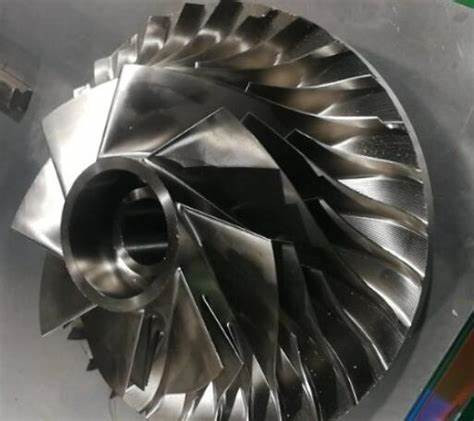
A common cylindrical medium-sized centrifugal pump in industrial application was used as the test platform. The primary pump parameters are design flow Q=50 m³/h, rated head H=40 m, and rated speed n=2900 r/min. For ensuring repeatability and controllability in comparative trials, three batches of impellers were treated with completely similar geometric parameters but different surface roughness, i.e., Ra = 3.2 μm (normal turning and milling), Ra = 1.6 μm (semi-finishing), and Ra = 0.8 μm (precision polishing). The three sets of impellers are accurately manufactured from the same 3D model such that the geometrical properties of the blades are completely identical except that surface finish is the only variation, thus enabling some differentiation of the effect of surface roughness on the performance of the pump.
Surface Roughness Detection
To obtain the true surface roughness value of each impeller, a contact profilometer with high accuracy was used to sense over five normal flow channel positions on the blade surface. The measurement points are arranged evenly in the regions of the leading edge, middle, and trailing edge so that the uniformity and representativeness of measurement point distribution for each Ra grade sample can be ensured. To avoid measuring errors, each measuring point was measured three times in repetition and averaged, with repeatability errors controlled within ±0.05 μm. Standardized measuring procedures and standardized operations allow us to give precise and reliable surface roughness data, with a sound basis for later comparisons of the performance of pumps.
Performance Testing Methods
The pump performance tests were also performed on the identical pump test rig, and all testing conditions such as inlet pressure, working fluid, and ambient temperature were kept the same to ensure superior comparability among experiments. The head, power, and flow rate of the three impellers at every operating point were precisely measured using a normal pump test system, and pump efficiency and performance curves were computed accordingly. Under the test, to enhance sensitivity to the influence of roughness of surface, test flow range was between 50% and 120% of design operating point flow, and the primary focus was placed on the trends of change of pump performance in the high-efficiency range and critical range.
Experimental Results and Data Analysis
After finishing pump performance test and surface roughness test, we processed and analyzed experimental data step by step to examine the quantitative relationship between impeller surface finish and pump performance, fully considered economy and manufacturing process, and made recommendations for engineering practice optimization. Subsequent sections explain and analyze the pump efficiency enhancing effect, fluid boundary layer mechanism, and total economic trade-offs.
Comparison of Pump Efficiency with Different Finish Impellers
By comparing the test data of the three impellers in a similar test platform and under the same boundary conditions, it can be seen that when the surface roughness of the impeller decreases, the pump efficiency clearly follows an upward trend. At design operating point, with the Ra value decreased from 3.2 μm to 1.6 μm, the optimal pump efficiency is increased from 71.2% to 73.7%, an increase of approximately 2.5%; with the Ra value further decreased to 0.8 μm, the efficiency of the pump can be as high as 75.2%, an increase of approximately 4.0% than that of rough surface state. In addition, not only does the pump get better at the design operating point, but even in the medium-high flow range, the efficiency curve of the impeller with better surface finish will also be flatter, meaning a wider high-efficiency working range, which means that the pump is more versatile to variations in working conditions and can reduce the energy losses caused by partial deviations from the design point.
Mechanism of Finish on Energy Loss
To further clarify the physical reason for pump efficiency enhancement, we examine its action process from fluid boundary layer theory and mechanism of energy loss points of view. The smoother the impeller surface, the smaller the frictional shear stress at fluid solid boundary, the more efficient suppression of turbulent vorticity generation, and the more smoothly the fluid adheres, which is advantageous to thinning the boundary layer and reducing the secondary flow losses. When there are apparent micro-concavities on the surface, these convex-concave surfaces will induce local vortices and flow separation phenomena, increase flow resistance and viscous dissipation, reduce the effective energy transfer capacity of the blade to the fluid, and make the flow line deviate from the design trajectory and worsen energy loss. Hence, reducing surface roughness is equivalent to reducing the energy loss channel in the pump, and that also is one of the most vital reasons for improving pump efficiency.
At the same time, there will also be an effect on the pump flow symmetry and hydraulic performance from a high Ra value. Outlet and inlet flow fields will be very slightly distorted, and as a result, the evolution of secondary flow in guide vanes and volute will be affected, which is another potential reason for the drop in overall efficiency of the pump.
Economic and Manufacturing Process Trade-offs
Even though reduction of surface roughness will significantly increase the efficiency of pumps, ultra-smoothness necessarily means more complicated and precise manufacture and post-treatment procedures, which will raise production cost. For example, the decrease from Ra = 3.2 μm to 0.8 μm can cause the finishing and polishing time of the single impeller to exceed 30%, especially for hard-to-cut high-strength materials such as stainless steel and titanium alloy, the resource usage of electrolytic polishing and ultra-precision grinding is enormous.
But in the long run, for large and medium-sized pump sets with more than 6,000 hours yearly running time, every 1% improvement in efficiency is gigantic energy saving and consumption, which easily compensates for initial processing costs. Therefore, in industrial application, rational choices should be made fully considering operating conditions of the pumps, energy consumption cost, and production budgets: for high-lift, large-flow, and continuous duty pump stations, high-finish impellers should be preferentially selected in order to provide long-term economic benefits; while for small pumps or intermittently used pumps, comparatively lower surface roughness grades can be employed in order to reduce manufacturing costs on the condition that basic performance is ensured, in order to obtain the best performance/cost ratio.
Theoretical Comparison and Engineering Suggestions
One can find from the equation for pump efficiency η = ρgQH / P that raising pump’s effective head H or reducing shaft power P is able to make the pump more efficient. Minimization of energy loss is the only variable means of increasing efficiency without changing the design parameters of a pump. And fluid friction loss has a strong correlation with wall roughness. With finish control, not only is surface friction reduced, but disk friction can be boosted, secondary backflow can be delayed, and eddy current impact loss can be reduced.
We suggest taking the following measures in the production process of the impeller to enhance the surface quality:
- Utilize local electrochemical polishing or ultrasonic grinding on crucial zones of the flow passage (especially the middle and rear section of the blade and transition arcs).
- Forecast low-speed areas by CFD simulation and pre-establish areas requiring better finish control during design stage;
- Polish the outer disk area of the front and rear covers of the impeller to reduce disk resistance at high speeds.
Conclusion
The influence mechanism and actual effect of impeller surface finish on pump efficiency are presented in this paper by systematic experimental research and theoretical analysis. The testing shows that each level drop of the impeller Ra value can bring about 1% to 2.5% efficiency increase, as well as a good supporting effect on flow stability and high-efficiency zone width. For long-term operation of industrial pump stations, the energy-saving benefit provided by improving the finish is tremendous and the long-term trade-off between investment in production and operational cost savings can be achieved.


