
In high-stakes industries such as power, petrochemical, shipping, and environmental protection, uninterrupted operation of equipment has direct bearing on corporate financial interest and security. Because an impeller is a basic component of mechanical equipment, it is likely to suffer wear, corrosion, or even structural failure through long-term use, which leads to equipment shutdown or performance degradation. Hesitant in accepting these sudden maintenance demands, traditional standard part buying and stock assignment models fall short of satisfying the production’s timeliness needs due to long delivery cycles and low flexibility.
Introduction
Having long been involved in equipment maintenance project management, I have come to firmly acknowledge the massive impact of impeller failure on the operation of complete equipment systems. Since they are primary components for kinetic energy conversion and energy transfer, impellers normally run under severe conditions of high rotation speed, high temperature, and high pressure. Once they encountered faults such as crack, wear, or imbalance, they not only cause the entire machine to stop but can also trigger chain mechanical failure and safety accidents. Especially in continuously operating equipment such as thermal power plants, petrochemical reaction facilities, and sewage treatment facilities, the immediate economic loss to the company for each shutdown hour is easily tens of thousands or even hundreds of thousands of yuan.
The traditional type of impeller replacement would normally rely on inventory spare parts or universal substitute parts. However, in engineering work, due to varying years of operation for equipment, initial design parameters, and personal working condition adjustment, standard parts in many cases are hard to fit perfectly, which may result in such problems as size incompatibility, dynamic balance diseases, efficiency losses, or even “worse after replacement.” Therefore, the “customization + quick delivery” model emerged and became a growing mainstream practice in emergency maintenance projects.
Core Elements of Rapid Delivery Customization Services
To enable customers to obtain precise and high-quality customized impellers in a short time, organizational efforts must be well-coordinated among the three most critical chains of design, manufacturing, and quality to develop a set of highly integrated, cooperative, and smart core capabilities. These capabilities not only form the most critical pillars for guaranteeing the delivery time but also the inherent promise for continuously enhancing the product performance and quality.
Flexible Design and Intelligent Modeling Capability
Quick delivery services must first have the ability to complete precise modeling and design iteration in a brief period of time. Modern manufacturing businesses typically utilize digital reverse engineering and 3D scanning technology to speedily examine damaged impellers and create digital twins for modeling. I went through this process in a maintenance project in a steam turbine where under a day was spent on scanning and modeling. Paired with existing modular design libraries, CAD modeling and CFD simulation analysis can be achieved, significantly reducing the design cycle. The strongest benefit of this capability is that it has excellent engineering flexibility and more comparable to real working conditions, which can rapidly meet users’ customized matching needs.
Efficient Manufacturing Capability and Process Collaborative Optimization
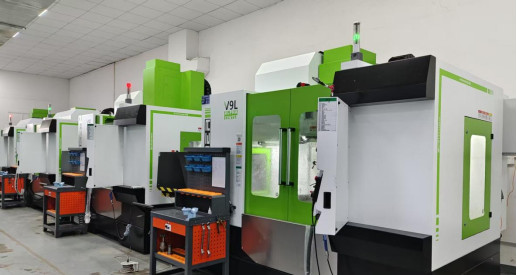
With the manufacturing link, rapid delivery services are founded on collaborative optimization between processes and equipment. The simultaneous utilization of advanced equipment such as CNC five-axis machining centers, additive manufacturing (3D printing) equipment, high-speed milling, and precision casting has greatly promoted the efficiency of one-piece custom manufacture. Especially for small and medium-sized customized impellers, additive manufacturing has exhibited (extremely strong) timeliness advantages. Through advanced tool path planning and fixture design integration, “one clamping, full-process machining” can be achieved, greatly reducing tool change time and setup cycles. Meanwhile, the digital scheduling system dynamically optimizes the schedule according to task priority, and actually realizes “inserting urgent orders without disturbing the production sequence.”
Strict Quality Control System Assurance
Quality should never be compromised even with tight delivery schedules. Under the rapid customization mode, there also needs to be implementation of full-process quality control system. Firms are usually equipped with Coordinate Measuring Machines (CMMs) to verify dimensional accuracy, utilize dynamic balancing machines to test the operational balance, and eliminate internal defects through non-destructive testing technologies such as ultrasonic flaw detection and magnetic particle inspection. Consider the case of a rapid delivery project I completed: before delivery, the impeller should have a simulated operation bench test to provide assurance regarding its reliability and load response so as to certify its durability in a way that customers can utilize it immediately without secondary adjustment. The foundation of parallel speed and reliability underlies the high-quality guarantee.
Main Advantages of Rapid Delivery Customization Services
In equipment operation and production management, timely access to high-performance and guaranteed impeller products can directly relate to production continuity and corporate economic benefits. Compared with the traditional long procurement pattern, rapid delivery customization services can provide customized solutions in emergency cases, bringing real value and long-term profit to users.
Significantly Shortening Equipment Shutdown Time
This is the most direct and remarkable advantage of rapid customization services. All projects are completed in just 5 to 10 days from the placement of demand through delivery. This is a strong performance compared to weeks or months for the traditional spare parts purchasing cycle, significantly shortening the critical path lead time and avoiding production capacity losses through machine shutdown. I recently assisted in the emergency production of a batch of customized impellers for a port sewage lifting pump station job with a delivery horizon of 7 days, nearly 20 days short of the regular procurement schedule, enabling the system to be restored to operation in a timely manner and averting serious consequences because of the insufficient drainage capacity during wet weather.
Reducing Maintenance Costs and Operational Risks
After equipment malfunction, if the impeller replacement is not feasible within time, it usually causes the expansion of the failure scope and even leads to secondary damage. Prompt customization services make equipment come back to normal state within time, reducing the probability of (defective operation) and preventing unnecessary maintenance and overhaul costs caused by chain maintenance. Furthermore, by making the customers accessible with highly flexible products, energy consumption can be reduced and equipment efficiency improved, thereby achieving overall reduction in operating costs from the life cycle point of view.
Meeting Personalized Replacement Needs and Ensuring Interchangeability and Performance Matching
Rapid delivery custom service emphasizes “demand based production” rather than “inventory based supply.” Along with customers’ original design drawings or on-site scanning data, machine parameters can be significantly recovered, and perfect structural compatibility can be guaranteed with even optimization and upgrade in performance. For example, blade angles can be accurately optimized via CFD simulation to maximize efficiency; or materials employed can be replaced with more corrosion-resistant alloys according to the application environment to prolong service life. This is the ability to not merely “restore to the original state” but also possibly “excel the original configuration” in repair.
Enhancing Supply Chain Response Capability and Customer Satisfaction
Fast delivery is essentially a picture of supply chain flexibility. With the backing of material pre-positioning systems and electronic order systems, manufacturing organizations can support shortening the response cycle and providing assurance for the coordinated operation of upstream and downstream supply chains. In some industries, customer satisfaction not only depends on product quality but also heavily on the speed of response in services. Effective use of fast customized impeller services can significantly enhance customer stickiness and repurchase rates, creating a solid reputation and brand trust for companies.
Conclusion
With the increase in needs for equipment availability and operating continuity across various industries, expedited delivery customization services are more and more replacing conventional long procurement chains and becoming a necessary tool in urgent maintenance projects. It organically integrates adaptable design, digital manufacturing, process integration efficiency, and process-quality control throughout, establishing a service model in favor of response speed and customization depth, significantly enhancing the timeliness and economy of industrial maintenance and operation.


