
Due to their special geometric shapes and material properties, impeller parts are difficult to machine, and frequent tool wear has been a bottleneck in their efficient production. Traditional cooling and lubrication methods can no longer meet the high-standard requirement of tool protection under complex machining conditions. As a new green lubrication technology, the minimum quantity lubrication (MQL) system achieves precise cooling and good lubrication in the cutting zone by the combined delivery of a small amount of lubricant and compressed air.
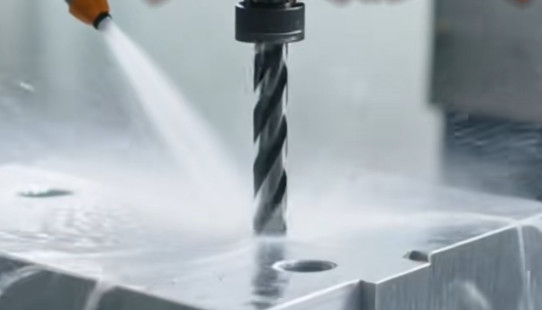
Technical Challenges of Tool Wear in Impeller Machining
As important rotating components in high-end equipment manufacturing, the precision, strength, and machining surface quality of impellers have a direct influence on the performance of the entire machine. Especially in aero-engines, high-efficiency compression systems, and gas turbines, impellers are mainly made from difficult-to-machine materials such as Inconel 718 superalloy and titanium alloy. Besides high hardness and bad plasticity, these materials also have low thermal conductivity, (highly prone) to form high-temperature and high-stress cutting zones when machining, leading to rapid tool wear. In the meantime, impeller blade spatial surface structure is complex with radical machining path curvature change and poor local rigidity, (highly likely) to cause tool edge chipping, cracking, or even premature failure. In my previous machining practice, it was not unusual to discover that with traditional wet cutting cooling methods, even when using efficient emulsions, it was still not easy to access all tool-workpiece contact areas. Issues such as inadequate lubrication, thermal shock repeated, and chip adhesion have been plaguing the machining quality for a long time. Therefore, seeking an efficient, precise, and green tool lubrication method has become the top priority for impeller machining technology development.
Technical Principle and Lubrication Mechanism of MQL System
The MQL system atomizes a very small amount of lubricating oil using compressed air and injects it directly into the cutting contact zone, forming a stable lubricating film and assisting heat diffusion, thus significantly improving the tool’s working environment. The system typically includes a high-pressure air source, a precision oil supply unit, an oil mist mixer, and nozzles, controlling lubricant consumption at a very low rate of 5–50 ml/h with oil mist particle sizes of 10–50 μm in order to penetrate the chip zone with high-pressure airflow and stably adsorb on the cutting contact surface.
Different from the traditional cooling methods where temperature reduction is the focal problem, MQL focuses on the synergetic function of lubrication and temperature control. By reducing the friction coefficient effectively, MQL significantly reduces the relative sliding resistance between the tool and workpiece and that between the tool and chips, thereby reducing abrasive wear and adhesive wear. Additionally, under the action of a micron-level oil film continuously, the tool surface can be maintained sharp for a long time, and it can effectively prevent diffusion wear and thermal fatigue cracks caused by high temperatures. In essence, MQL is not just a single cooling (substitute) technology but an overall new upgrade of traditional machining concepts.
Empirical Machining Experiment Design and Data Collection Methods
To evaluate the actual process performance of MQL technology in superalloy impeller machining in a systematic way, the paper established a comparative empirical machining experiment scheme with the focus on its comprehensive performance in cutting heat control, tool wear retardation, and surface quality optimization, and quantitative acquisition and analysis of main machining parameters and performance indexes.
Experimental Objects and Equipment Configuration:
Inconel 718 integral superalloy impeller blanks were used as the objects to be machined. Extensively used for aero-engine impellers, the material is thermally sensitive with high hardness and great machining difficulty. A five-axis machining center with high precision was used for full-path control to achieve stable feed and posture control of the tool in complex areas such as blade roots and rims. A solid cemented carbide ball-end mill with Φ12 mm PVD coating and inner cooling channel structure was selected to operate in conjunction with the MQL system under fixed-point oil supply. The machining content was roughing to semi-finishing with a focus on tool load and wear behavior of high-load surface areas.
Process Parameter Setting and Comparative Variables:
Cooling mode employed a dual-channel control group design, i.e., conventional emulsion cooling (wet cooling) and MQL mode. In the MQL experimental group, synthetic ester-type high-temperature lubricating oil was used as the working medium, and spray oil flow 30 ml/h and air pressure 6 bar, producing a stable oil mist through precision nozzles to the cutting interface. All other machining parameters (such as spindle speed, feed rate, cutting depth) were kept the same for the purpose of making test results comparable. In order to realistically reproduce the continuous production state, tool status monitoring was performed after each 5 impellers were processed, so that the data collection spanned the whole process of the tool wear.
Data Collection Methods and Monitoring Indicators:
Several important indicators were collected quantitatively in the experiment to fully appraise the process merits of MQL technology. For tool wear, morphology observation and wear width (VB) measurement of the tool flank were conducted using a high-resolution microscope, paying close attention to wear evolution trends and frequency of occurrence of damage modes such as chipping and cracking. The machining temperature of the workpiece was monitored in real time by an infrared thermal imager, which recorded peak and average cutting temperatures to evaluate cooling performance. Meanwhile, the surface roughness (Ra) of each impeller was gauged with a profilometer to identify the consistency of surface quality. Being recorded was also the number of workpieces that could be machined stably by one tool under each cooling method, with life as the assessment criterion to depict overall economy.
Experimental Results and Analysis: Verification of MQL’s Significant Efficiency
To continue evaluating the application effect of MQL technology on superalloy impeller machining, we compared the key performance indexes of traditional wet cutting cooling and MQL processes on aspects like tool wear, surface quality, thermal load control, and economic benefit. The trial used GH4169 impeller semi-finishing as the sample process, with a spindle speed of 16,000 rpm, feed rate of 1,000 mm/min, and the same kind of PVD-coated ball-end mill. As can be found from the test results, MQL presented very clear technical advantages in the high-load multi-axis machining condition.
Significant Reduction in Tool Wear
Experimental findings showed that after using the MQL system, tool flank average wear width VB was decreased from 0.18 mm under conventional cooling to 0.12 mm, a reduction of approximately 32%. More importantly, in areas of great cutting depth and high thermal load such as blade roots, the machining temperature was reduced by more than 40°C, with the growth of thermal fatigue cracks being greatly inhibited. The tool life average was increased from 90 minutes to 130 minutes, a 44% increase.
Substantial Reduction in Adhesive Wear and Built-Up Edge
Through comparison of high-resolution microscopic photographs, it was found that there were basically no significant adhesion marks on the tool edge under MQL conditions, while clear built-up edges adhered to the tool under conventional conditions, accelerating edge blunting. This means that micro-mist lubrication can quickly form a lubricating isolation layer in the early stage of cutting, (slow down) the adhesion tendency of high-temperature metal, maintain tool sharpness, and delay the wear process from the root.
Obvious Improvement in Surface Quality
In the surface roughness test, the Ra value of blades under MQL conditions decreased from 1.4 μm in traditional wet cutting to 0.9 μm, with more uniform tool marks and much-improved finish. The change not only demonstrates the positive role of lubricating media in reducing cutting force fluctuation but also indicates their effectiveness in mitigating vibration and suppressing cutting instability.
Outstanding Advantages in Green Manufacturing and Cost Control
MQL uses an extremely low amount of lubricating oil, only 0.1% of traditional emulsion systems, and the need for waste liquid treatment is essentially eliminated. This not only satisfies the demands of clean production but also removes problems such as workshop odors and slippery liquid backflow. Moreover, with reduced tool wear, replacement frequency is reduced, which translates to approximately 18% in savings in annual tool procurement and maintenance costs, further confirming its comprehensive advantages in economy.
Conclusions and Promotion Suggestions
According to the in-depth analysis of the performance of MQL in impeller machining, we can draw the following conclusions and make some practical recommendations with promotion value for reference in subsequent engineering application and production line transformation.
Strong Process Adaptability of MQL Technology
A number of experimental findings prove that MQL has better lubrication flexibility for thermosensitive superalloy and titanium alloy impeller machining, especially in the high-temperature stage from semi-finishing to finishing, where the tool protection effect is most obvious.
Superior Synergy Between Internal Cooling Channel Tools and MQL
It is recommended to use internal cooling channel tools for complex 3D surface machining areas to more accurately supply oil mist to the cutting point, improve lubrication efficiency, and prevent lubrication blind areas caused by unsuitable high-pressure spray angles.
Crucial Fine-Tuning of Parameters
Practice has shown that different tool materials, workpiece compositions, and cutting conditions have significant effects on the MQL system response. The spray flow (20–35 ml/h) and air pressure (5–7 bar) need to be adjusted according to specific conditions in order to achieve optimum lubrication effects.
Strengthen System Maintenance and Lubricant Selection
To ensure the long-term stable operation of the MQL system, regularly check whether the nozzles are clogged and whether the working status of the oil mist mixer is normal. Select green lubricants with excellent high-temperature stability and environmental properties to further improve the overall reliability of the system.
Conclusion
Through the systematic experimental research in this paper, it can be positively stated that the MQL system has not only a remarkable role in reducing tool wear in impeller workpiece machining but also great industrial application prospects in improving machining efficiency, surface quality, and relieving environmental burden. In the future, with the in-depth development of intelligent manufacturing and digital process control, MQL technology is certain to (connect) with real-time monitoring systems, further evolving towards intelligent lubrication and adaptive control, providing new momentum for efficient, green, and sustainable impeller manufacturing.


