
Impeller inner hole dimensional and form-position precision accuracy, as rotating high-speed components, has a direct impact on the quality of product assembly, rotation balance, and service life. Under mass production, precision gauges, as non-readable fixed-value instruments, play a leading role in dimension qualification judgment, assembly fit inspection, and measurement system calibration to achieve efficient and stable quality control.
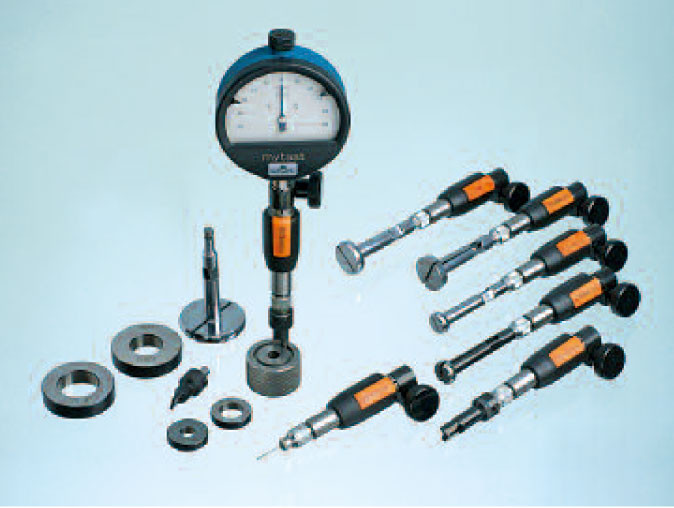
Necessity of Impeller Inner Hole Accuracy Control
As typical key rotating parts, impeller inner holes generally serve as shaft system assembly mating parts and geometric references, directly affecting component fit clearance, coaxiality, and dynamic balance performance in general. Once inner hole machining is beyond tolerance, it may cause assembly trouble at most or result in radial runout, bearing overload, or even unnormal machine vibration during operation at worst. As per my firm’s experience in a fan factory field project, the rate of tolerance permitted for control of impeller inner hole dimension is extremely low—especially in the case of high speed and high seal conditions where control precision of inner hole dimension requires at least H7 grade or higher. Therefore, starting from process design and inspection method choice to ultimate quality control, how to achieve quick, stable, and reproducible judgment of inner hole diameters and geometric accuracy is an essential connection in the entire process chain.
Types and Application Characteristics of Precision Gauges
Precision gauges, according to various checking requirements, can be divided into various types with various focusing points of calibration.
Go/No-Go Gauge
Go/No-Go gauge is the most widely used inner hole inspection method, which is fast, non-reading, and easy to operate. Its rate of inspection in mass production applications is much greater than conventional contact gauges such as calipers and internal micrometers. The Go gauge is stamped with the minimum limit size (passing indicates qualification), and the No-Go gauge is the maximum limit (failing to pass indicates qualification). This pass/fail binary assessment significantly reduces measurement time and removes subjectively reading mistakes in actual production line operations.
Plug Gauge and Ring Gauge
Plug gauges are more accurate than Go/No-Go gauges, normally used for graded measurement of inner hole deviation, for use in precision measurement or inter-process quality measurement. Though ring gauges mainly measure outer diameters, they can also serve as a reference standard for inner hole mutual inspection in certain applications.
Pneumatic Gauge
In applications requiring very high hole sizes (such as ≤2μm), pneumatic gauges are employed to apply high precision and reproducible dimension control according to non-contact pressure difference judgment principles, thereby being very common online measuring and control equipment applied on automated test lines. Especially in high-end production lines linked with machining centers and test machines, their feedback efficiency and precision far exceed manual handling.
Core Role of Gauges in Inner Hole Dimension and Geometric Accuracy Calibration
For precision manufacturing, especially high-requisite parts mass machining such as impellers, inner hole dimensions and geometric accuracy have a direct influence on product assembly performance, operating stability, and even overall machine life. How to achieve high efficiency and consistency, gauge technology enters with an indispensable role. The following points are of the greatest significance:
Rapid Qualification Screening to Improve Tempo Efficiency
In actual production, I contrasted the effectiveness of Go/No-Go gauges and CMM in measuring Φ35 H7 hole diameter: Go/No-Go gauges just consumed 10 seconds per piece with simple pass/fail judgment-making, suitable for tight-tempo and high-repeatability production lines; while CMM, as more precise, consumed over 3 minutes per test and needed experienced operation, and consequently imposed colossal pressure on on-site personnel allocation and equipment planning. In repetitive bulk machining, Go/No-Go gauges not only save first inspection time but also increase process inspection response time, maintaining a consistent production pace.
Ensuring Inspection Consistency and Reducing Human Error
Comparing to traditional contact or digital reading gauges, the greatest excellence of precision gauges is their “non-reading” judgment mechanism, which avoids subjective mistakes caused by manual reading. Gauges are manufactured to international or internal business standard limit sizes, with performance tested by straightforward binary “pass/fail,” which greatly reduces measurer skill level impacts upon result validity. Especially in staffs of high rotation or many new people, application of gauges consistently ensures inspection data constancy and stability.
Calibrating Other Inspection Means as Process Control Benchmarks
Even if the production houses have the best equipment like CMM or laser scanners, precision gauges remain useful calibration tools to ensure system validity. For example, before the first inspection for each shift, first-piece inspection following tool change, or after coming back to production with equipment maintenance, key dimensions must be quickly inspected with regular Go/No-Go or plug gauges to ensure possible issues like probe drift, program offset, or fixture defects. This “instrument-gauge” cross-checking system has been a standard guarantee of on-going quality control in high-precision production.
Assisting Assembly Verification to Ensure Customer Acceptance Consistency
In usage environments with highly stringent assembly precision requirements, such as aviation turbine components and precision motor bearing seats, customers will often use the same Go/No-Go gauges as manufacturers for re-inspection of incoming material to ensure assembly interface consistency and compatibility. Now, gauges are not only process production inspection tools but also supply chain upstream-downstream standard languages and trust bridges. The “same gauge, same inspection” approach significantly reduces rework ratios and delivery conflict rates, creating end-customer confidence and satisfaction in manufacturing quality.
Typical Case Analysis Combined with Processing Technology
Take an example of aviation-grade fan impeller, the inner hole is deep hole of grade H7, processed by turning + finish boring composite machining. Final inner hole dimension requirement is 35.000±0.015mm, surface roughness Ra≤0.8μm. The inspection link uses Φ35H7 Go/No-Go gauges for 100% inspection with CMM sampling frequency of 10 pieces per batch.
The inspection comparison analysis is as follows:
| Inspection Tool | Single-Piece Inspection Time | Inspection Accuracy | Operation Difficulty | Result Performance |
| Go/No-Go Gauge | ≤10 seconds | ±3μm | ★★★★★ | Pass/Fail |
| CMM | ≥3 minutes | ±1μm | ★★★ | Precise dimension |
| Micrometer | About 1 minute | ±2~3μm | ★★ | Large reading deviation |
Through comparison, it can be seen that the Go/No-Go gauge has the best efficiency in batch screening on the production line, and its qualification rate is highly consistent with the assembly fit. Finally, the qualification rate of the enterprise is stable above 99.3%, and the assembly abnormality rate is reduced to 0.4%, verifying the significant value of precision gauges in practical applications.
Indirect Calibration Function for Inner Hole Form-Position Accuracy and Surface Quality
Besides dimension qualification judgment, the gauges also have some shape accuracy discrimination ability:
- Roundness and cylindricity preliminary judgment: If the No-Go gauge insertion shows uneven tightness or jamming, it may indicate ellipticity or barrel-shaped errors in the hole;
- Surface roughness and defect identification: Insertion feel can anticipate the presence of scratches, burrs, and other defects inside the hole. Compare against standard samples if required, for roughness sensory comparison;
- Position accuracy verification: With dial indicators or CMM, gauges can serve as inner hole center auxiliary positioning devices for coaxiality and perpendicularity measurement references.
Usage Specifications and Maintenance Suggestions for Precision Gauges
To ensure the precision and dependability of gauge inspection, the following specs must be used:
- Periodic inspection and calibration: Traceability calibration should be done at intervals of every 6~12 months;
- Appearance inspection before use: Rusty, worn-out, or collision marks gauges shall not be used;
- Control environmental temperature: Measurement should be done in stable temperature environments of 20±1℃ to avoid interference results of thermal expansion and contraction.
- Standardized operation methods: The action of insertion should be slow and not forceful, and forced insertion is not allowed;
- Establish numbering and file management: Guarantee traceability and responsibility segregation of gauge utilization.
Conclusion
Against the backdrop of today’s more intense striving by precision manufacturing for efficiency, stability, and low error, precision gauges have been the indispensable tool in the calibrating role in the impeller inner hole accuracy control system because they hold great consistency, operability, and applicability for batch rapid inspection. Whether as the first line of defense for process checking or as the principal backup for final inspection and assembly acceptance, gauges exhibit extremely high engineering value in optimizing inspection efficiency, ensuring fit accuracy, and reducing quality risk. In the future, with the increasingly in-depth development of intelligent manufacturing, measure systems combined with automatic loading/unloading, feedback data, and intelligent recognition will increasingly promote inner hole accuracy inspection in a more efficient and intelligent way.


