
Given the increased requirements of impeller parts’ performance and intricacy in advanced manufacturing fields such as aviation, energy, and petrochemicals, the machining materials are primarily hard-to-machine materials with high work hardening tendency, high strength, and low thermal conductivity, i.e., Inconel 718, GH4169, and other titanium alloys. These materials put highly stringent requirements on tool thermal stability, wear resistance, and chipping resistance. Physical Vapor Deposition (PVD) coating technology has been found to be an important tool for the improvement of the performance and life of tools due to its high hardness, low friction, and adequate thermochemical stability.
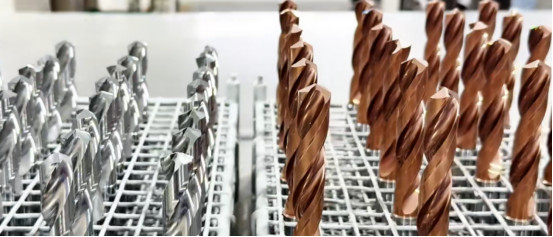
Severe Challenges of Tool Failure in Impeller Machining
Modern impellers have complex surfaces and high accuracy requirements, and the materials are usually “tough nuts” such as superalloys or titanium alloys. These materials have high strength, high plasticity, low thermal conductivity, and high work hardening tendency, therefore tools are susceptible to failure modes such as wear, built-up edge, thermal cracking, and chipping during cutting operations. Particularly for five-axis high-precision impeller machining, due to the rigorous requirement on path continuity, the tools must be replaced quite frequently. Therefore, replacing tools too often will significantly affect the machining speed and uniformity of the pieces. Therefore, how to significantly extend tool life and ensure process stability has been the key issue of improving the overall level of manufacturing impellers.
As a manufacturing technology researcher as an engineer, I have always given my attention to the actual performance of cutting tools when machining new materials. During actual use, we have found that uncoated tools, although cheaper, have short tool life, high machining temperature, and unstable workpiece surface quality in cutting Inconel or DSS materials. PVD coated tools have good strengths in this respect, and thus systematic investigation on them is of particular demand.
Analysis of PVD Coating Technology Mechanism and Performance Advantages
PVD (Physical Vapor Deposition) is a technique which ionizes metal targets into gas phase through physical methods such as arc evaporation and magnetron sputtering in vacuum and deposits them on the tool surface to generate superhard coatings. Its deposition temperature is typically lower than 500°C, which is not simple to cause thermal damage to the substrate tool, and can be utilized on various cemented carbide and ceramic substrates.
The improvement of PVD coatings on the performance of the tool is mainly demonstrated through the following aspects:
- Improving hardness and wear resistance: TiAlN and AlTiSiN coatings possess microhardness as high as 3020 GPa, which can significantly reduce the wear rate of the tool cutting edge.
- Optimizing thermal isolation and thermal stability: Coatings have good thermal insulation properties, which can effectively prevent cutting heat conduction to the tool’s internal and reduce flank wear and thermal softening chipping.
- Reducing friction coefficient and anti-adhesion: Coatings such as CrN and AlCrN have strong lubricity, reduce chip adhesion, and reduce the scratch risk and defect on the machined surface.
- Improving oxidation resistance: Coatings such as TiAlN can form a stable Al₂O₃ film at high temperatures, effectively delaying tool oxidation degradation, and are suitable for dry or semi-dry machining.
All these mechanisms cumulatively make PVD coatings a systematic solution for improving tool life and performance, especially suitable for impeller machining conditions where high thermal load bearing capability is required.
Typical Application Benefits of PVD Coatings in Impeller Machining
PVD coatings have distinguishing advantages in the delicate machining of superalloy impellers due to their better thermal stability, wear resistance, and high bonding. For typical difficult-to-machine materials such as Inconel 718 and GH4169, the use of PVD coated tools not only realizes remarkable extension of tool life but also helps to increase machining stability and surface quality effectively and become a key means to achieve efficient and high-precision machining.
Significant Tool Life Enhancement
TiAlN and AlTiSiN coated ball-end mills were used in five-axis roughing and semi-finishing machining of Inconel 718 turbine blades. The results showed that tool life was enhanced by 2.5 to 4 times with uncoated tools. TiAlN coating with its excellent hot hardness can also keep the cutting edge sharp at 800°C, particularly in severe conditions of high cutting depth and high speed. In addition, this type of coating has a very strong inhibitive effect on abrasive wear and adhesive wear and can significantly prolong the tool change cycle and improve the continuous machining ability of the production line.
Enhancing Machining Stability and Path Continuity
PVD coatings have a small friction coefficient, which can effectively suppress the formation of built-up edge and the frequency of edge chipping during cutting. When in five-axis path machining of complex impeller surface, especially with slow feeding along curved blade edges, uncoated tools would be subjected to micro-vibration and trajectory drift due to skew cutting load, but coated tools can be guaranteed to have control of stable trajectory within a wide parameter window. This vibration-damping and force-stabilizing characteristic smoothes the entire machining process, closes the cutting path to the optimum tool path closer, and removes contour error and risk of rework because of trajectory error to a very large extent.
Improving Surface Quality and Process Consistency
Through surface roughness measurement of the machined blades, we learned that in machining Inconel 718 with TiAlN coated tools, the Ra value can be regulated consistently at 1.0 μm, while in machining with uncoated tools it is higher than 2.0 μm. This is because coated tools retain edge sharpness better at higher temperatures and reduce the blunting of the tool face caused by adhesion and heat diffusion. Enhanced surface quality not only promotes the subsequent polishing and fitting processes but also has a positive influence on the general aerodynamic performance and operation noise control of the impeller, promoting the achievement of high consistency and reliability process goals.
Coping with Complex Working Conditions and High-Impact Environments
When faced with special working conditions such as duplex stainless steel (for example, 25Cr DSS) with high hardness and high corrosion resistance, the quality of coating performance will have direct effects on tool stability and part quality. Study has demonstrated that turning inserts coated with AlCrN/TiSiN composite PVD coatings have lower residual tensile stress and better thermal fatigue resistance than single AlTiN coatings during high-temperature and multi-impact cutting. During machining, it can more effectively suppress the inducement of stress corrosion cracking (SCC), and is particularly suitable for machining stress-concentrated impeller parts such as multi-intermittent cutting zones, interlaced stiffener structures, and groove edges. Such coating also has greater thermal conductivity, which is able to quickly dissipate heat and reduce the frequency of thermal cracks and tool burning, and ensure stable machining under heavy load.
Typical Tests and Life Comparison Analysis
In an impeller tool process optimization test I participated in, we selected uncoated cemented carbide tools and TiAlN coated ball-end mills to carry out milling tests on titanium alloy impellers on a five-axis machining center, and obtained the following comparison data:
| Project | Uncoated Tool | TiAlN Coated Tool |
| Average Life | 12 min | 33 min |
| Surface Roughness (Ra) | 2.1 μm | 1.0 μm |
| Workpiece Cutting Temperature | 820 °C | 610 °C |
| Chipping Occurrence Frequency | High | Extremely low |
The test results also show clearly that PVD coatings have excellent virtues for thermal load reduction, cutting behavior stabilization, and workpiece surface integrity improvement.
Conclusion
In summary, PVD coating technology has excellent performance improvement potential in the application of impeller tools. Not only does it enormously extend tool life, but also greatly increase machining stability and quality of finished products, and it is an important process auxiliary technique for high-end manufacturing industries. In the future, with the continued integration of materials science, deposition technology, and intelligent manufacturing, PVD coated tools will play an even more central role in the field of efficient machining of complex structural parts. As an engineering practitioner, I am absolutely certain that through continuous technical optimization and interdisciplinary cooperation, PVD technology will become increasingly capable of processing advanced manufacturing equipment and critical components.


