
As aerospace, energy equipment, and high-end fluid machinery industries develop, ever-growing demands on high-precision and mass production of complex impeller parts have imposed tremendous bottlenecks on traditional manufacturing processes in terms of machining efficiency and capacity improvement. Though multi-axis linkage machining is superior in shape control and complex surface processing, frequent tool changing has emerged as a crucial factor hindering the overall production rhythm. High-efficiency tool change systems, especially integrated solutions based on servo-driven, intelligent identification, and quick-change tool holder technologies, have been effective means of removing this bottleneck.
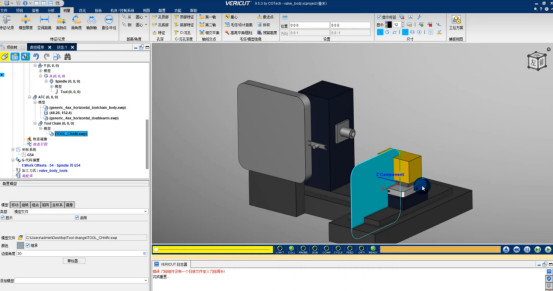
What is a High-Efficiency Tool Change System?
A high-efficiency tool change system refers to an automatic device or control technology in CNC machine tools, especially five-axis or multi-station machining centers, for quick, precise, and reliable tool changing. It is an important device in the contemporary machining of impellers, high-end mold manufacturing, and other fields to increase production efficiency and reduce non-cutting time.
A high-efficiency tool change system is a reliable, fast, and automatic tool changing system that significantly reduces tool change time, human intervention, and enhances overall machining efficiency. When machining complicated workpieces (i.e., impellers), a part often requires more than 10 tools to perform a number of processes like roughing, finishing, groove machining, and sidewall trimming. Not only is manual changing a waste of time, but it also leads to repeat clamping errors. High-efficiency systems have the ability to automatically change tools in a matter of seconds, with production rhythm non-stop.
Analysis of Cycle Bottlenecks in Mass Impeller Machining
In several big-scale impeller automation line projects that I’ve been involved in, there’s a pervasive problem: even with highly optimized machining paths and ensured fixture location accuracy, the overall cycle time is extended due to excessive tool changes. Statistical data show that machining a typical multi-axis integral impeller involves the application of more than 10 types of tools (e.g., ball-end mills, round-nose mills, tapered mills, etc.). With an average of 5–8 seconds for a tool change, tool changing alone would account for more than 10% of the total machining time.
Then it is further complicated by the introduction of tool wear management systems, where backup tools, automatic tool compensation, and life rotation mechanisms all play a part in increasing the tool change frequency. Without the support of intelligent systems, the majority of machining centers still utilize robotic arm or disc-type ATC systems, which are beset by slow tool change response, long tool position calling paths, and jerky command execution—hidden bottlenecks to mass machining efficiency.
Types and Operating Mechanisms of High-Efficiency Tool Change Systems
For resolving this issue, the industry has developed numerous high-efficiency tool change system structures, which are mainly divided by tool change response mechanisms and integration intelligence levels:
| Type | Technical Characteristics | Application Scenarios |
| Servo-Driven High-Speed Tool Magazine System | Achieves tool change response <1 second, precise positioning, stable linkage | High-end five-axis machining centers, impeller machining with high tool change frequency |
| Dual-Arm Manipulator System | Simultaneous tool picking/placement in front/back stations, supports parallel tool change | Multi-station parallel, unmanned machining cells |
| Disc/Chain Servo Tool Magazine | Supports ≥60 tools, short tool change path, high efficiency | Mass automatic lines, high tool change density processes |
| Intelligent Tool Identification System (RFID/NFC) | Automatically identifies numbers, life status, assists system in automatic tool selection/compensation | Multi-variety small-batch flexible production lines |
These systems not only give priority to tool change time but also provide intelligent tool management, tool change path optimization, and fault prediction, advancing steadily towards “full tool life cycle management.”
Take BT tool holder quick-change system as an example: through precise spindle adapters and unique drive mechanisms, axial/radial repeatability accuracy <5μm can be realized and tool change can be completed in 3–10 seconds. Deep integration with NC systems can realize automatic response to tool calling instructions, which is a mainstream trend for high-efficiency tool quick change.
Mechanism of High-Efficiency Tool Change Systems in Optimizing Machining Cycles
For multi-axis impeller machining, repeated and massive tool changes due to different cutting operations make tool change efficiency a major bottleneck affecting the overall machining rhythm. Traditional tool change methods rely on a sequence of operations like robotic arm rotating, positioning, and resetting, which are time-consuming and prone to errors. High-efficiency tool change systems, especially advanced ATC with parallel operation, pre-tool picking, and intelligent recognition, are one of the most important technical ways for intelligent machining centers to improve equipment utilization and reduce non-cutting time. The mechanism is discussed in four aspects:
Significantly Shortening Non-Cutting Time to Unleash Machining Tempo Potential
Non-cutting time is an important indicator of overall machining efficiency, and tool changing accounts for a high proportion. On traditional machines, a complete tool change typically takes ~6 seconds—non-trivial for impeller parts with aggressive cycle requirements. Servo-driven high-speed ATC systems, such as servo-arm tool grippers or direct-drive turntable tool magazines, can cut the tool change time to 1–2 seconds. On a typical 12-process impeller, this would be a savings of ~50 seconds of non-cutting time per part. At 100 pieces per day, this amounts to over 1.4 hours saved per day, or a ~15% improvement in equipment utilization—direct benefit to high-load shops.
Enabling Parallel Preparation and Pre-Tool Fetching for Seamless Process (Transition)
The other main advantage of high-efficiency tool change systems is parallelization of “pre-tool fetching” and “path prediction.” The system can read NC programs or monitor real-time machining status to know beforehand the next tool number/specification, finishing tool pick-up and movement to the standby position before unloading the current tool. This function eliminates the idle “unload-then-select” phase of traditional tool changing, achieving smooth tool changing. This function was implemented in an aviation small turbine impeller machining machine, along with tool path prediction modules, and reduced overall spindle idle time by ~12%, significantly improving spindle utilization and eliminating the “drag effect” of tool switching on machining rhythm.
Achieving Tool Life Prediction and Intelligent Switching to Ensure Machining Continuity
In machining hard materials (e.g., nickel alloy, titanium alloy) using an impeller, the wear of tools is inevitable and directly affects surface quality and precision control. Modern tool change systems are equipped with RFID recognition and AI prediction algorithm of wear, and they automatically calculate residual tool life by accumulating machining time, cutting length, wear rate, etc. in real time. When the system finds a tool approaching failure, it prioritizes the dispatch of backup tools or assumes a “multi-tool same-number strategy,” completing intelligent tool switching without human intervention to ensure continuous machining. This mechanism significantly enhances night or long-cycle continuous machining stability, avoiding workpiece scrapping or machine halt due to faulty human judgment or untimely tool replacement.
Reducing Human Dependence to Facilitate Unmanned Machining
Together with the trend of “black light factories” in industrial automation, high-efficiency tool change systems have become one of the core technologies to realize unmanned workshop operations. Traditional manual tool change or inspection not only needs high labor intensity but also carries the risks of misoperation or missed inspection. Closed-loop control of tool information reading, status monitoring, anomaly alarm to automatic switching is achieved through intelligent tool change systems with identification, early warning, and adaptive processing functions, greatly reducing the dependence on technical staff. With such a high level of automation, they are easy to apply to night machining, hazardous environments, or manpower-constrained conditions, laying a sound groundwork for continuously operating unmanned production lines.
Analysis of Typical Application Cases
Case 1: Titanium Alloy Impeller Automation Line for Aero-Engines
- Background: Over 20,000 impellers manufactured every year, high tool change frequency, manual operation could not meet tempo requirements.
- Solution: Introduced dual-channel chain tool change system with 80-servo tool magazine and intelligent life monitoring module.
- Results:
- Average tool change time reduced from 5.6s to 1.8s
- Overall line efficiency improved by 18%
- Manpower input reduced by 20%, equipment utilization increased by 22%
Case 2: Unmanned Machining Cell for Stainless Steel Centrifugal Impellers in Chemical Pumps
- Background: 150 impellers per day output, 24-hour unmanned operation needed.
- Solution: Adopted BT tool holder quick-change system + RFID identification + automatic tool compensation.
- Effects:
- Achieved 500-hour continuous unmanned tool change operation
- Automatic replacement of worn tools, monthly failure rate controlled within 0.5%
- Machining cycle compressed from 60 minutes to 48 minutes, output efficiency improved by 20%
Conclusion
Against the backdrop of increasingly frequent, precise, and mass multi-axis impeller machining, the high-efficiency tool change system is no longer “equipment appendage” but an important technology to improve the overall line machining rhythm and production organization optimization. By accurately reducing non-cutting time, enhancing machining continuity, and enabling intelligent tool management, it lays the foundation for achieving true unmanned and intelligent machining. In the future, with the continued integration of new technologies like industrial AI, digital twins, and sensing systems, high-efficiency tool change systems will be brought to a new dimension of intelligent adaptability and autonomous decision-making, and it will be one of the basic cornerstones for modern manufacturing factories to build efficient and resilient production capacities.


