
Metal Matrix Composites (MMCs) possessing superior mechanical properties such as high strength, resistance to wear, and resistance at high temperature are the best material option for high-performance aerospace, energy equipment, and other impellers. However, MMCs face numerous manufacturing problems, such as the non-uniformity in the distribution of raw material, restriction on complex forming processes, and processing problems due to hard particles.
Introduction
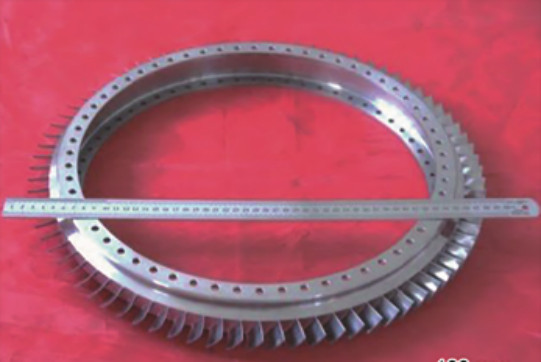
While demand for light-weight, high-strength, and wear-resistant impellers for aerospace, energy machinery, and high-efficiency fluid machinery has increased, traditional metal materials have gradually been unable to meet the requirements of severe working environments. MMCs with unification of the moldability of metal matrices and advanced properties of reinforcing phases (high strength, wear resistance, high-temperature resistance, etc.) have become promising candidates for future high-performance impellers. However, the inherent intricate microstructure and material interface characteristics of MMCs also incur a great number of manufacturing challenges in return. In this paper, the technical challenges in MMC impeller design, forming, processing, and service processes are discussed in a systematic manner and the related countermeasures are proposed, hoping to provide theoretical and technical support for MMC impeller industrial production.
Analysis of Manufacturing Challenges
Metal Matrix Composites (MMCs) show vast potential for the manufacture of high-performance impellers due to their superior strength, wear resistance, and thermal stability. Nevertheless, the realistic production of MMCs for complex geometric components is still bedeviled by numerous technical challenges. The manufacturing challenges arediscussed systematically from four major perspectives:
Difficulty in Controlling Uniform Distribution of Raw Materials
MMCs are composed of a metal matrix and reinforcing ceramic phases (e.g., SiC, Al₂O₃, etc.). Fabrication of the impeller includes uniform distribution of the reinforcing phases in complex geometries. As a result of reasons such as melt viscosity, interfacial tension, and particle agglomeration, reinforcing phases migrate or settle while flowing or sedimentation occurs, leading to local unevenness in material properties, which further affects the strength and reliability of the final product. The uneven distribution of strengthening phases is likely to cause insufficient fatigue life and wear resistance of impellers during their service life. Therefore, the problem of how to control the uniform distribution of particles came forward as a central issue for MMC impeller processing.
Limitations of Forming Processes for Complex Structures
Impellers usually have complex spatial curves and narrow flow channel structures. The traditional forming methods such as die casting, powder metallurgy, and stir casting are inadequate to generate such high-precision and complex geometries. The addition of reinforcement phases lowers the total plasticity of the MMCs, not only increasing the difficulty in mold design but also contributing to forming defects such as cracks and pores. Secondly, MMCs’ high-hardness reinforcing phases cause stringent wear of forming tools, contributing to process complexity.
Processing Difficulties Caused by High-Hardness Particles
MMCs tend to contain hard ceramic particles with Mohs hardness significantly higher than the traditional tool materials, which results in severe tool wear during processing, leading to low processing efficiency and surface finish. Moreover, the thermal expansion coefficient difference between the metal matrix and reinforcing phases may induce interface delamination or micro-cracks during processing, further degrading the overall properties of the final product.
Difficulties in Welding and Repair
Because MMCs possess a complicated microstructure and a strong interfacial reaction between reinforcement phases and the matrix, common welding and heat repair methods are generally not suitable for MMC impeller manufacturing. Especially when defects or damage occur in impeller products, common repair methods are unavailable, which brings enormous trouble to quality control in the production process and afterwards.
Solutions and Engineering Strategies
To actually address the technical issues of Metal Matrix Composite (MMC) impellers, such as non-uniform particle distribution, hard forming of complex structures, processing issues, and unrepairability, systematic engineering solutions have to be formulated from different dimensions like material design, high-end manufacturing processes, processing equipment optimization, and operation and maintenance management. Following are four points with current forward-looking solution streams.
Optimizing Composite Design and Particle Distribution Control
With the adoption of Integrated Computational Materials Engineering (ICME) and simulation technology, the metal matrix type, volume fraction, and particle morphology can be optimized on macro and micro scales. The technologies mentioned above support predicting particle distribution in materials and, therefore, their uniformity is improved. Advanced forming methods like ultrasonic-assisted stir casting and semi-solid composite injection molding have been used to achieve higher dispersibility for the particles. Such techniques not only allow for improved particle distribution but also enhance interfacial bonding strength between reinforcing phases and matrix phases, hence improving the overall performance of impellers.
Using Additive Manufacturing to Construct Complex Structures
Metal additive manufacturing technologies, including Selective Laser Melting (SLM) and Electron Beam Melting (EBM), provide new ideas for generating high-complexity MMC impellers. Additive manufacturing stringently controls the distribution of reinforcing phase in the metal matrix in a layer-by-layer pattern, avoiding particle settling in traditional forming methods. Furthermore, additive manufacturing can achieve complex structures such as thin-walled structures and slim flow passages, which are difficult to achieve in traditional casting or machining. Additive manufacturing can also achieve functional gradient material design according to actual requirements and trade-off between local strengthening and global lightweighting.
Applying Special Tools and High-Energy Processing Technologies
Addressing process challenges caused by high-hardness reinforcing phases, high-hardness tool materials such as Polycrystalline Cubic Boron Nitride (PCBN), ceramic tools, and diamond-coated tools are selected, along with high-speed and low-cutting-depth processing strategies to avoid tool wear. In addition, non-conventional processing technologies such as Electrical Discharge Machining (EDM) and Laser-Assisted Finishing (LAFM) are utilized primarily, which have the ability to effectively improve processing surface quality and reduce thermal stress accumulation during the course of processing.
Surface Strengthening and Preventive Maintenance Technologies
Due to repair challenges of MMC materials, surface strengthening technologies are particularly important. Surface coating treatment of vulnerable parts of impellers by means of technologies such as laser cladding and plasma spraying can be utilized to enhance their wear resistance, corrosion resistance, and high-temperature resistance. In addition, under the combined application of digital twin technology, real-time monitoring of the service condition of impellers is possible, timely detection of defects can be achieved, and preventive maintenance can be performed, thus prolonging the service life of impellers.
Engineering Application Prospects
With the continuous development of additive manufacturing technology and the extensive popularity of intelligent processing equipment, MMC impellers have broad application prospects in aero gas turbines, high-temperature chemical pumps, high-speed cooling water pumps, and liquid rocket pumps. Especially under severe working conditions requiring extremely high strength, rigidity, heat resistance, and corrosion resistance, the superior performance of MMCs will be an irreplaceable technical support for traditional metal materials.
Conclusion
Being integral components of next-generation high-performance devices, MMC impellers continue to face various challenges such as particle distribution, forming accuracy, and processing damage with manufacturing processes. However, due to novel material conception ideas’ proposals and breakthroughs in superior forming and processing technologies, these problems are gradually being dealt with. Forward-looking, with diversified material systems and innovative intelligent manufacturing technologies continuously being developed, MMC impellers will play increasingly important roles in the manufacture of high-performance equipment and drive further research and development of efficient, reliable, and energy-saving equipment.


