
Being a key component of fluid machinery, the machining precision of impellers has direct effects on equipment performance and stability. Together with the emergence of increasingly complex shapes of impellers, especially the widespread application of 3D free-form surfaces, multistage linkages, and thin-walled structures, precision control has become a key factor. In the last several years, the role of CNC machining center control systems in the accuracy of impeller machining has gained wider attention.
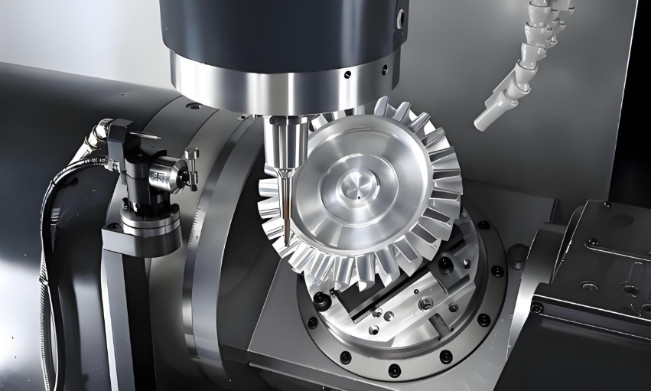
Introduction
Impellers are essential components in a large number of fluid machines such as centrifugal pumps, compressors, and gas turbines with complex 3D curved surface geometries. Geometric precision directly influences dynamic performance, operational efficiency, and mechanical equipment stability during the precision machining of impellers. Traditional precision control has typically focused on parameters such as machine tool stiffness, tool wear, and programming trajectories, but recent studies have made clear that the role of machining center control systems in affecting impeller precision is more apparent. The effects of control systems not only affect machining trajectory accuracy but also on tool motion coordination and error compensation capability. This article will focus on investigating in-depth the multi-dimensional impact of machining center control systems on impeller precision control and advancing optimization methods to enable high-precision impeller machining.
Role of Control Systems in the Machining Process
The control system of a CNC machining center can be considered the “brain” of the whole machine, with primary tasks such as but not limited to:
- Performing interpolation computation and managing multi-axis synchronous motion;
- Preemptive optimization and acceleration/deceleration of the machining paths;
- Real-time feedback and compensation for machining errors, such as backlash and thermal deformation;
- Integrating tool life management, cutting monitoring, and external probe functions.
In machining of impellers, especially in five-axis linkage machining, control system quality is critical. Its command parsing speed, interpolation precision, motion coordination algorithm, and error compensation capacity determine the tool trajectory’s smoothness and precision in space. If the control system is insufficient, the tool may be deviated from the optimal path, which affects the geometric precision and surface quality of the impeller.
Influence Mechanism of Control Systems on Impeller Precision
The operation efficiency of control systems in complex impeller processing is closely associated with geometric precision, surface integrity, and machining stability for end products. As five-axis linkage technology has evolved, CNC systems are not only command executors but also master control nodes for high-precision machining. Their operation efficiency in interpolation precision, multi-axis coordination, and compensation of errors indicates the upper limit of machining for complex curved surface components.
Decisive Role of Interpolation Algorithms in Impeller Surface Trajectory Precision
Impellers are usually produced using free-form or spiral surfaces with complex geometry and a significant change in curvature, imposing very strict demands on tool path continuity and interpolation accuracy. Traditional G01 linear interpolation algorithms easily generate step errors and path discontinuity when traversing high-curvature areas, which degrades surface finish. Alternatively, high-order curve interpolation such as Non-Uniform Rational B-Spline (NURBS) interpolation algorithms provides smooth transition with no steps and enables the tool to be fitted closer to streamlines of blades and significantly improved machining accuracy.
In addition, modern CNC systems usually incorporate Look-ahead functions, where it is feasible to pre-read and analyze a number of subsequent interpolation segments beforehand to optimize speed and acceleration change in advance. This dynamic adjustment system effectively avoids feed sudden changes, mechanical shocks, and trajectory errors and greatly enhances overall trajectory stability during high-speed precise machining. For example, the Siemens system can predict up to 1,000 segments of trajectory, which brings significant advantages to continuous multi-surface corner machining of impellers.
Multi-Axis Coordination Control Ensures Tool Posture and Path Smoothness
In the five-axis machining of impellers, axes A and C must continuously vary tool postures in order to trace the relentless changes of surface normals. The movements must be synchronized with the XYZ three axes within milliseconds; otherwise, issues like posture sudden change, cutting path deviation, or even tool collision would arise. A good control system must possess excellent multi-axis interpolation functions in order to accomplish real-time inter-axis coordination and speed coordination.
When the control system is sluggish, typical problems are tool axis torsional effect, posture switching jumps, and trajectory path distortion, especially evident in channel roots or high-curvature blade areas. Siemens’ “Advanced Surface” is a high-order control technology specifically tailored to five-axis interpolation. It uses algorithm-level dynamic motion prediction and acceleration compensation to guarantee best posture and feed smoothness for tools on continuous space curves, effectively increasing surface uniformity and contour precision.
Precision Error Compensation Improves Dimensional Consistency and Machining Precision
High-precision machining of impellers is very minute tolerance—any minor error may result in asymmetric thickness of blades or variation in flow line, with a devastating effect on hydrodynamic performance. CNC systems therefore require the implementation of sophisticated error compensation facilities to offset effects from the machine tool itself, ambient temperature, and motion systems.
The most commonly implemented compensation techniques are:
- Backlash Compensation: Compensates for lead screws and nuts gap positioning errors;
- Thermal Compensation: Drives command displacement dynamically based on the machine tool’s temperature rise model to guarantee machining consistency during thermal steady state;
- Volumetric Compensation: Tracks the global error field using a ball bar or a laser interferometer and compensates it through the control system in order to achieve high-precision control of 3D geometry.
Take the example of the Heidenhain control system: through incorporation of real-time temperature measurement, thermal drift feedback on the spindle, and laser measurement technology, it achieves sub-micron-level contour error calibration, used widely in high-precision machining of important components like aero-engine impellers and gas turbine guide vanes.
Typical Case Analysis: Influence of Different Control Systems on Impeller Machining Precision
To intuitively demonstrate the effect of control systems on impeller machining, we compared machining accuracy under three widely used control systems (FANUC 31i-B5, Siemens 840D sl, Heidenhain TNC 640) on the same five-axis machine at an aerospace company. According to trial cutting tests of aluminum alloy impellers, the following conclusions were reached:
| Control System | Contour Error (mm) | Surface Roughness (Ra, μm) | Blade Thickness Consistency Error (μm) | Stability Assessment |
| FANUC 31i-B5 | ±0.025 | 0.5 | 30 | Medium |
| Siemens 840D sl | ±0.015 | 0.38 | 18 | High |
| Heidenhain TNC 640 | ±0.012 | 0.35 | 15 | Extremely high |
Experimental results prove that Heidenhain TNC 640 CNC control system performs most efficiently with regard to precision, surface finish, and consistency and reflects the strengths of its high interpolation accuracy power and error compensation features in impeller machining.
Control System Optimization Strategies for Improving Impeller Machining Precision
In high-precision five-axis impeller machining, work performance of control systems directly affects machining quality and accuracy. To ensure that impellers are in accordance with design requirements, businesses can optimize control systems from different sides to enhance machining stability and precision.
Enable High-Order Surface Interpolation Functions to Improve Trajectory Fitting Precision
Most modern CNC machines usually support high-order interpolation technologies, such as NURBS interpolation in Siemens SINUMERIK and Fanuc’s AI Contour Control. These capabilities enable tool paths to closely follow complex surface designs with zero step errors and surface defects that result from linear interpolation. Especially in free-form complex blade machining, application of high-order interpolation ensures smooth and continuous tool motion, significantly improving impeller machining accuracy and surface quality.
Optimize Look-Ahead Control Parameters to Ensure Smooth Movement
Look-ahead control dynamically adjusts machine deceleration/acceleration by pre-reading upcoming tool positions, avoiding vibration at, or abrupt deceleration during, trajectory change. Adequate adjustment of the look-ahead depth and proper setting of the deceleration interval can smoothen five-axis linkage motion, greatly reducing machining defects caused by tool impact and posture sudden changes. This is particularly important for deep groove blades of complex shape or obviously curved impeller surfaces.
Use Simulation Software for Path Verification to Reduce Risks
Using virtual machining software such as VERICUT and NX Simulation, pre-simulate the tool path and control parameters to automatically detect issues like path interference, trajectory discontinuity, and multi-axis motion aberrations. Simulation verification allows engineers to optimize machining programs, avoiding rework or scrap workpiece during actual machining, and optimizing machining efficiency and reliability.
Regular Calibration and Error Compensation to Ensure Precision Stability
Geometric error, thermal deformation, and machine tool transmission clearances all contribute to the influences on machining precision, requiring periodic laser interferometry or ball bar calibration of machine tools. In combination with the intrinsic error compensation capability of control systems, dynamic compensation of motion errors can be realized, ensuring machining dimension and shape consistency, as well as long-term stable manufacture of high-quality impeller components.
Strengthen Operator Training to Improve Operation and Debugging Capabilities
Control systems are complex, and the skill of operators directly affects machining effects. Through systematic training, enable programming and operating personnel to study various parameter settings, unusual alarm handling, and simulation analysis, efficiently avoiding human errors and improving machining stability and precision. Professional literacy of operators is an important guarantee for unleashing the maximum potential of control systems.
Conclusion
With the brain of modern CNC machining centers, control system performance is key to deciding the accuracy of machining complex parts like impellers. From interpolation trajectory precision control to five-axis coordination algorithms and dynamic error compensation systems, the level of intelligence in control systems sets the technical limit of high-end production. In the future, as AI-augmented control, adaptive machining, and digital twin machine tools come into being, control systems not only will be executors but intelligent scheduling centers during processing, providing close assistance for high-precision, high-efficiency, and low-loss production of complex impellers.


