
Hastelloy, a nickel-based, high-performance matrix alloyed with rich alloying components such as molybdenum and chromium that offers corrosion resistance, is widely used in the complex corrosive environments of the process chemical industry due to its superior pitting, crevice corrosion, and stress corrosion resistance, with particular important use in pump equipment.
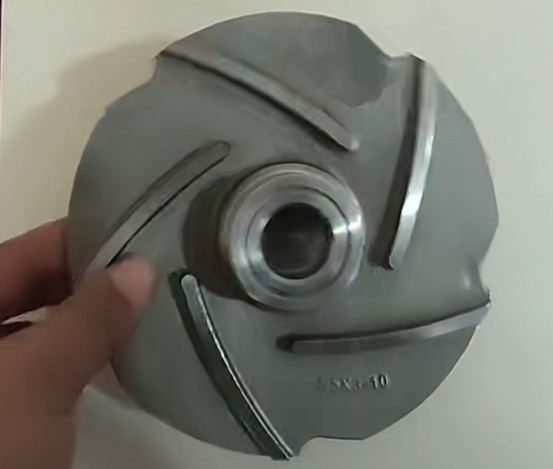
Introduction
In the chemical process industry, compressors and pumps as primary equipment for fluid transport have a direct influence on production process economics and safety. But their key components—especially impellers—operate long-term in very corrosive mediums such as concentrated sulfuric acid, hydrochloric acid, sodium hypochlorite, and chlorinated organic mediums. Conventional stainless steel materials are usually susceptible to corrosion failure in these mediums, struggling to sustain high-reliability standards. As a good nickel-based corrosion-resistant alloy, Hastelloy is used extensively in making corrosion-resistant pump impellers due to its greater acid resistance, pitting resistance, and thermal stability, particularly good service performance in severe conditions such as high temperature/pressure, strong acids, and high chloride. Systematic research on corrosion stability can not only better select materials but also significantly enhance the operating reliability of chemical devices.
Overview of Hastelloy Material Characteristics
Hastelloy is a group of solid solution-strengthened nickel-based alloys with elements such as molybdenum (Mo), chromium (Cr), iron (Fe), and tungsten (W) in a precise proportion. Common grades include Hastelloy C-276, C-22, B-2, etc. Of these, C-276 is classified as a “universal corrosion-resistant material” due to its broad-range resistance to corrosive media of all types. The alloy exhibits resistance to acidic, oxidizing, and chlorinated environments, mainly because of a stable passivation film and resistance to structural stability at elevated temperatures. The presence of molybdenum significantly enhances local corrosion resistance, chromium improves resistance to oxidizing media, while the nickel matrix offers thermodynamic and mechanical stability. Low carbon and silicon contents also suppress the precipitation of intergranular carbide, and the material is highly weldable and can be applied to chemical equipment having complex chemical components.
Characteristics of Corrosive Conditions in Chemical Industry
Chemical equipment that corroded in chemical environments are complicated and dynamic, primarily containing:
- Strong Acid Media: Conventional inorganic acids such as sulfuric, hydrochloric, and phosphoric acids are extremely corrosive under different concentrations and temperatures, particularly sensitive to local corrosion.
- Chloride Ion-Containing Media: Chlorine, sodium hypochlorite, and chlorinated organic compounds widely exist in processes such as chlor-alkali, bleaching, and chlorination reactions, (highly prone to) inducing pitting and chloride stress corrosion cracking.
- High-Temperature Oxidizing Atmosphere: Oxidizing environments caused by high-temperature processes or reaction heat promote metal oxidation and passivation film damage.
- Crevice and Microflow Corrosion: Complex structural parts such as bolt connections and hub crevices are prone to acid concentration and local oxygen depletion, forming crevice corrosion sources.
Through a number of field investigations and a review of operating data, I have found that the majority of corrosion failure incidents typically originate from the change of local conditions incompatible with the characteristics of the material, and the broad-spectrum nature of corrosion resistance of Hastelloy ideally addresses this industry requirement.
Corrosion Stability Analysis of Hastelloy Impellers
After the application success of composite impellers, we remain focused on the stability of impellers under complex working conditions. Especially under chemical, marine, and high-temperature corrosion conditions, material corrosion resistance is among the primary factors affecting impeller service life and reliability. The outstanding corrosion-resistant Hastelloy alloys are frequently applied to produce impellers for various harsh working conditions.
Corrosion Resistance Mechanism
The key reason that Hastelloy shows excellent stability in harsh corrosion environments is that it possesses unique alloy composition and efficient passivation mechanism. High content of chromium (Cr), molybdenum (Mo), iron (Fe), tungsten (W), and other elements in the alloy has a synergistic effect to help the alloy rapidly form a thick, compact, and tenacious oxide passivation film in various media, mainly composed of Cr₂O₃, MoO₃, and NiO. This oxide film is effective against erosion by oxidizers and corrosive acids in oxidizing conditions, and in reducing conditions, it relies on the surface molybdenum enrichment to form a local “protection zone” in order not to pit.
Of special interest is that Hastelloy shows stability much higher than stainless steel in heavily corrosive environments with the presence of chloride ions (Cl⁻). The tendency of surface segregation of the molybdenum creates a molybdenum-rich surface layer that highly resists the intrusion of chloride ions, markedly reducing risks of local corrosion. Meanwhile, the nickel (Ni) component of the alloy confers excellent ductility and toughness properties to the alloy. After damage or impact beyond the surface layer, it can easily repair the passivation film by way of “self-healing” oxidation reactions, providing long-term stable protection. This in-situ repassivation capability is precisely the vital difference between Hastelloy and standard stainless steel or other corrosion-resistant alloys.
Typical Corrosion Types and Micro-Morphology
Although Hastelloy has exceptionally high total corrosion resistance, localized failure modes can nevertheless occur under specific application conditions, being largely comprised of the following typical corrosion types:
- Pitting Corrosion: Mostly occurs in chemical environments containing Cl⁻ ions, typically manifested as isolated and deep pits, often initiating from non-metallic inclusions, micro-cracks, or mechanical scratches on the material surface. The electrochemical reaction rate in pitting areas is much higher than that in surrounding areas, and once formed, it is extremely difficult to self-heal, being an important factor affecting the early life of impellers.
- Intergranular Corrosion: Although Hastelloy itself has good resistance to intergranular corrosion, improper handling during welding or local heat treatment can easily lead to the precipitation of chromium-rich or molybdenum-rich intermetallic compounds, causing depletion at grain boundaries and forming local anodic areas, triggering grain boundary selective corrosion, which may even lead to inter-tissue debonding or structural failure in severe cases.
- Crevice Corrosion: Mainly occurs in poorly ventilated areas such as connection parts, fastening areas, or weld roots of impellers. In these areas, due to limited solution flow, oxygen concentration differences lead to enhanced local acidity, forming a strong autocatalytic corrosion microenvironment. This “local battery effect” aggravates the metal dissolution rate, being one of the key issues that need to be focused on during the long-term service of Hastelloy.
- Stress Corrosion Cracking (SCC): Under combined action of high tensile stress and corrosive media, brittle fracture in the transgranular or intergranular form may occur. Even if Hastelloy is resistant to SCC, in the case of extreme conditions of high temperature, high chlorine, and high stress, multi-source cracking and fast propagation can take place, with fracture surfaces exhibiting characteristic intergranular fracture or quasi-cleavage morphology.
Key Factors Affecting Corrosion Behavior
Several factors determine corrosion behavior in Hastelloy impellers, including the chemical and microstructural character of the material itself and external working conditions and control of manufacturing process. The following are of overriding significance to determining its corrosion stability:
- Temperature and Media Composition: An increase in environmental temperature significantly accelerates the electrochemical reaction rate, especially in high-chlorine or strong acid environments, where the corrosion rate increases exponentially. In addition, free ions present in common media such as HCl, H₂SO₄, and HNO₃ also aggravate the local corrosion behavior of the alloy. Therefore, mastering the synergistic corrosion mechanism between media composition and thermal environment is a prerequisite for formulating corrosion protection strategies.
- Surface Condition and Mechanical Processing Residual Stress: Scratches, cracks, deformation layers, and residual tensile stress generated during mechanical processing may all become corrosion initiation sources. Especially on the surface of high-speed rotating impellers, these micro-defects may gradually expand into corrosion fatigue cracks under alternating loads. Therefore, high-quality surface finishing and subsequent stress relief heat treatment are particularly important.
- Heat Treatment Process Parameters: The solution treatment temperature and cooling rate directly affect the precipitation behavior of intermetallic compounds and the chemical stability of grain boundaries. By optimizing the heat treatment system (such as sufficient solution + rapid cooling), the formation of chromium-depleted areas at grain boundaries can be minimized, thereby significantly improving resistance to intergranular corrosion.
- Operating Conditions and Erosion Loads: In actual operation, impellers are long-term in high-speed rotation and complex flow fields, often subjected to particle impact, turbulent scouring, and cavitation bubbles. These dynamic loads not only accelerate the mechanical damage of the surface passivation film but also easily collaborate with chemical corrosion to induce corrosion fatigue or multi-source micro-cracks, significantly reducing impeller service life.
Stability Improvement Strategies
Combining current research and engineering practice, I believe the corrosion stability of Hastelloy impellers can be improved from the following aspects:
- Optimized Casting and Heat Treatment: Achieve precise solution treatment by controlling temperature and time, refine grains, inhibit the precipitation of σ or μ phases, and enhance intergranular corrosion resistance.
- Application of Surface Strengthening Technologies: Use laser remelting, electropolishing, shot peening, and other methods to improve surface density and block corrosion source invasion paths.
- Refined Fluid Structure Design: Reduce crevices and dead zones in pump design, improve flow channel distribution, and reduce the risk of crevice corrosion and erosion from the source.
- Corrosion Monitoring and Early Warning Systems: Introduce electrochemical noise method, EIS, and other technologies for real-time online monitoring to identify corrosion trends in advance.
- Precise Material Matching: Select different Hastelloy alloys for different corrosion types, such as C-276 suitable for oxidizing and chlorine-containing environments, and B-2 suitable for non-oxidizing acid conditions.
Conclusion
In general, Hastelloy impellers are outstandingly stable in the severe corrosive environments of the chemical process industry and are a key material choice for high-corrosion applications. In the coming years, with the advancement of green chemistry, where efficient separation and extreme process conditions become increasingly prevalent, Hastelloy will encounter even more stringent performance demands.
Therefore, based on its corrosion mechanism that I have learned deeply, I believe that pursuing research in material design optimization, multi-scale corrosion simulation, smart online monitoring, and advanced manufacturing techniques will be the key path to further drive its extensive application in high-end machinery. As we have experienced through practice, the combination innovation of material science and engineering technology is the fundamental support for ensuring the safe and sustainable operation of chemical equipment.


