
In wastewater treatment industries, the operating environments of pump equipment are typically filled with corrosive chemicals and abrasive particulates, cutting down dramatically the service life of key internal components. As the central component for power transmission, impellers are subjected to continuous corrosion, erosion, and fatigue loading, and thus the selection of high-performance material is particularly critical. High-silicon cast iron has been widely used in the manufacture of sewage pump impellers since it possesses chemical stability in acidic environments and good wear resistance.
Introduction
In sewage treatment systems, especially during municipal drainage and industrial wastewater recycling, pumping equipment must cope with long-term operation, high-frequency start-stop cycles, and complex water quality challenges. Sewage often contains high concentrations of inorganic acids, organic compounds, heavy metal ions, and sand impurities, which cause severe corrosion and mechanical wear to impellers, leading to reduced operational efficiency and premature equipment failure.
Traditional gray cast iron or ductile iron typically has a service life of less than two years under such conditions, while high-silicon cast iron offers significant advantages in corrosion and wear resistance due to its unique silicon-graphite eutectic structure. In an industrial sewage pump station technical transformation project I participated in, replacing impellers with high-silicon cast iron extended the equipment maintenance cycle from 1 year to over 4 years, significantly reducing maintenance costs and operational interruption rates. This change prompted me to deeply study its life performance and optimization paths.
Material Characteristics of High-Silicon Cast Iron
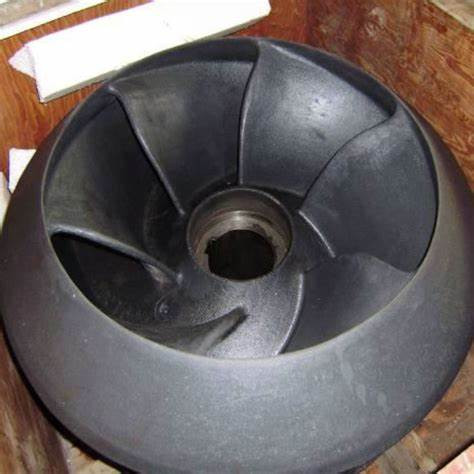
High-silicon cast iron (normal composition: Si 14.5–15.5%) is a type of brittle cast iron material with low carbon and high silicon content, and its structure is composed of (large amounts of) silica eutectic phases and fine graphite. Its principal performance features are as follows:
Excellent Chemical Stability
The high silicon content causes the material surface to form a dense silicon oxide film, which possesses very high inertness in acidic sewage of pH < 4. It possesses good corrosion resistance to most inorganic acids (e.g., sulfuric, phosphoric) and certain organic acids (e.g., acetic, oxalic). This causes it to possess irreplaceable advantages for highly corrosive areas like acid anaerobic tanks and dephosphorization reaction tanks.
Medium Strength and High Hardness
Though high-silicon cast iron is of low ductility and is one of the typical brittle materials, its Brinell hardness usually is HB 250–350, which provides a certain erosion resistance. In the environment of sewage containing hard particles like sand and glass pieces, the surface wear rate is far lower than that of common cast iron.
Good Castability and Formability
High-silicon cast iron is suitable for integral casting of complex structures, which meets the shape requirements of closed and semi-open impellers in sewage pumps. However, its welding performance is extremely poor—after cracks or defects occur, it is almost impossible to repair, thus presenting higher demands on casting processes.
While these material properties are salient, they also reflect deficiencies such as low impact resistance and propensity for edge fracture that must be mitigated by design and operational means.
Analysis of Influencing Factors on Service Life
The service life of high-silicon cast iron impellers is affected by a number of interacting factors, of which the following four categories are particularly important:
Corrosive Environmental Factors
Acid-base components, dissolved gases (such as CO₂, H₂S), and microbial metabolites in sewage form corrosion cells on the impeller surface, accelerating material degradation. The advantage of high-silicon cast iron lies in its self-passivation property—its passivation layer can automatically repair minor damages, with corrosion rates significantly lower than other metal materials in most acidic media.
Erosion Wear Effect
Under high-speed rotation, the blade surface is impinged by solid particles with high hardness, resulting in micro-pits, erosion bands, and edge erosion. Although high-silicon cast iron has relatively high hardness, its wear resistance is still limited in areas of extremely high particle concentration or flow velocity, frequently causing issues like thinned blade leading edges and degraded flow channels.
Processing and Forming Defects
High-silicon cast iron is prone to shrinkage cavities, slag inclusions, and other casting defects that act as sites for crack initiation during subsequent service, taking a drastic toll on impeller life. Casting temperature, mold design, and cooling rate must therefore be tightly controlled to improve product consistency.
Working Condition Mismatch and Operational Parameter Fluctuations
Running pump systems for a long term in the low-efficiency region, start-stop frequency, or idling and cavitation conditions all induce fatigue failure of impeller materials. In an engineering inspection, I found that a booster pump with start-stop frequency produced punctate erosion on the leading edge of its high-silicon cast iron impeller through local idling cavitation. Despite the better performance of the material, the incorrect operation led to premature scrapping.
Typical Service Life and Engineering Cases
Tests show that the service life of high-silicon cast iron impellers is 15–35 years under conditions of moderate corrosion and moderate wear, which is far longer than that of ordinary cast iron (approximately 10 years) and some high-chromium alloy steels (3–5 years). Under conditions of corrosion dominance and low wear, they can operate stably for over 6 years without replacement.
Take, for example, a municipal sewage treatment facility: after having first used ductile iron impellers that needed to be replaced annually, since switching to high-silicon cast iron in 2018, the impellers have operated for over 5 years with only moderate surface shelling but no structural degradation. This has saved significant replacement and shutdown costs, with operating managers providing extensive feedback that the material is “of great engineering value.”
Engineering Strategies for Extending Service Life
Although high-silicon cast iron impellers possess better wear and corrosion resistance, brittleness and structure sensitivity cause service life to depend primarily on systematic engineering optimization. For optimum performance, collaborative optimization should be implemented from design, production, operation, to intelligent maintenance, establishing a full-life-cycle reliability improvement system.
Structural Design Optimization
Structural design is the initial line of defense in high-silicon cast iron impeller life extension. Since its erosion resistance is mainly concentrated at the leading and trailing edges, weak points (such as blade leading edges, trailing edges, and outlets) can be purposely designed with a larger thickness to enhance erosion and corrosion resistance through geometric shaping. Meanwhile, flow channel profiles and curvatures should be optimized to avoid excessive local flow velocity peaks causing turbulence and eddy current erosion, reducing damage risks due to energy concentration.
In addition, the transitional zone between blades and the hub is also a stress concentration zone. Through the addition of transition fillets and elimination of sharp corners, one can enhance stress distribution and reduce crack initiation tendency caused by the coupling effect of thermal stress and centrifugal load.
Application of Surface Strengthening Technologies
Aiming at issues like micro-cracks, pitting, and local spalling on high-silicon cast iron surfaces, advanced surface strengthening technologies can significantly extend service life. Common methods include:
- Ceramic Coatings: Such as Al₂O₃, ZrO₂, etc., applied via plasma spraying to enhance surface hardness and heat resistance, suitable for high-temperature or highly corrosive media environments.
- Brush Plating/Overlay Welding of Ni-based Alloys: Forming corrosion-resistant coatings through local deposition, widely used in chemical pump impellers to delay chemical medium erosion.
- Laser Cladding Strengthening: Using Ni-based or WC-based alloy powders combined with laser local cladding to construct composite strengthening bands in high-erosion areas, enhancing both surface hardness and crack propagation resistance, thus significantly extending vulnerable area life.
According to actual service scenarios and damage distribution characteristics, zonal strengthening strategies should be adopted for different regions to achieve optimal resource allocation.
Precise Matching of Operational Conditions
Moderately matching operating conditions is particularly crucial to extending impeller life. Firstly, pump types and impeller forms should be sensibly selected to avoid over-design flow operation or extended no-load operation, so as to avert fluid-induced vibration and non-linear impact loads. Secondly, under the start-stop operating conditions with high frequency, the upper limits of start intervals and operating frequency should be determined to restrict low-cycle fatigue damage caused by thermal stress cycles.
Meanwhile, improving influent water quality is an excellent way of reducing impeller erosion risks. Sand settling and multi-stage filtration systems can be introduced at the front end of pump stations to reduce hard particles entering the impeller cavity, particularly during high-sand content situations.
Digital Monitoring and Predictive Maintenance
Relying on digital operation and maintenance technologies to achieve real-time perception of impeller operation status and life prediction is an important development direction for improving reliability. Recommendations include:
- Constructing online monitoring systems with vibration sensors, power collectors, flow meters, etc., to real-time collect key operation data.
- Establishing remaining life prediction models via AI algorithms based on data-driven fatigue life modeling, integrating load spectra, temperature distribution, and operation frequency, transitioning from “passive repair” to “active maintenance.”
- Carrying out periodic non-destructive testing (such as ultrasonic flaw detection, infrared thermal imaging) to (investigate) early cracks, corrosion hazards, or thermal fatigue signs, providing a basis for maintenance decisions.
The integration of digital and traditional maintenance methods will greatly enhance the reliable operation duration and economic efficiency of high-silicon cast iron impellers.
Conclusion
High-silicon cast iron impellers have good material compatibility and engineering reliability for application in sewage treatment, with particular suitability for (working conditions) where there is simultaneous acid corrosion and moderate particle erosion. Though possessing intrinsic drawbacks of high brittleness and inconvenient repair, their service life and operation safety can be effectively improved through process control, structure design, and operation strategy optimization.


