
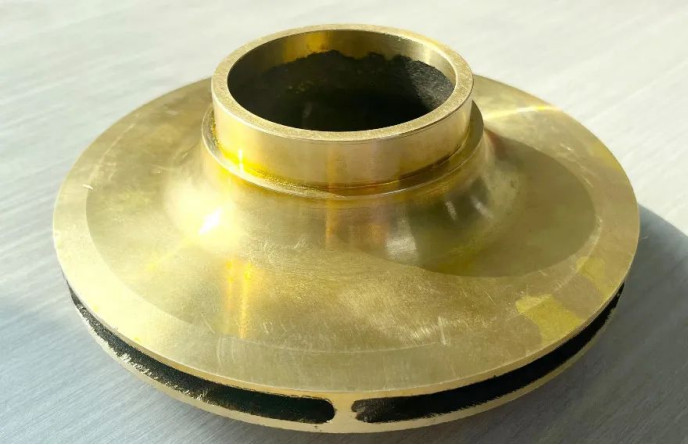
As a major power device of fluid conveying systems, pump operating efficiency is directly related to energy consumption levels and economic performance. The impeller as the most critical device for the energy conversion process in pumps has material properties—especially thermophysical characteristics—that play a key role under high-temperature, high-frequency, or heat-sensitive fluid conditions on the global efficiency. Copper alloys have found wider applications in hot water pumps, chemical pumps, and circulation pumps owing to their favorable workability, corrosion resistance, and thermal conductivity.
Introduction
In the course of operation of pump systems, the impeller plays not only the vital function of transferring mechanical energy to the liquid but also a direct role in controlling fluid flow patterns, energy loss, mechanical friction, and thermal management. Historically, hydraulic structure design and processing precision were accorded the highest priority while optimizing pump efficiency, and material thermal characteristics were not deemed sufficiently significant. However, with pumps now being utilized in ever-higher temperature or heat-sensitive applications, the influence of impeller thermal conductivity on pump efficiency has become increasingly important.
In my professional engineering experience, I designed a high-temperature hot oil pipeline transportation system refurbishment. The first stainless steel impeller was troublesome due to local heat accumulation due to its inferior thermal conductivity, which led to seal failure and cavitation. Having opted for a copper alloy impeller in its place, the equipment operated more smoothly, shaft seal temperature decreased by nearly 15°C, and overall energy consumption dropped substantially. Such experiences have always reaffirmed my admiration of the central role of copper alloy materials in thermal management of pumps.
Overview of Thermal Conductivity Characteristics of Copper Alloys
Copper and copper alloys belong to the highest thermal conductivity metals, with typical values of 80 to 400 W/m·K, far superior to common cast iron (around 50 W/m·K) and stainless steel (15–25 W/m·K) used for pump equipment. Amongst them, ZCuSn10Zn brass alloys and certain bronze materials possess high thermal conductivity and mechanical properties balance, which are qualified to fabricate impeller products with complex structural features, thin wall thickness, and higher thermal loads.
The copper alloys’ good thermal diffusion quality can quickly pass through friction, shearing, and fluid heat transfer-induced heat to the pump body or cooler device to avoid performance reduction because of local overheating. This aspect is a unique advantage when selecting material for high-temperature cycles, heat exchange units, or heat transport of heat-sensitive reaction media.
Direct Influence Mechanism of Thermal Conductivity on Pump Efficiency
Copper alloy impeller’s excellent thermal conductivity allows the improvement of pump operating efficiency from different dimensions, specifically including:
Reducing Flow Channel Thermal Instability and Optimizing Fluid Dynamic Characteristics
When hot fluids such as hot water, hot oil, or chemical media containing reactive chemicals are conveyed, undesirable thermal conductivity of the impeller easily produces local hotspots, thereby resulting in non-uniform expansion of the material, flow channel deformation, and high turbulence, which results in loss of efficiency. Copper alloy impellers can enable rapid heat transfer and stable blade geometry, hence good streamline patterns, thereby reducing fluid head loss and conversion efficiency of kinetic energy improvement.
Alleviating Frictional Heating and Controlling Seal Temperature
Some pumps such as canned motor pumps and vertical hot water pumps have impellers near bearings and seal parts. Trapping of frictional heat in service 再易 (highly likely to) lead to aging, deformation, or leakage of seals. Copper alloy impellers are capable of transmitting local heat and reducing temperature in the shaft seal region and increasing seal life. When a canned motor pump was undergoing maintenance, I found the oil film temperature of the bearing in the copper alloy impeller system to be approximately 12% lower than that in the steel impeller system, greatly extending the maintenance cycle.
Efficiency Advantages in Specific Working Conditions
Due to their higher thermophysical properties and anti-scaling capabilities, copper alloy impellers possess excellent efficiency advantages in certain special working conditions, especially suitable for industrial processes of high-temperature fluid transport and scale-hard conditions. The following conducts a special analysis under two typical working conditions.
Hot Water and Hot Oil Systems
In applications such as industrial heat exchanger systems, heat transfer oil circulation, or high-temperature condensed water recovery, the medium temperature is typically maintained at 80–180°C. These high-temperature conditions of transportation place extreme demands on the thermal stability of the impeller material. Due to low thermal conductivity of standard stainless steel impellers, local temperature rise is prone to occur under high-speed rotation and medium impact, generating huge thermal stress gradients, which in turn cause material thermal fatigue cracking, dimensional deformation, or even premature failure.
Copper alloys, due to their very good thermal conductivity (typically more than 10 times that of stainless steel), can easily conduct and distribute heat evenly and successfully remove the risk of temperature concentration zones. This heat balance function allows the entire impeller to expand in unison when temperature rises, avoiding structure stress concentration caused by thermal shock. In addition, high thermal conductivity can reduce the thermal stabilization period following pump startup, allowing the system to enter a state of efficient operation more quickly and enhance total energy utilization and response speed.
Scale-Prone Fluid Transportation Systems
In processing media of high hardness such as slurry, cement slurry, or with calcium ions or sulfates, temperature difference, pressure fluctuation, and chemical composition cooperate to generate scaling layers on the surface of the impeller easily. Once bonded, the scaling layers, apart from affecting the cross-section of the fluid channel, will also change the local flow velocity distribution, thereby leading to pump efficiency loss and energy consumption increase, and even local corrosion.
The second major advantage of copper alloys also relates to their equal heat distribution. Since no major local heat spots are formed within the impeller, the temperature gradient driving force on which precipitation reactions crystallization depends is actually suppressed, which dramatically eliminates the scaling formation process. Also, the copper surface has low adhesion to sulfate and carbonate materials, and thus it is less likely to form a solid scale layer compared to stainless steel. This material is excellent in corrosion resistance. This property of material has a positive meaning in guaranteeing long-term patency for flow channels and pump body efficiency, especially suitable for working conditions with strong requirements on cleanliness of flow channels, such as sewage treatment, transportation of slurry, and circulation of pulp.
Comparative Analysis of Efficiency with Common Materials
| Material Type | Thermal Conductivity (W/m·K) | Corrosion Resistance | Pump Efficiency Performance | Applicable Temperature Range |
| Copper Alloy | 80–400 | Excellent | High | -20~200°C |
| Stainless Steel | 15–25 | Good | Medium | -50~250°C |
| Gray Cast Iron | ~50 | General | Medium-Low | 0~120°C |
| Engineering Plastic | <1 | Good | Low | -10~80°C |
Copper alloys far excel other materials in the rate of thermal load response and thermal conductivity stability, especially in steady operation, repeated heat transfer, or temperature sensitivity applications, where their performance efficiency is (highly advantageous).
Coupling Effect of Thermal Conductivity and Overall Pump System Efficiency
Copper alloy impellers not only serve thermal balancing within the local impeller region but also exhibit positive linkage effects at the pump system level:
- Decreasing starting thermal resistance and energy consumption: Impellers with high thermal conductivity can quickly dissipate thermal stress in the early startup phase, decreasing the temperature rise stabilization time;
- Enhancing automatic adjustment capability: Copper alloy materials possess rapid response to fluid temperature change, allowing for dynamic control of intelligent pump sets;
- Reducing cooling system load: Material with proper heat conducting performance reduces the dependency on external cooling equipment, improving the overall energy efficiency ratio of the machine (COP) and running stability.
Conclusion
The superior thermal conductivity of copper alloy impellers not only effectively reduces thermal stress and local overheating phenomena but also greatly improves the overall efficiency of pumping of pump systems through improved thermal management and reduced fluid energy loss. With the rapid development of energy-saving pumps and the growing demand for intelligent operation and maintenance, copper alloy materials have irreplaceable engineering values in high-temperature, heat-sensitive, and high-frequency start-stop operating conditions.


