
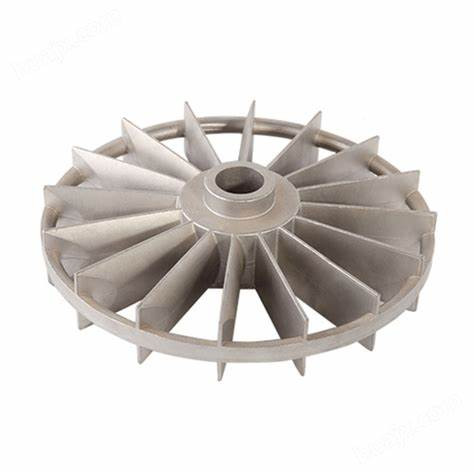
As seawater use machinery and marine machinery are evolving quickly, the corrosion environment for seawater pump impellers has also become increasingly harsher, creating greater demands for corrosion resistance of seawater pump impellers. Due to its double microstructure of austenite and ferrite, Duplex Stainless Steel (DSS) has excellent mechanical properties as well as high corrosion resistance to chloride ions and is therefore an extremely appropriate material for seawater pump impellers.
Introduction
Seawater pump impellers operate long-term in seawater desalination equipment, shipboard seawater service, and power plant cooling systems under high chloride, high salinity, high velocity flow, high-temperature conditions prone to pitting corrosion, crevice corrosion, and Stress Corrosion Cracking (SCC). Austenitic stainless steels of the conventional type (such as 316L) have some corrosion resistance, but there is still high failure risk in seawater environments. Through decades of trials and site fieldwork, I discovered that duplex stainless steels (e.g., 2205, 2507), blessed with their superiority in corrosion resistance to chloride ions and mechanical properties, have become reliable alternatives to 316L.
Microstructure and Corrosion Resistance Mechanism of Duplex Stainless Steel
Duplex stainless steel contains approximately 50% austenite (γ phase) and 50% ferrite (α phase). This composition balance provides:
- The α phase possesses superior pitting and crevice corrosion resistance to chloride ions;
- The γ phase offers superior plasticity and toughness.
- High contents of Cr, Mo, and N also favor the formation of a stable passivation film, preventing intrusion by corrosive media and significantly enhancing overall corrosion resistance.
Comparative Analysis of Electrochemical Tests
Electrochemical tests provide quantitative assessment bases for material resistance to corrosion but with macroscopic corrosive media interfacial reaction behavior essentially. For additional revealing of local damage features and corrosion mechanisms of different stainless steels under chloride ion erosion, comparative analysis should be done for surface corrosion morphology, pitting pit morphology, passivation film rupture modes, etc., from the microscopic morphology point of view. This will provide more intuitive and specific support for a comprehensive grasp of duplex stainless steel’s corrosion resistance advantages and subsequent material modification strategies.
Test Conditions and Methods
To systematically investigate the electrochemical behavior of different stainless steel materials in seawater environments, the current study took three typical materials—Austenitic 316L, Duplex Stainless Steel 2205, and Super Duplex Stainless Steel 2507—and conducted the following electrochemical experiments in simulated seawater environment (3.5 wt% NaCl solution, room temperature):
- Open Circuit Potential (OCP): To evaluate the spontaneous corrosion tendency of materials under static conditions;
- Potentiodynamic Polarization Test: To measure anodic polarization behavior and corrosion current density;
- Electrochemical Impedance Spectroscopy (EIS): To obtain interfacial reaction impedance and charge transfer characteristics;
- Pitting Potential Measurement: To evaluate the material’s resistance to local corrosion (pitting) in chlorine-contaminated environments.
- The tests used a three-electrode system with a saturated calomel electrode (SCE) as the reference electrode, and the test potential scan rate was 0.5 mV/s.
Summary and Analysis of Test Results
The following table provides the major electrochemical performance parameters of the three samples of stainless steel:
| Material | Pitting Potential (vs. SCE) | Polarization Current Density (µA/cm²) | Electrochemical Impedance | Corrosion Resistance Evaluation |
| 316L | +120 mV | 3.2 | Medium | Obvious pitting tendency |
| 2205 | +370 mV | 0.9 | High | Significantly better than 316L |
| 2507 | +510 mV | 0.4 | Very high | Excellent corrosion resistance |
Key observations from the test data:
- In terms of pitting potential, 2507 has a significantly more positive pitting potential (+510 mV), indicating it is more resistant to pitting in chloride ion environments with stronger interfacial stability;
- Based on polarization current density, the corrosion current density of 2507 is as low as 0.4 µA/cm², far lower than that of 316L, indicating lower overall corrosion rate;
- Impedance characteristics show that 2507 and 2205 have higher interfacial charge transfer resistance, indicating higher density and more complete passivation films, and thus more effectively restraining electrochemical reactions.
In short, duplex stainless steels, especially 2507, demonstrate significantly enhanced corrosion resistance over typical austenitic stainless steels in simulated seawater conditions, which makes them particularly well-suited for high-chloride ion corrosion risk service applications such as seawater pump impellers.
Application Cases of Seawater Pump Impellers
Whereas electrochemical laboratory tests provide quantitative parameters for corrosion resistance of materials, the key to actually verifying their performance lies in their actual performance under long-term service conditions. We therefore further incorporated regular seawater pump application scenarios to thoroughly verify the engineering applicability and durability advantages of duplex stainless steel by comparing the service cycles and corrosion condition of different materials under true working conditions.
Analysis of Engineering Application Cases
In one of the offshore water pump systems, the conditions for operation are high salinity (3.5% NaCl), water temperature 30°C, and velocity 3 m/s. With the original 316L impellers, frequent maintenance and severe pitting were observed within 6 months; after replacement with 2205 impellers, continuous operation for more than 12 months had no definite evidence of corrosion marks, the length of the maintenance cycle was significantly enhanced to more than 2 years, and the estimated life to service was more than 5 years. This amply demonstrates the greater corrosion resistance of duplex stainless steel in actual working conditions, reducing maintenance costs and equipment shutdown risks significantly.
Comparison of Operational Performance
| Project | 316L Impeller | 2205 Duplex Impeller |
| Number of Pitting Spots | >30 within 6 months | 0 within 12 months |
| Maintenance Frequency | Once every 8 months | No maintenance needed for >2 years |
| Expected Service Life | <2 years | >5 years |
In application experience, it was found that since 2205 replacement, the impeller corrosion problem became almost zero, equipment operation became steadier, and maintenance costs were significantly minimized. My research has also experienced the wonderful advantages of duplex stainless steel in seawater long-term working conditions.
Analysis of Key Influencing Factors
Corrosion resistance is determined by several microscopic and process factors, with key points as follows:
| Factor | Influence Description | Control Strategy |
| Phase Proportion | The ratio of austenite to ferrite directly affects SCC and pitting resistance | Precisely control heat treatment to achieve a 50/50 structure |
| Alloying Elements | Contents of Cr, Mo, N are closely related to passivation film stability | Select 2205, 2507 grades and optimize composition ratio |
| Grain Size & Precipitation of Second Phase | Coarse grains and σ phase precipitation reduce corrosion resistance | Grain refinement + moderate solution treatment to avoid precipitation |
| Surface Condition | Roughness and residual stress affect corrosion initiation paths | High-precision surface polishing and passivation treatment |
| Welding Heat Affected Zone | High heat input increases intergranular corrosion sensitivity | Adopt low heat input welding and control thermal cycles |
Progress in Corrosion Behavior Mechanisms
Current research has shown that corrosion of duplex stainless steel is no longer determined by alloy composition; microstructural properties (such as second phase precipitation, grain boundary segregation, texture preferred orientation) and semiconductor behavior of passivation films have become the focal point in corrosion research. Preferential corrosion is an overall type of failure, mostly with Cr-depleted regions or phase boundaries, regarding which additional in-situ electrochemical measurement and micro-area chemical composition analysis are needed to better understand. At the same time, the complex coupling factors between corrosion products, temperature, and film-forming ability are also “hotspots” of study.
Conclusion
Duplex stainless steel has been the preferred material for impellers of seawater pumps due to its structure merits, corrosion resistance, and mechanical properties, which are collectively enhanced. Systematic electrochemical study and engineering practice cases also illustrate its broad applicability in significant engineering. Duplex stainless steel will play an increasingly important role in marine equipment in the future through ongoing material research and process optimisation.


