
In the latest pump equipment, impellers, being inherent parts for transferring energy and conveying fluids, are directly subjected to complex flow fields and solid-liquid two-phase mediums with dual stresses of severe abrasion and corrosion. High-chromium cast iron has become mainstream materials due to its high hardness, high carbide concentration, and excellent economy.
However, owing to its high brittleness, it will tend to form cracks at local stress concentration or in corrosive environments, resulting in failure. A comprehensive investigation of its abrasion-corrosion performance and suggesting rational design improvement strategies have been the focal points of my researches in designing high-performance pump components.
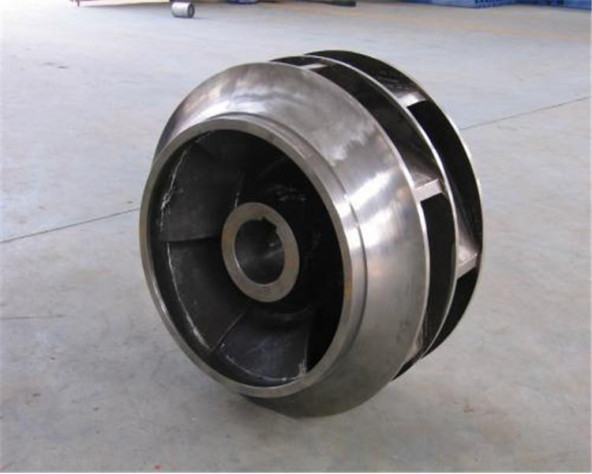
Overview of High-Chromium Cast Iron Material Characteristics
High-chromium cast iron usually refers to white cast iron with 12% to 30% chromium, typically having an M₇C₃-type carbide structure in a martensitic matrix. These carbides have hardness of as much as HV 1500 or greater and form a formidable barrier to abrasion impact and cutting. Maintaining control of the proper Cr/C ratio within the alloy and the addition of alloying atoms such as Mo, Ni, and Cu can produce a more homogeneous microstructure and enhance corrosion resistance. Its low toughness, non-uniform carbide distribution, and high residual stress still remain likely causes of abrasion-corrosion failure.
Abrasion-Corrosion Failure Mechanism of High-Chromium Cast Iron Impellers
In addition to corrosion resistance, the abrasion resistance of the material is also of great significance for pump equipment conveying solid particle media, which has a direct effect on impeller life. Especially in complex working conditions with coexisting slurry, sediment, or corrosive liquid, the service performance of high-chromium cast iron, as a common wear-resistant casting alloy, has been of great concern. To study in depth its failure characteristics when used, high-chromium cast iron impellers’ abrasive-corrosion damage modes are discussed on three points: abrasive erosion, corrosion-abrasion synergistic effect, and microstructure.
Mechanism of Abrasive Erosion
When pumping media with solid particles (such as slurry or mortar) like impellers do, abrasive particles hit the surface in high speed and multi-angles, and the surface is damaged by cutting, plowing, and spalling. In actual working conditions, we can find that shear wear is dominant at an impact angle of approximately 30° and indentation damage and micro-crack extension are dominant at 90°. Although coarse M₇C₃ carbides are hard, they easily initiate crack sources in stress-concentrated areas to induce local material spalling.
Corrosion-Abrasion Synergistic Effect
Most application environments involve weak acidic liquids or chloride solutions. The chemical corrosion dissolves the protective film of the metal matrix, facilitating easier penetration of the matrix by abrasive particles. Corrosion induces local breakdown of passivation, metal ion dissolution, and stress-concentrated area formation, further strengthening the initiation and propagation of cracks, a typical manifestation of corrosion-abrasion synergistic effect.
Microstructure and Crack Propagation Behavior
Microstructure and carbide distribution in high-chromium cast iron play important roles in the control of crack behavior. Carbides, if they are distributed in network or rod-like cluster, become micro-crack paths easily under cyclic loads. The austenitic matrix, on the other hand, is tougher and has the ability to suppress crack propagation to some extent. Fineshed carbides may be blended to create a more optimal organizational structure.
Optimization Design Paths for High-Chromium Cast Iron Impellers
Focusing on the problems of susceptible abrasion-corrosion and crack growth disclosed by high-chromium cast iron under severe working conditions, relying solely on material hardness cannot meet the actual demands of long-cycle and low-fault operation any more. Therefore, systematically optimized strategies from various aspects such as alloy design, structural geometry, surface treatment, and numerical verification are needed. Based on the above failure mechanism analysis, the following four major design optimization tendencies of high-chromium cast iron impellers are proposed to further enhance their overall service performance and operating reliability.
Alloy Composition and Microstructure Regulation
It is possible to adjust the Cr/C ratio (4-6 is ideal) in order to control the amount and grain size of carbides and to remove coarse carbides. The addition of elements such as Mo and Ni can stabilize the austenitic matrix and improve toughness and corrosion resistance. As for heat treatment, adopting a two-stage quenching and tempering process can sharpen the structure and improve hard-toughness combination, which is a significant method to significantly enhance service performance.
Structural Design Optimization
Structurally, I would like to adopt transition fillets, reinforcing ribs of the blades, and controllable wall thickness structures to minimize the stress-concentrated area. Moreover, optimizing the shape of the flow channel and blade attack angle not only decreases the impact frequency but can also effectively minimize local erosion hotspots, thereby prolonging the entire life of the impeller.
Surface Strengthening and Coating Technology
Laser cladding, plasma spraying, and high-hardness carbide (e.g., WC-Co) coatings have the ability to significantly improve surface wear resistance. These coating processes can not only leave a hardened layer but also impose beneficial residual compressive stress that resists crack propagation. I particularly recommend combining cold spraying and surface shot peening processes to attain a composite surface with both strength and toughness.
Numerical Simulation and Experimental Verification
Through CFD-DEM simulation, abrasive flow patterns, impact angles, and hotspot distributions are accurately predicted, and with the collaboration of finite element analysis, stress-concentrated areas may be determined. The above methods combined with normal wear tests (e.g., ASTM G65) are a closed-loop design optimizaiton process in my practice.
Application Case Analysis and Effect Evaluation
In the refurbishment of a slurry pump, we optimized the alloy composition of the original impeller (increasing Cr to 25%, decreasing C to 2.2%, and the addition of 1.2% Mo) and with the Ni-based plasma cladding coating. Together with structural optimization, simulation proved that the erosion hotspot zone reduced by 30%, and the real service life was extended to 14 months. With reference to the original plan, the wear ratio fell by 42%, and the maintenance frequency was significantly reduced.
Structural Design of Embedded Parts and Optimization of Tapping Process for High-Chromium Cast Iron
Although multi-disciplinary treatments for the regulation of composition, optimization of structures, and surface hardening have improved the service life of high-chromium cast iron impellers to a certain extent, machining, especially thread machining, remains an essential limitation in the actual assembly and maintenance. The severe wear of high-hardness carbides on tools and breakage of taps repeatedly has significant effects on the efficiency of assembly and the yield of workpieces. Therefore, embedded thread structures have become a fundamental process innovation to tackle the issue of tapping high-chromium cast iron. The following discusses embedded part design and tapping processes in detail.
Tapping Problems of High-Chromium Corrosion-Resistant Cast Iron
The high-hardness carbides contained in high-chromium cast iron seriously deteriorate its machinability, especially threaded hole machining, where the tap can easily break. I have encountered the same problems in a number of projects and found that annealing treatment had limited effects, and breakthroughs were eventually realized with embedded parts supplemented.
Key Points of Embedded Part Structural Design
Embedded parts are built of high-strength material such as 45 steel, washed and anti-rusted prior to being implanted in the mold and soldered onto the casting through chill effects. The scheme should be designed in a way that their thickness, position, and thread hole (deviation) should be in a reasonable range. Meanwhile, V-shaped grooves and orientation locking structures are also presented on their surface to prevent detachment and rotation during usage. Modulus calculation and chill fusion equations are used to examine the reasonability of dimensions and guarantee structure safety and reliability.
Conclusion
Impellers made of high-chromium cast iron possess better performance in the state of high abrasion and corrosion but more failures are mainly due to the synergism of coarse carbides, hard matrix, and pitting corrosion. Comprehensive performance of impellers can be significantly improved by alloy optimization, structural design improvement, and surface strengthening treatment. Meanwhile, structurally reasonable embedded parts to be mounted is a main measure to enhance manufacturability for processing complexity. In the near future, further innovative exploration of multi-scale simulation and intelligent optimization methods, preparation of functional gradient coatings, and wear-resistant composites with high toughness will generate more efficient and credible solutions for high-end fluid machinery components.


