
As a key component of new-power equipment, large-size impellers play a vital role in high-end fields such as the aerospace, wind power generation, energy equipment, and petrochemical machinery industries. Their complex structure, thin wall thickness,and diversified machining path create extremely stringent requirements for clamping stability and positioning accuracy during machining.
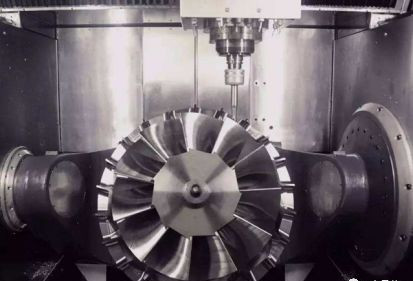
Introduction
With the power systems being developed into high power and high performance, big-sized impellers with a diameter of more than 600mm are nowadays widely available in industrial equipment. However, in actual processing machining, I deeply appreciate the fact that the processing difficulty for such compound structural parts is much higher than that of general workpieces. Especially in high-precision machining such as five-axis linkage milling and dynamic trimming balance, traditional universal fixtures are generally incapable of ensuring repeated clamping stability, which typically becomes the key bottleneck for overall machining precision. Therefore, to design special fixtures with high positioning precision, structure rigidity, and thermal stability has become an inevitable critical factor in large-size impeller manufacturing.
Machining Requirements and Fixture Challenges of Large-Size Impellers
Big impellers find wide applications in the aviation, energy, and petrochemical industries. Because of the high complexity of their spatial geometric structures and extremely high requirements for machining precision, it leads to a chain of positioning, clamping, and path planning issues in machining. It is the key to improve overall machining quality and efficiency to cope with these issues.
Analysis of Workpiece Structural Characteristics
Large-diameter impellers have the following structural characteristics, posing very high difficulties to the production process:
- Complex Spatial Structure: Large-diameter impellers are mainly composed of multi-stage three-dimensional curved blades spirally stacked around the central axis, with great flow channels and large curvatures, increasing the difficulty of path design machining and tool interference avoidance, which relies on five-axis linkage machining with high accuracy and simulation confirmation.
- Uneven Wall Thickness: Blade regions consist of structural low points where locally wall thickness is less than 2 mm, thus more prone to elastic deformation and cutting chatter during machining, significantly deteriorating final product accuracy as well as surface quality.
- Multi-Process Integration: The machining process involves sequence-critical processes such as rough milling, five-axis finish milling, end face shaping, and dynamic balance adjustment, which involve very demanding requirements for clamping stability and reference integrity, with a long process chain and complex interference control.
Positioning Difficulties in Machining
In actual machining of big-size impellers, the following positioning and clamping problems are particularly outstanding:
- Accumulation of Repeated Positioning Errors: Without a common reference positioning system in multi-station and multi-surface machining, it is simple to cause error superposition, which affects final assembly accuracy and aerodynamic performance.
- Structure Deformation Caused by Clamping: Traditional rigid fixtures cannot sacrifice the safeguarding of structural weak points, and assymetric clamping forces might induce local plastic deformation in internal blades or root regions.
- Restricted Five-Axis Machining Paths: Fixture volume, structure geometry, and clamping position need to dynamically adjust to machining paths, with complex path interferences and fixture avoidance calculations, directly affecting machining integrity and tool life.
- Lengthy Auxiliary Working Hours: The traditional tooling replacement, adjustment, and leveling processes are cumbersome and highly dependent on manual operation, leading to an increase in non-cutting time and severely restricting overall capacity improvement.
Fixture Design Strategies for Improving Positioning Accuracy
Directed at clamping difficulty of big-size impellers in accurate machining, fixture schemes need to be scientifically designed from a number of dimensions such as positioning references, structure arrangement, and thermal stability so as to achieve a clamping assurance system with high repeatability, low deformation, and high rigidity.
Selection and Optimization of Positioning References
At the first stage of fixture design, the “unified reference, consistent process reference” design philosophy should be adopted in such a way that the fixture positioning system completely coincides with the machine tool process coordinate system to achieve the maximum consistency of the positioning source. In the case of large-size impellers, the following integrated positioning strategies are generally adopted:
- Central Hole + End Face Positioning: The radial centering is achieved with a highly accurate inner hole alignment, and the end face contact as an axial positioning reference, for central hole structured impellers, with repeated clamping accuracy within ±0.01 mm controlled.
- Tapered Surface Auxiliary Positioning: Coupling tapered surface positioning structure and tapered pins enhances workpiece clamping stability in radial and axial directions and reduces rotation errors caused by eccentric force.
- Elastic Floating Support Mechanism: Adjustable support units provide floating support for thin-walled blade sections to effect local floating support, effectively absorbing clamping stress without compromising rigidity and deforming.
Precision Positioning Elements and Adjustable Structures
In addition to sufficient repeatability and stability, precision fixtures also must meet the need for rapid adaptation to different model products and adjusting capability of positioning errors. The following structural configurations are recommended:
- Replaceable Positioning Pins and Limit Blocks: Modular changing between fixtures for different structural impellers is achieved through rapid replacement, improving production flexibility.
- High-Precision Guide Rails and Fine-Tuning Gaskets: Fine-tuning gaskets and guide rails system may be applied to align minor translation and angle misalignment of the fixture, making initial installation positioning and thermal deformation compensation simple.
- Ceramic Ball or Tungsten Steel Pin Positioning Elements: Wear-resistant materials with high hardness can be utilized to design positioning surface structures for improving service life and maintaining long-term repeated positioning accuracy.
- Pneumatic Auxiliary Clamping System: Accommodating the addition of pneumatic ejectors and automatic release mechanisms enables quick positioning and precise resetting, significantly cutting tooling replacement and auxiliary aligning time.
Structural Rigidity and Thermal Stability Control
Structural rigidity and thermal stability are overall critical indicators of guaranteeing machining accuracy. In traditional large-size impeller programs, we have the following strategies to enhance the thermal-mechanical performance of fixtures:
- Optimal Material Selection: Materials with low thermal expansion coefficient such as gray cast iron-based composites, 6061-T6 aluminum alloy, GFRP reinforced composites, etc., are selected as the fixture base material to restrain positioning drift caused by a rise in temperature.
- Finite Element Structural Optimization Design: Finite element simulation is performed on the fixture structure to simulate mechanical stiffness analysis and thermal distribution simulation, with the optimization of the arrangement of rib plates and support shape of critical stress zones for controlling deformation under high-load and thermal conditions.
- Heat Avoidance Grooves and Thermal Insulation Design: The heat avoidance grooves or thermal insulation grooves are created in the areas prone to heat concentration to reduce the heat transfer path and improve the stability of thermal response of the system.
Further Improvement and Generalization Exploration of Fixture Structures
For the problem of complex and incompatible fixture types in multi-stage compressor impeller manufacturing, we attempted to design a modular fixture system of “jig base + movable core”. The jig base is set on the worktable, and with a change in the corresponding 规格 (specification) of the core, fast machining to meet various grade products is possible. Such a structure, together with the arc contact pressure plate and countersunk bolt fixing device, can effectively avoid displacement and scratching of the workpiece in rotational pressing, greatly improving the flexibility and stability in batch machining.
Future Development Trends and Research Directions
Looking forward, I believe special impeller machining fixtures for large-size ones will continue to develop in the following ways:
- Modular and Flexible Structures: Addressing quick switching and comprehensive adaptation among diversified model workpieces.
- Intelligent Sensing and Digital Integration: Integrating 3D probes, laser centering, and other sensing systems to achieve online monitoring.
- Electrically Controlled Clamping Systems: Application of closed-loop clamping force control through utilization of servo clamping + force feedback systems.
- Simulation-Driven Design Optimization: Relyance on virtual simulation platforms for fixture structure optimization and interference analysis to enhance the rationality of preliminary designs.
Conclusion
Briefly, high-precision impeller machining with large dimensions not only requires the coordination of high-performance machine tools and complex tool paths but also (inseparable from) the stable guarantee of special fixtures under clamping. Under systematic positioning strategy design, structure rigidity control, and smart integration means, special fixtures have significantly improved machining quality and efficiency. As a practitioner, I am strongly convinced that with the profound integration of digitization and modularization, fixture technology can continue to support high-end manufacturing with an even more solid foundation, as a pillar for strategic industries such as aviation and energy.


