
Together with the development of mechanical systems towards high efficiency and reliability, the fatigue strength of impellers as key rotating components has turned into a basic determining factor for equipment safe operation and service life. Glass Fiber Reinforced Polymer (GFRP) is increasingly replacing traditional metallic materials in the manufacture of medium-low speed impellers due to its higher specific strength, corrosion resistance, processability, and good fatigue property.
Introduction
Impellers in mechanical equipment such as wind turbines, chemical pumps, and compressors need to withstand alternating loading for a long time. Especially under high-frequency cycles and severe environments, their fatigue performance is the decisive factor. Although metal materials have higher strength, they have a shorter lifespan under corrosive media and a higher density, which is not conducive to structural lightweighting.
On the other hand, GFRP has substitution potential in medium-load and medium-speed rotating components due to its high specific strength, superior environmental resistance, and moderate price. Particularly in the current investigation, the similarities and differences in the fatigue behavior of thermoset and thermoplastic GFRP materials have been of interest. As mechanical equipment sets out for green manufacturing and full-life cycle control, it is of extreme theoretical and practical significance to investigate the mechanical behavior of the two types of materials under high-frequency loading and environmental aging for engineering applications.
Material Systems and Specimen Preparation
The subject of this paper is the fatigue behavior of GFRP in marine and humid environments, for which three typical matrix systems are chosen and laminates and specimens are manufactured according to a common process flow. Material formulations and preparation conditions are specified as below.
Material Types
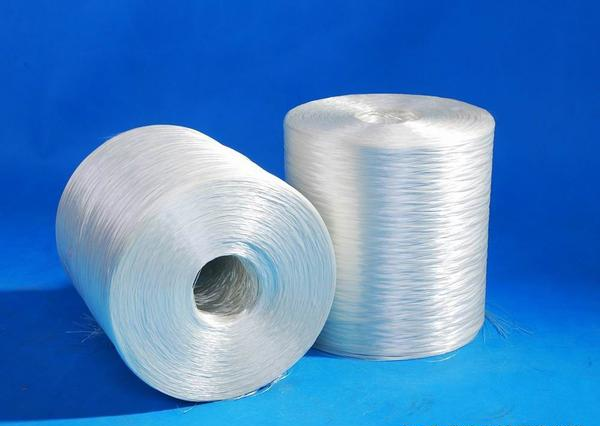
The reinforcement fibers used in the research are quasi-unidirectional non-woven glass fiber fabrics that contain 0° and 90° main-direction fibers and a small percentage of stitch-reinforcing fibers, with stable layup configurations and controllable properties in each direction. The matrix resin systems used are as follows:
- GF/Epoxy (Glass Fiber/Epoxy): A typical thermoset resin composite system with widespread use in long-term load-carrying structures such as wind turbine blades and industrial pump housings, with high fatigue strength and interface bonding performance.
- GF/Acrylic (Glass Fiber/Acrylic): With Elium® thermoplastic acrylic resin, it has higher toughness and recyclability and is a new type of green sustainable composite.
- GF/Acrylic-PPE (Glass Fiber/Acrylic-Polyphenylene Ether): 5 wt% polyphenylene ether (PPE) particles are doped in the Elium® matrix to improve the material’s chemical stability, thermal stability, and fatigue life, suitable for complex service environments such as marine equipment.
All three materials were fabricated into laminates through the Vacuum Assisted Resisted Transfer Molding (VARTM) process for good fiber impregnation quality and porosity control.
Process Parameters and Specimen Specifications
- Fiber Volume Fraction: Controlled within the range of 53%–55%, verified by the weighing method and ablation method.
- Curing Process:
- GF/Epoxy system: Cured at 60°C for 8 hours + post-cured at 100°C for 4 hours.
- GF/Acrylic and GF/Acrylic-PPE systems: Cured at room temperature for 24 hours without post-heat treatment.
- Specimen Cutting: Carried out according to ASTM D3479 standard, with specimen dimensions of 250 mm × 14 mm × 1.5 mm for fatigue tensile testing.
- Seawater Aging Treatment: Some samples were aged by immersion in natural seawater at 50°C for 3 months to represent material performance evolution under marine service conditions, with mass, thickness, and microstructure comparison before and after immersion.
Through aforesaid designing and preparing methods, the comparison between various materials is ensured to be representative and reproducible, and a unified and controllable basic sample is offered for the subsequent fatigue performance test and life test.
Fatigue Testing Methods and Experimental Design
To systematically evaluate the influence of different matrix systems on GFRP fatigue performance, this study uses standard fatigue loading tests combined with multi-level load design and fracture surface analysis methods to establish a comprehensive experimental verification system. The experiments in all cases were conducted in a controlled temperature and humidity environment to ensure data consistency and reliability.
Loading Conditions and Test System
Fatigue tests were performed using high-precision servo-hydraulic fatigue test machines (rated load ±100 kN) of the MTS or Instron brand, and the loading mode was constant-amplitude tension-tension fatigue. The specific loading parameters are as follows:
- Stress Ratio (R): Held at 0.1, i.e., the minimum load is 10% of the maximum load, to ensure pure tensile stress conditions.
- Loading Frequency (f): Set at 5 Hz to balance test efficiency and avoid thermal damage caused by high-frequency heat accumulation.
- Stress Level Setting: The upper loading limit was graded according to the Uniaxial Tensile Strength (UTS) of each material:
- GF/Epoxy and GF/Acrylic: 80% UTS, 60% UTS, 40% UTS.
- GF/Epoxy additionally set a 30% UTS level to capture low-stress long-life characteristics.
- Termination Criteria:
- Obvious crack penetration or fracture failure of the specimen.
- Or the number of cycles exceeds 10⁶–10⁷ (million to ten million levels) to construct the endurance limit region in the S–N curve.
- Fracture Surface Analysis: After ultrasonic cleaning and drying of the failed specimens, their fracture surfaces were investigated in areas using a Field Emission Scanning Electron Microscope (FE-SEM) to find the main crack source location, fiber fracture morphology, matrix debonding interface, and possible fatigue striations, which aid in determining the main failure mechanism.
The above loading schedule can effectively depict the fatigue response laws of different materials during high-stress and low-stress stages and compromise between the test cycle and data representativeness.
Fatigue Performance Test Results and Analysis
Fatigue Life Performance
Experiments demonstrate significant differences in fatigue life for different materials and treatment conditions. Under the 60% UTS stress level:
| Material Type | State | Average Fatigue Life (Cycles) |
| GF/Epoxy | Dry | 3.5 × 10⁶ |
| GF/Epoxy | Aged | 2.6 × 10⁶ |
| GF/Acrylic | Dry | 2.8 × 10⁶ |
| GF/Acrylic | Aged | 2.9 × 10⁶ |
| GF/Acrylic-PPE | Dry | 3.1 × 10⁶ |
| GF/Acrylic-PPE | Aged | 3.3 × 10⁶ |
As can be seen, thermoplastic materials still maintain good fatigue life in the aged state, even outperforming the epoxy system at some stress levels.
Failure Modes and Microscopic Analysis
SEM observation shows that the major failure modes under dry conditions are:
- Longitudinal cracking and shear failure: More common in acrylic-based systems.
- Brittle fracture and fiber pull-out: Common in GF/Epoxy specimens.
- Residual plastic-deformed matrix: More common in thermoplastic materials, indicating stronger energy dissipation capability.
Interfacial debonding was the major failure mechanism in aged specimens, especially in GF/Epoxy specimens, where the fiber/matrix bonding zone was severely corroded by seawater with obvious delamination. Acrylic and PPE blend systems showed greater interfacial stability, which could be due to their matrix structure being more adaptive to aggressive environments.
Views and Suggestions on Improving Fatigue Resistance
Combining experimental results and engineering backgrounds, in my view, the improvement of the fatigue performance of GFRP must be tackled in a multi-faceted manner:
- Structural Optimization Design: Introduce staggered angle layups (±45°/0°/90°) to inhibit crack propagation paths.
- Matrix Modification: Use toughness-modified resins, e.g., with PPE or nanoparticles, to improve matrix energy absorption capacity.
- Interface Treatment: Treat fibers with silane or plasma to enhance bonding performance, especially under aging environments.
- Intelligent Monitoring Integration: In engineering practice, combine acoustic emission or fiber optic sensing and other techniques to obtain real-time early fatigue damage signals.
Conclusion
Through comparative study on two sets of systematic fatigue performance tests in this paper, we have verified the fatigue resistance adaptability and material sustainability advantages of GFRP, especially acrylic thermoplastic composites, in impeller engineering. These materials can achieve a synergy of high strength and long life under appropriate design and treatment conditions in a dry state or after seawater aging. My view is that subsequent research work must continue to focus on process-interface-structure collaborative optimization and further achieve transfer of these benefits to fields such as marine wind power and tidal energy, promoting the high-performance application of composites in harsh environments.


