
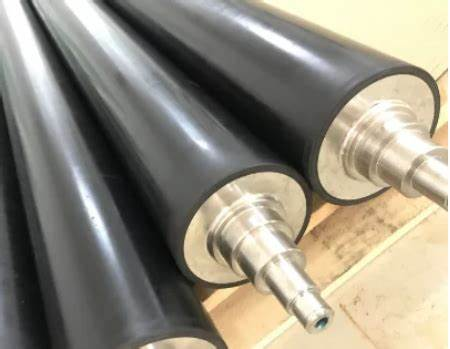
Encouraged by the urgent demand for low-energy, high-performance components in the aerospace industry, the automotive field, wind equipment, and hydrogen energy systems, the light weight of main rotating components such as impellers became the focal point of modern engineering technology. Carbon fiber reinforced polymers (CFRPs) with their higher specific strength, specific stiffness, fatigue life, and design flexibility have overcome the backdrop of traditional metal materials facing performance barriers, emerging as a strong candidate for the next generation of high-performance lightweight impellers.
Introduction
As the focal component for fluid machine system conversion of kinetic to pressure energy, impeller mass directly affects the dynamic response properties, energy conversion efficiency, and fatigue life of the system. Hydrogen fuel compressors in aero-engines, wind power machinery, and high-speed industrial pumps all expose impellers to centrifugal forces due to high-speed rotation and must endure the synergistic effects of thermal stress, vibration, and complex aerodynamic pressures. Whereas traditional metal materials like aluminum alloys and titanium alloys have good formability and high-temperature strength, their corrosion resistance, formability, and weight reduction limit are limited.
Carbon fiber composites, with their excellent specific strength (of as much as greater than 2500 MPa) and specific modulus (greater than 150 GPa) and very good fatigue and corrosion resistance, are growing ever more ubiquitous in high-stress structural components that heretofore were the province of metals alone. In all my previous experience with lightweight composite impeller projects, we have indeed validated a number of performance advantages of CFRP materials in impeller use, especially demonstrating very good performance in terms of vibration response control and thermal stability under high-speed rotation.
Analysis of Performance Advantages of Carbon Fiber Composites
Carbon Fiber Reinforced Polymers (CFRPs), with the merit of superior mechanical properties, lightness benefits, and environmental adaptability, are becoming more and more promising candidates for high-performance impeller structures in applications with highly demanding requirements in mass, efficiency, and environmental adaptability, such as aviation compressors, wind power equipment, and hydrogen energy devices. The following comprehensively discusses their crucial strengths in three respects: specific strength, fatigue endurance, and structural designability.
High Specific Strength and Specific Stiffness
The specific strength of carbon fiber is up to 5–6 times steel’s, and the specific stiffness is more than 20 times greater than aluminum, enabling CFRP impellers to trim mass by over 50% under equal loading. For example, our 12,000 rpm T800-grade carbon fiber composite impeller tested had a maximum radial deformation less than 70% of metallic impellers, significantly alleviating loss of aerodynamic efficiency and axially induced imbalance risks due to deformation.
Fatigue Performance and Corrosion Resistance
Compared to metal materials, CFRP possesses more stable alternating load fatigue life. Its favorable compatibility with salt spray, acid-base, and humid conditions makes it suitable for marine wind power compressor impellers and humid conditions. No visible crack initiation occurred under the 10⁷ cycle fatigue test, significantly better than the same-specification aluminum alloy solution.
Designability and Functional Integration
Composites can provide “local customization” through ply angle, thickness, resin matrix, and fiber selection so that impellers will experience better stress responses when different locations have specialized demands. Further, with additive manufacturing and composite processing, it is able to attain complex inner cavity, flow guide hole, and embedded insert designs, expanding functional boundaries.
Structural Design Methods for Carbon Fiber Composite Impellers
The structural design of Carbon Fiber Reinforced Polymer (CFRP) impellers varies from typical metal materials. Their performance relies not only on the material but also on ply strategies, structure shape, load path distribution, and multi-physical field coupling response. To achieve the design requirements of light weight, high strength, and long life, several design approaches and simulation methods need to be deeply practiced, developing the integral design process from laminated structure design to dynamic performance verification.
Laminated Structure Design
Rational ply schedules are accountable for realizing impeller structural performance. Symmetrical cross-plied stress reductions in interlayer stresses are typically used, and directionally reinforced layers are overlaid to enhance strength in the major stress direction. Based on ANSYS Workbench and PlyStack modules, we have established a simulation-based ply optimization procedure, ensuring structural safety margins to major loads with minimum mass.
Finite Element and CFD Coupling Simulation
With structure-aerodynamics coupling simulation, the effects of centrifugal loads, aerodynamic pressure, and thermal deformation can be considered fully in terms of predicting the global stress response of impellers in actual working conditions. For example, in a model for hydrogen combustion compressor that I handled, with joint optimization by CFD-FEA, high-stress areas were concentrated in high-strength fiber layers, achieving the optimal material utilization of the structure.
Topology Optimization and Dynamic Response Analysis
Using topology optimization technology (e.g., the SIMP density method) in structural design can properly achieve optimal structural material layout. The strategy does “redundancy removal” structure design of a local structure by step-by-step iterative computation of material distribution density in the design space, not only for mass reduction but also to improve material utilization efficiency. Based on the preservation of redundancy of strength in critical locations, non-critical load-bearing regions in the impeller hub and blade transition zones are efficiently “hollowed out” as well, contributing to even lower rotational inertia.
Simultaneously, carbon fiber impellers also need to satisfy high-order modal frequency conditions to prevent resonance due to coincidence with equipment main frequencies or aerodynamic excitation frequencies. We ensure all the main order frequencies are distant from the likely excitation band through modal frequency analysis and response spectrum analysis. In designing a large hydrogen compression machine, this method successfully prevented the third-order mode falling into the system excitation frequency range, improving the operation stability and structural fatigue life of the entire machine.
Application of Advanced Manufacturing Technologies in Impeller Forming
In the manufacturing processes of CFRP impellers, traditional metal processing technology cannot meet the all-around requirements of complex structures, light weight, and high-performance uniformity. For this reason, new composite forming technologies have progressively evolved into the focus of support for CFRP impeller manufacture. The following are 切入 (cuts into) from three processes: compression molding/RTM, automatic placement, and additive composites, on their corresponding applications and merits in actual engineering.
Compression Molding and RTM Technology
Compression molding and Resin Transfer Molding (RTM) technology are capable of achieving high fiber volume fraction (~60%) and porosity (<2%) precision forming in small-size impellers with complex curved surfaces. It is suitable for mass production and consistency control.
Automatic Placement + Hot Press Curing
Automatic Fiber Placement (AFP) and autoclave curing are suitable for the manufacture of aviation-grade high-performance impellers with stringent ply path control and resin infiltration quality. An impeller with a hyperbolic structure that we fabricated with this technology maintained ±0.1 mm dimension accuracy after repeated curing multiple times, showing manufacturing consistency that was extremely high.
Additive Manufacturing and Multi-Material Composites
With internal supporting structure production using 3D printing and outer layer CFRP creation, it is achievable to achieve light hollow structures and complex functional integration. Such a “shell-core” composite strategy greatly enhances design freedom, reduces the quantity of connecting components, and lessens failure risks.
Performance Testing and Experimental Verification
The following test comparison results are obtained from performance comparison tests between carbon fiber impellers and metal impellers of the same size in my laboratory:
| Indicator | Metal Impeller | Carbon Fiber Impeller |
| Self-weight (kg) | 1.20 | 0.42 |
| Maximum deformation (mm) | 0.56 | 0.39 |
| Thermal expansion coefficient (ppm/°C) | ~20 | <2 |
| Dynamic balance accuracy (g·mm) | ±2.5 | ±1.0 |
| Fatigue life (10⁷ cycles) | Crack occurred | No crack found |
In addition, through laser vibration testing and strain gauge array analysis, we verified that carbon fiber impellers possess more excellent modal response than metal structures under high-speed rotation with lower vibration amplitude and thermal stress accumulation.
Key Challenges and Optimization Strategies
| Challenge | Causes | Coping Strategies |
| High material cost | Expensive high-end fibers and process equipment | Replacement with thermoplastic matrix materials, batch automation to reduce unit price |
| High processing complexity | CFRP unsuitable for traditional metal processing methods | Use laser edge cutting, CNC auxiliary processing |
| Difficult metal-composite connection | Mismatched thermal expansion coefficients | Adopt insert curing and flexible interface design |
| Lack of unified standards | Lack of long-term durability databases | Construct special fatigue and environmental database systems for impellers |
Conclusion
As an emerging lightweight structure material of the new generation, carbon fiber composites are driving impeller technology development forward from the traditional metal era to the smart composite structure era. They have shown promising prospects in terms of application in aero-engines, rail transport, efficient wind power generation, hydrogen compression, and other fields. With the consistent decline in material prices, continuous maturation of processing technologies, and optimization of standard systems, I believe that future carbon fiber composite impellers not only will be “light” substitutes but will propel high-quality manufacturing evolution towards directions such as multi-functional integration and adaptive structural design.


