
As a representative complex curved surface part, geometric accuracy, surface integrity, and form-position tolerance of impellers are closely related to dynamic balance performance and fatigue life of mechanical systems. Multi-batch machining mode process stability is very sensitive to interference from many factors like extended equipment operating time, man shifts, and material batch changes.
Our own prolonged experience has also found that even with the same NC program and machine, apparent differences still exist in profile error, roughness, and dimensional deviation among different batches. Not only does this process “drift” increase rework ratios and production costs but also critically affects delivery stability. Deep investigation and efficient control of stability issues in multi-batch machining are therefore necessary in order to accomplish high-consistency and high-quality manufacturing.
Introduction
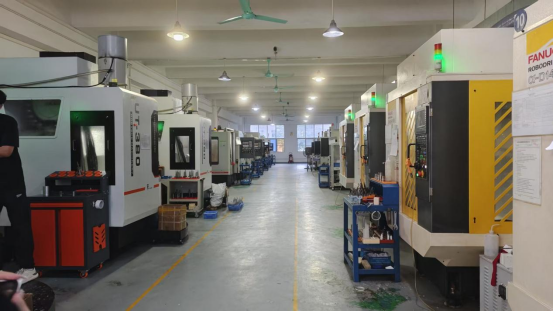
Multi-batch impeller machining refers to a production pattern where there are multiple similar or similar impeller workpieces machined in batches and programmed on the same production line or machine tool. It emphasizes the organizational mode of batch manufacturing, rhythm of machining, and efficiency of resource allocation.
Similar to baking pastries, rather than one at a time, several are produced simultaneously, keeping them consistent and efficient in batch form. Multi-batch impeller machining employs the same principle in producing major components such as “impellers” for the aviation, energy, or pump industries.
| Industry | Machining Purpose | Impeller Type |
| Aerospace | Mass manufacturing of small turbine impellers | Titanium alloy or nickel-based alloy impellers |
| Energy Equipment | Parallel production of multi-model orders | Wind power compressor impellers |
| Chemical Pumps | Industrial order delivery | Stainless steel or Hastelloy impellers |
| Automotive Supercharging | Annual production of tens of thousands of pieces | Small aluminum alloy impellers |
Performance and Cause Analysis of Process Instability in Multi-Batch Impeller Machining
In the process manufacturing of precision impellers with multi-batch, even though equipment parameters and process parameters will be standardized, problems such as (finished product quality fluctuation), geometric error accumulation, and inconsistency in deliveries still frequently happen. The cause is more likely not a single variable but systematic instability owing to more than one reason. The next deeply analyzes the performance and root causes of instability of the four significant links: tools, equipment, workpieces, and process flows.
Inconsistency of Tool Wear
The nonlinear tool wear process is one of the most unstable parameters of multi-batch impeller machining. Especially when cutting hard-to-cut materials such as nickel-based alloys and titanium alloys, tool wear was found to exhibit a gradual start and heavy later stages. If tool life is not controlled well and the substitution plan is not controlled well either, not only does it cause fluctuation of surface roughness but also causes diffusion of dimensional deviation. We have noticed that the condition of wear of tool has a direct relationship with actual cutting temperature and feed force, and monitoring these process parameters and establishing an early warning mechanism are the basis for process stabilization.
Machine Tool Thermal Error and Geometric Drift
Long-term continuous machining will cause thermal deformation of key parts of the machine tool (e.g., spindle, lead screw, and guide rail), resulting in deviation of the profile machining trajectory. In five-axis linkage machining, especially zero return deviation and temperature rising drift of B/C axes, it will directly affect the precision of the impeller surface profile. Apart from that, machining time nodes for workpieces in different batches are different, and environment temperature changes will further worsen uncontrollability of error fluctuations.
Lack of Consistency in Blanks and Clamping References
Blank material batch margin deviation and tissue uniformity difference will cause the moving of the starting point of the coordinate, thus exacerbating the subsequent process error. For example, in batch shipping of impellers, we found that center offset exceeded 0.02mm due to untimely replacement of three-jaw chuck wear, which affected the form and position tolerance control as a whole.
Non-standard Call of Processing Program Versions and Parameters
Continuous program changes from one batch to another or incomplete documentation of changes to parameters quickly lead to incorrect version programs called by operators with inconsistent paths and cutting parameters. Lack of program version control and simulation verification means poses a serious hidden danger of bad consistency between multiple batches.
Strategies for Improving Process Stability
To tackle the common process fluctuations in multi-batch impeller machining, it should start at multiple levels such as process standards, equipment control, data management, and intelligent auxiliary systems to establish a systematic and sustainable process stability control system. The next five major strategies are proposed to achieve the mode upgrading of production from “experience-driven” to “data-driven”.
Standardization and Modular Construction of Process Flows
First, a general process template for typical impeller product families needs to be established and multi-axis path methods, toolset combination procedures, feed and speed values, etc., be encapsulated in a modular way. In this manner, utilizing the reuse mechanism in the process module library not only can the time for process preparation be reduced, but various batches also can carry out production with an equal technical starting point, and thus significantly increase consistency and traceability.
We propose creating a single “BOM + Routing” model to coordinate the workpiece structure and the process path step by step, without free adjustments resulting from operator variations and process understanding variations. In turn, the standard template has to be configurable to accommodate differing customers’ shifting needs for material, allowance, or processing grade.
Tool Management and Wear Monitoring System
To address the fluctuation problem caused by the inconsistency of tool life in multi-batch machining, an RFID-tool identity recognition and full-life cycle management system needs to be introduced to provide full-process visualization from warehousing, clamping, use to scrapping. Coupled with online data sources such as spindle current, cutting force fluctuation, and machining acoustic emission signals, a tool wear state discrimination model is developed.
When the system detects that the trend of tool wear exceeds the safety value, it is able to automatically terminate the program and call for tool change to prevent unqualified products with a large area caused by tool (out of control). In addition, the rhythm of tool change can be optimized by incorporating the life prediction model to guarantee the balance between the frequency of tool change and cost-effectiveness.
Dynamic Thermal Error Compensation Mechanism
Machine tool thermal drift is amongst the most crucial concealed hazards that cause precision instability between batches in five-axis machining. Hence, temperature sensors are to be installed at the major nodes such as the spindle seat, rotary axis center, and bed to detect thermal field data in real time. Then, using neural network or fuzzy logic modeling technology, the input temperature is converted into real-time compensation value and input into the NC system.
In an infrared thermal imaging and deep learning model-based experiment, we enhanced the accuracy of the workpiece and the spindle’s displacement error from ±18μm to ±7μm, significantly improving the free-form surface profile’s repeatability and consistency of the profile.
Digital Clamping and Reference Reproduction Technology
Clamping accuracy will enlarge the impeller profile error, so a two-stage approach of “high repeatability + adaptive adjustment” is required. At the physical level, high-precision positioning pins with adaptive vacuum chucks are introduced to improve clamping repeatability; at the control level, online probes are embedded to conduct adaptive calibration of the processing coordinates per batch.
For example, a trigger probe is used to scan the blank edge before machining, and an automatic coordinate correction program compensates the tool path to let the clamping error converge within ±5μm, greatly reducing the accuracy fluctuation introduced by manual positioning offset.
Program Management and Virtual Simulation System
For complete elimination of silent risks such as program version confusion and erroneous parameter calls, a framework for centralized management of program versions should be established. Each process program update should be subjected to version archiving and approval processes and can only be released after validation from the CAM → Post → G-code closed-loop simulation system.
The virtual simulation system should include functions such as tool path verification, interference verification, and feed path smoothness analysis and produce standardized verification reports as the basis for program review and quality traceability. In long-term usage, the system might also create a parameter optimization database to provide data support for continuous process optimization.
Conclusion
Process stability is the key to ensuring that multi-batch production of impellers can achieve high quality and high efficiency delivery. Starting from five aspects: equipment, tools, process parameters, fixtures, and information management, this paper establishes a set of process stability control strategies with standardization, monitoring, and compensation at the core. According to empirical investigation, not only have we determined the applicability of these steps but also proved that they play a crucial role in reducing manufacturing oscillations and improving machining uniformity.


