
In technologically advanced manufacturing industries such as aviation, energy, and chemical engineering, small-lot customized impellers, being significant product forms meeting sophisticated functional and customized specifications, bear significant scheduling challenges due to their manufacturing processes involving multiple processes, multiple machines, and high-precision levels. Traditional mass production planning approaches cannot meet realistic demands of impellers, such as multiple models, frequent changes, and stringent delivery conditions, leading to chronic issues like delayed deliveries, loss of resources, and poor capacity utilization.
Introduction
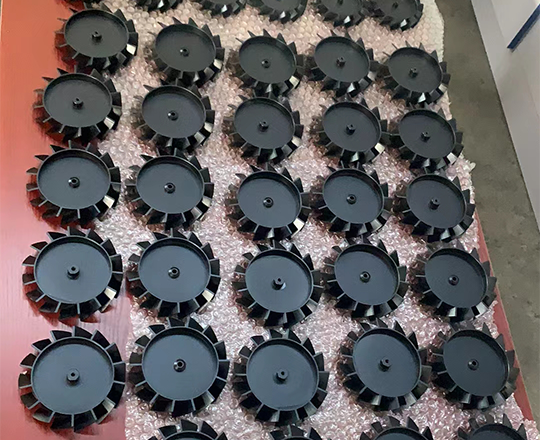
Tailor-made small-batch impellers are widely used in aero-engines, special pumps, precision turbines, etc. They typically need high process consistency, high-performance metrics, and high complexity, and delivery cycles have direct effects on user system operation efficiency overall and on the progress of the project. Nevertheless, traditional scheduling methods always focus on linear progress, ignoring heterogeneity between orders and non-uniformity of the process chain, so it is difficult to tackle problems such as order changing too often, resource conflicts, and equipment movement.
In actual project planning, we have repeatedly encountered the fact that the main reason for delivery delay is not the delay of a single link but the poor overall response capability of the scheduling system. Therefore, I believe that delivery time optimization for small-batch customized impellers should focus on establishing a flexible scheduling mechanism for “high-mix low-volume” production, deeply integrating processes, resources, and information systems to form a dynamic, visual, and collaborative manufacturing decision-making system.
Production Characteristics and Delivery Challenges of Small-Batch Customized Impellers
In the contemporary high-level equipment field, impeller components are widely used in aerospace, power energy, and high-accuracy fluid systems. With the increasing market demand for non-standard structures, high-quality materials, and customized aerodynamic performance, the manufacture of impellers is gradually shifting step by step from mass standardization to small batches and highly customized manufacturing. The shift has also instigated new challenges for production organization, process planning, and delivery control, especially in the following key areas:
Complex Process Chain and Highly Differentiated Paths
The manufacturing process of custom impellers typically consists of multiple critical processes, from five-axis rough and finish machining, heat treatment, stress relief, 3D inspection, surface coating treatment, to dynamic balance testing and assembly pre-checking. Not only are these processes complicated but also have high dependency in execution logic. Above all, differences in customers’ requirements for blade geometry, rim thickness, material mechanical properties, and assembly accuracy mean that almost every order requires a (individually tailored) process route and parameter setting.
For example, a client proposed increasing the efficiency of the intake channel through the use of Inconel 625 material, requiring topography tolerance of the blade inlet angle to be ±0.01 mm, leading the process design team to add local micro-machining processes and proprietary tool path optimization algorithms. These strongly differentiated process streams make conventional step-by-step scheduling modes difficult to handle, requiring the scheduling system to have highly flexible and real-time scheduling so that local bottlenecks do not affect overall delivery.
Frequent Switching Leading to Low Resource Utilization
Unlike mass production, small batch orders present the need for constant switching of tooling, tools, and even programming parameters because of constant specification changes. For instance, after machining a titanium alloy impeller on a five-axis machining center, a change in production to stainless steel impeller involves not just changing the entire fixture system but also loading adaptive tool paths and recalibrating spindle speed and feed strategies.
Our on-site workshop survey found that in the case of a particular type of impeller machining work, its average switch cycle was 3 hours, and effective cutting was accomplished only during some 58% of working time. The main causes of this scenario are the lack of standardized processes in fixture setup, slow CAM program downloading, and the lack of centralized control of cycles for first-piece debugging. It can be seen that in the absence of process standardization, modular fixtures, and automatic tool change systems, repeated switching is one of the main challenges restraining delivery control.
Information Silos and Feedback Delay Affecting Overall Rhythm
In a small-batch customized production system, barring the situation where information cannot be seamlessly integrated between planning scheduling, CAD design, CAM programming, workshop manufacturing, quality inspection, and other connections, it will greatly degrade the systematic control capability for delivery dates. For example, following the two-day delay of a batch of impellers by heat treatment process, the notice was not timely received by the quality inspection department and it still prepared for CMM measurement according to the original cycle, resulting in resource idleness and workstation collision.
This “local (out-of-control)” will not only affect the delivery pace of a single order but can also cause chain breakdowns among plans between several orders, especially when processing routes share common equipment or man-power, the delay effect will be exponentially magnified. In traditional manufacturing environments, as there is no integrated database and no real-time feedback routes among systems, typical delivery control logic still stays on the post-event remediation and manual coordination level and is not applicable to achieve data-driven active management and predictive scheduling.
Design of Delivery Time Optimization Scheduling Scheme
Facing the production pressures of small batches and highly custom-designed impellers, traditional static scheduling and linear operation modes were unable to catch up with dynamic delivery pressures. To achieve the goal of “high response, low lag, and accurate delivery,” there should be a systematic solution path in process chain collaborative modeling, scheduling algorithm introduction, resource allocation optimization, etc. It shows step by step how to create a scheduling system for delivering time optimization from four levels.
Collaborative Modeling of Process Chain
Time optimization begins with an in-depth understanding of resource constraints and dependency relationships of the entire production process. We recommend combined modeling of resource utilization plans, process routes, and BOM structures to construct a “Task Flow Graph” with topological semantics. The graph not only illustrates sequential and parallel dependencies among processes distinctly, but also represents resource usage and exclusivity constraints dynamically.
In actuality, to give one example, we once modeled a specific aviation-grade custom impeller order production chain using task flow modeling and found dynamic balance testing and heat treatment to have high parallel feasibility. Simply by re-scheduling relative equipment use and manpower assets, the overall construction time was cut from the originally scheduled 21 days to 18 days, a 14% reduction in the delivery cycle and thus effectively taking pressure off downstream assembly schedules.
Integration of Multi-Objective Scheduling Algorithms
In practice, multi-objective conflicts on the campus of manufacturing (e.g., shortest delivery time, minimum model changes, balanced equipment loading, etc.) typically need help to get to the global optimal solution using single-priority rules. Thus, we recommend integrating multi-objective heuristic optimization algorithms to build an adaptive scheduling model.
Specifically, methods such as Genetic Algorithm (GA), Simulated Annealing (SA), or Particle Swarm Optimization (PSO) can be utilized to integrate multi-dimensional objective functions for iterative optimisation. In Inconel impeller batch order scheduling simulation, a comparison between the “Earliest Delivery Time First Method” and the GA optimization strategy, we noticed that the latter improved the usage of resources by 13%, reduced the average model changes by 28%, and reduced the entire delivery cycle by more than 22%. This portrays the flexibility and effectiveness of multi-objective scheduling in scheduling non-standard small-batch orders.
Dynamic Capacity Forecasting and Parallel Process Optimization
Dynamic capacity management is an essential foundation for flexible scheduling assistance. Combining historic work order data, equipment utilization rates, downtime cycles, and failure models, we recommend establishing a dynamic capacity forecasting module derived from the MES system to identify high-load processes and probable bottlenecks in advance.
For instance, consider my company. By establishing equipment work calendars and task accumulation trend charts, we precisely predicted a 7-day lag of the bottleneck in the dynamic balance detection station within a given timeframe. We then optimized the sequence of coating treatment processes according to this, resulting in saving approximately 26% of the overall construction time using parallel implementation, compressing the entire impeller delivery cycle from 26 days to 19 days, and enabling timely delivery of major orders.
Order Priority and Bottleneck Process Mitigation Mechanism
For the purpose of reasonably allocating capacity resources, it is necessary to establish an order priority assessment system based on science. The assessment indicators can include multiple aspects such as customer level, binding contract, risk of delay, liquidated damages of contract, strategic value, etc., and assign dynamic weight values to orders, which are important references for the APS (Advanced Planning & Scheduling) system’s scheduling priority.
At the same time, for normal bottleneck operations such as five-axis machining centers and vacuum heat treatment furnaces, it is recommended to set up backup resource mechanisms such as (pre-set redundant equipment) or establishing rapid outsourcing plans. When production line operations become heavy, the system can automatically trigger the “bottleneck overflow mechanism” to move specific orders to external resources or (spare workstations) to ensure high-priority order continuous flow and plan stability.
Information System Integration and Scheduling Platform Construction
In order to ensure the scheduling scheme to have real-time (real-time nature) and practicability in real implementation, an information platform integrating ERP, MES, and APS systems as the major body must be constructed:
- ERP System: Responsible for order decomposition, assignment of material, and first-stage plan scheduling.
- MES System: Real-time collects production progress, abnormal alarms, and equipment status.
- APS System: Dynamically adjusts scheduling strategies according to real-time resource statuses and order priority.
- Visualization Platform: Utilizes kanban to display task progress and bottleneck alarm information to enable timely response from on-site managers.
Implementation Cases and Practical Effects
Hypothetically assuming an aviation precision parts manufacturer, following deployment of the proposed scheduling optimization system in this paper, its small-batch impeller delivery capability has significantly enhanced:
| Indicator | Before Optimization | After Optimization |
| Average delivery cycle (days) | 26.4 | 18.7 |
| On-time delivery rate for urgent orders | 76.2% | 93.5% |
| Five-axis machine tool utilization rate | 62% | 83% |
| Average process switching time (minutes) | 42 | 23 |
| Order information flow cycle | T+2 days | T+0.5 days |
Through the realization of these, it is absolutely established that scientific scheduling optimization not only enhances the efficiency of production but also maximizes the flexible response capability of the enterprise towards (changing) customer needs.
Conclusion
Small-batch customized impeller delivery time optimization is the key (understanding) for production enterprises to follow the “rapid response-stable delivery” strategy. The scheduling optimization methodology proposed in this paper emphasizes establishing an intelligent scheduling system for flexible manufacturing with process collaboration as the core, resource integration as the method, and information platform as the backing.


