
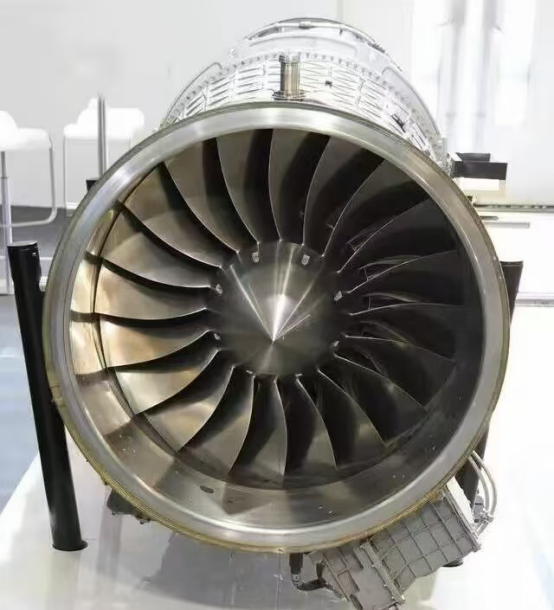
Within the aerospace systems, impellers, as the important components of such vital parts as compressors, turbopumps, and liquid rocket engines, their production and machining precision directly influence the aerodynamic performance, fuel efficiency, and operational safety and stability of the entire machine. With the trend of the development of aerospace equipment in the direction of high thrust-to-weight ratio, adaptability in extreme environments, and lightness, the unprecedented multi-dimensional requirements have been put forward for high-precision impellers in terms of geometric shape and location accuracy, tolerance control, surface roughness, and dynamic balance performance.
Introduction
Impellers, being high-speed rotating components, undertake the major functions of air compression, fuel supply, and energy conversion in complex systems such as aero-engines and rocket thrusters. Taking aero-engines for instance, not only does the compressor and turbine stage impeller determine the thermal efficiency of the engine, but it also has a direct impact on combustion stability and fatigue life. In my long-term engineering practice, I have increasingly felt that the manufacturing precision of impellers has been a significant restrictive factor for the improvement of the performance of aviation power systems.
With the constant use of complicated three-dimensional free-form surface structures, the conventional machining technique can no longer satisfy the double needs of precision and efficiency. This has led us to bring in high-stiffness five-axis linkage CNC machine tools, ultra-precision measuring devices, and precision casting and assembly technologies into the system of impeller manufacturing to establish a modern manufacturing system with precision closed-loop control.
Analysis of Key Precision Requirements for High-Precision Impellers
In the aerospace field, as key rotating components, the accuracy of impeller production directly affects the performance, efficiency, and reliability of the entire machine. Practices of a number of compressor and gas turbine projects show that high-precision impeller production requires strict control over indicators in four areas: geometric shape accuracy, size tolerance, surface quality, and dynamic balance, forming an integrated high-consistency production system.
Geometric Shape Accuracy
Aerospace impellers typically have complex free-form surface geometries, with extremely high requirements for their contour accuracy. The contour error of traditional blades needs to be kept within ±10μm, and the flow channel error should not exceed ±0.05mm for the best aerodynamic performance. In a compressor optimization project I participated in, the geometrical deviation in the streamline transition zone was optimized to ±6μm through error distribution control and tool path optimization, and the pressure ratio efficiency was enhanced by approximately 2.3%. At the same time, the blade thickness distribution, the main bus curvature, and the transition areas between the roots and tips of the blades all need to be precisely controlled to avoid performance degradation or even structural failure due to local airflow separation.
Dimensional and Positional Tolerances
Precision assembly requires very tight fits between impellers and bearings, sealing systems, and casings. For example, the coaxiality of the center hole should be better than 5μm, and the H6/k5 interference fit used in the rotor system can effectively avoid wear and vibration problems in the event of high-speed rotation. In a gas turbine project, we limited the coaxiality deviation within 3μm through the use of multi-dimensional compensation control technology, ensuring the stable operation of the rotor system at 30,000 rpm.
Surface Roughness
The surface roughness of the impeller has a direct relationship with their flow efficiency, noise, and fatigue life. The blades of high-pressure compressors typically need to be Ra≤0.2μm, and the critical parts such as turbine blades even use mirror finishing to reach Ra less than 0.08μm. In practical process application, through the use of high-frequency assisted grinding and plasma polishing technology, we can significantly reduce the surface roughness of superalloy blades without changing the geometric contour, thereby improving thermal shock resistance and fatigue life.
Dynamic Balance Accuracy
Impellers are ultra-high speed rotors, and their dynamic balance accuracy is the guarantee of the whole machine’s vibration control. The allowable residual unbalance of aero-engine impellers should be within ≤1 g·mm. Through double-sided dynamic balancers and laser weight removing technique, the digital closed-loop control can be achieved with an error of less than 0.05 g·mm single-piece weight removing in mass production, which improves the overall machine life and operational stability.
High-Precision Manufacturing and Detection Path
Against the backdrop of increasingly stricter demands for aerospace high-precision impeller manufacturing, we have established a five-axis machining-based, digital detection-supported, and thermal control and clamping compensation-assisted multi-level precision manufacturing system, which guarantees the overall improvement of geometric accuracy, assembly consistency, and surface quality of complex impellers.
Five-Axis Linkage CNC Machining Technology
High-stiffness five-axis CNC machining centers are the principal equipment for producing high-precision impellers. In a constant temperature and humidity environment, combined with the CAD/CAM software UG NX to optimize the tool path, and through tool compensation and real-time thermal deformation prediction, we have achieved a total machining error of Inconel 718 material impellers within ±5μm. It is particularly worth noting that the GROB five-axis machining center has obtained good positioning precision (0.002mm) for machining large impellers (diameter >500mm), which is a guarantee for complex space curved surface machining.
Intelligent Detection and Error Closed-Loop Control
Through the application of coordinate measuring machines (CMM), laser scanning, and ultra-precision optical grating ruler technology, non-contact measurement of the impeller’s major geometric parameters such as impeller blade profiles, flow channels, and reference surfaces can be realized. The measurement results in real time are returned to the machining program for setting up error closed-loop adjustment control. In practical application, the system has made it possible to increase the qualification rate from 92.3% to 98.7%.
Precision Fixtures and Thermal Control Systems
In actual machining, we use flexible pre-stress fixtures in coordination with temperature control platforms to achieve effective compensation for thermal deformation and clamping errors. At the same time, in coordination with infrared monitoring and thermal expansion forecast models, the whole process control of tool wear and part thermal deformation is achieved, thereby ensuring dimensional and form-position accuracy stability.
Important Role of Precision Casting in High-Precision Impeller Manufacturing
In high-precision impeller production, precision casting not only has the capacity to be a pre-shaping process to reduce the burden of subsequent processing, but also possesses unmatched advantages in structure complexity, material utilization, and overall production efficiency. Especially against the backdrop of aerospace light-weighting and structural integration, precision casting technology is evolving into an essential front-end process in advanced manufacturing procedures.
Precision Molding Technology for Aluminum, Magnesium, and Titanium Alloys
To achieve structural lightweight, precision casting technology has been an effective way for the pre-forming of high-performance impellers. Aluminum alloys are widely used due to their high specific strength and good processability, and vacuum die-casting can greatly reduce the porosity; while magnesium alloys are widely used in satellite and missile structures since they have very low density and excellent electromagnetic shielding ability. To form titanium alloy impellers, centrifugal casting and investment precision casting can efficiently solve the forming problem of thin-walled complex structures and achieve integral forming of complex blades.
Forming Precision and Dimensional Control
By means of controlling the thermal deformation and solidification behavior of wax patterns and mold shells, the dimensional accuracy of investment castings can be kept within the CT3 level and the subsequent processing volume can be reduced. At the same time, the density of the thick-walled area can be increased and the formation of cracks and shrinkage cavities can be avoided by local loading feeding technology and directional solidification process.
Conclusion
The precision demands of aerospace systems’ high-precision impellers have exceeded the limitations of traditional machining. Not only must it have high geometrical accuracy and surface quality, but all-around coordination in dimension control, dynamic performance, lightweight structure, and digital management must also be achieved. Five-axis high-precision machining, intelligent measurement, precision casting, and thermal deformation controlling technologies have initially formed a manufacturing system that can meet the requirements.


