
Superalloys as the main material for large components such as aero-engine turbine blades, blisks, and casings extensively utilize their high-temperature tensile strength, resistance to creep, and corrosion due to their excellent properties. Advances in casting technology have rendered possible the achievement of complex impeller geometry, especially investment casting technology for hollow film-cooled blades, following design requirements for severe working conditions.
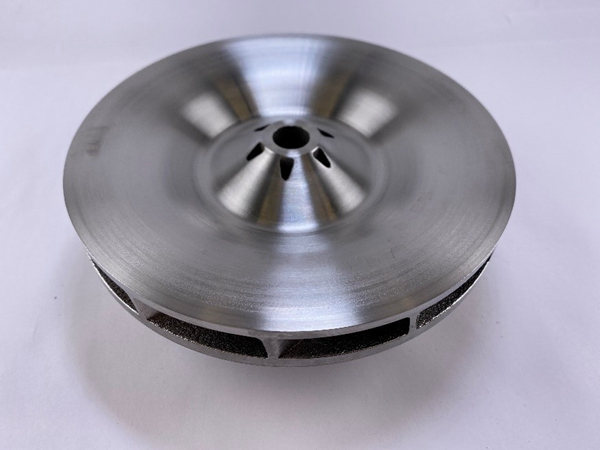
Since the 1940s, superalloys have made repeated improvement in general properties by optimizing alloying elements and manufacturing process advancements, such as vacuum smelting, investment casting accuracy, and single-crystal casting technology. As a necessary process, heat treatment governs precipitation of strengthening phases and stress relief within the component by varying solution treatment temperature, conditions for aging, and hot isostatic pressing (HIP), with a goal of optimizing the microstructure and enhancing the service performance at high temperature.
Microstructure alteration and surface condition after heat treatment play a direct role in mechanical properties and service life of impellers, which implies the need for post-heat treatment polishing processes. As a prominent manufacturing engineer, I understand that joint optimization between heat treatment and polishing is required in advancing superalloy impeller manufacture technology.
Introduction
Superalloy impellers are accountable for the central power transmission function of gas turbines and engines, and the stability of their performance directly influences the efficiency and safety of equipment overall. Heat treatment, being a critical process to improve the uniformity of superalloy microstructure, precipitation of strengthening phases, and stress relief, significantly enhances the high-temperature strength, creep life, and fatigue life of impellers. But oxidation reactions at high temperatures in heat treatment cause the surface of the impeller to form a decarburized layer and an oxide scale, which are resistive to (peel off), with tissue hardening and surface deformation, causing a very high increase in the surface roughness, much exceeding the rigorous aviation requirement of Ra ≤ 0.8 μm. Therefore, polishing of the surface after heat treatment not only ensures impellers’ surface integrity and dimensional precision but also serves as a requirement to ensure full exploitation of impeller mechanical properties.
In my (years of work experience), I have a deep respect that the rational selection of polishing processes and precise control of process parameters are the most important factor in improving the manufacturing quality of superalloy impellers. This article will focus on the variations of surface conditions and polishing process schemes of superalloy impellers after heat treatment, and make systematic technical suggestions with material properties and process requirements.
Influence of Heat Treatment on the Surface of Superalloy Impellers
Heat treatment plays an integral part in the manufacturing of superalloy impellers, especially for nickel-based casting superalloys such as GH4169, Inconel 718, and Rene series. High-temperature solution treating and low-temperature aging are generally included in heat treatment, and in some cases, hot isostatic pressing (HIP) is used to eliminate internal defects and strengthen the microstructure of the material.
But in the environment of oxidizing at high temperatures, there is an unavoidable dense and adherent oxide scale on the impeller surface mostly of NiO and Cr₂O₃ type. The thicknesses of the oxide scale usually reach tens of micrometers, which are almost impossible to scrape off completely by mere mechanical means. In addition, the surface layer’s structure is more refined after heat treatment, and the grain boundary is improved, thus a sharp increase in surface hardness and it is more difficult to polish subsequently.
During this time, heat treatment can also create localized deformation and warping of the impeller, and dimensional stability decreases, and subsequent mechanical correction and fine polishing must be done in parallel. Due to these reasons, the surface roughness of the impeller after heat treatment is normally higher than Ra 3.0 μm, way beyond the stringent needs of the aviation industry for the surface finish. Not only does it affect the aerodynamic efficiency and corrosion tolerance of the impeller, but it also poses a hidden danger as a potential source of fatigue crack nucleation.
In general, the surface state of superalloy impellers following heat treatment requires that polishing must balance effective oxide scale removal and minimal surface damage with precise control of size and topography.
Common Polishing Process Schemes after Heat Treatment
Mechanical Polishing
Mechanical polishing is mainly employed to eliminate oxide scale and surface burrs through physical means such as sandpaper, grinding wheels, and polishing wheels with polishing paste. The process is easy in tooling and adaptable, and is applicable for roughing of large planes and impeller rims.
It possesses the advantages of efficient removal of heavy oxide scales, small investment in equipment and mature technology. However, mechanical polishing is not good in flexibility to complex blade surfaces, easily scratches and leads to stress concentration, and will easily result in metal smearing and excessive grinding. These defects are particularly fatal to high-precision impellers, and therefore mechanical polishing is used mainly as pretreatment.
Applied together with actual working conditions, I often recommend mechanical polishing as the first process to complete the high-speed shaping of rough surfaces and oxide scale as a pre-requisite for subsequent fine polishing.
Electrochemical Polishing
Electrochemical polishing makes use of preferential dissolution of micro-convex parts on the anode impeller surface in the electrolyte to achieve surface smoothing and mirror effects. This technique can be used to treat nickel-based superalloys, especially intricate inner cavities and flow channel structures.
This method can reduce the surface roughness of the impeller to Ra ≤ 0.2 μm, which meets the high precision of aero-engines. The intention is to control parameters such as voltage, current density, and temperature in precise amounts to avoid electrode offset and local over-etching. The limitation is that it has an impact on part size, and it is generally used in conjunction with semi-finishing.
Along with my practical experience, electrochemical polishing is an excellent choice for impeller complex shape processing and mechanically hard-to-reach parts, and it is a necessary process to achieve high surface finish.
Chemical Polishing
Chemical polishing obtains high surface micro-homogenization through selective corrosion of convex parts by aggressive acid solutions. It is a stress-free process without mechanical stress and is applied to thin-walled blades and micro-structure areas.
Though strict safety measures and chemical solution composition matching are required at operation, chemical polishing can greatly increase surface gloss and homogeneity and is a common impeller final finish treatment technique.
I believe, notwithstanding its very high technical obstacle, its non-destructive ability and extremely high homogeneity determine its irreplaceable role in polishing high-level impellers.
Hybrid Polishing
Hybrid polishing brings together the optimum characteristics of mechanical, electrochemical, and chemical treatments to achieve three-stage removal and modification:
- Primary stage: Mechanical polishing eliminates thick oxide scale and coarse surface defects;
- Intermediate stage: Electrochemical polishing further eliminates micro-protrusions and achieves surface smoothing;
- Fine stage: Chemical etching and mirror polishing improve surface brightness and uniformity, yielding Ra ≤ 0.4 μm.
- This process route meets the entire-process requirements for improving the surface quality of superalloy impellers and is the prevailing scheme advised in my industrial practice.
Application Case Analysis: GH4169 Heat-Treated Impeller
Taking a particular air compressor impeller made of GH4169 alloy as an example, the roughness of the surface after heat treatment is about Ra 3.5 μm, and the oxide scale thickness is about 20 μm. For the surface condition mentioned above, we applied a three-stage composite polishing process:
- Mechanical polishing: Employ grinding wheels and sandpaper to efficiently remove the oxide scale and initially (trim) the shape;
- Electrochemical polishing: Precisely adjust electrical parameters in a specific electrolyte to remove micro-protrusions and fine defects and achieve a mirror texture;
- Chemical polishing: Etching increases surface flatness and gloss and ensures the edges of the blades are intact and free of passivation.
Finally, the removal rate of oxide scale was 99.5%, the surface roughness was always kept at Ra 0.3~0.5 μm, and no ablation and corrosion pits defects were found. This technology has applied to mass production. Combined with a laser scanning measuring system, a closed loop of rigid quality control has been implemented, which has greatly improved the service performance and manufacturing uniformity of the impeller.
In my opinion, the case graphically illustrates the importance of the composite polishing process in improving the surface performance of superalloy impellers and demonstrates the necessity for multi-process coordination and fine process control.
Why Polishing is Indispensable after Heat Treatment?
Although heat treatment significantly improves the overall mechanical properties of impellers, degradation of surface roughness and defects always affects downstream operations and final performance. The need for polishing is warranted by:
- Removal of oxide scale and decarburized layer: Polishing eliminates the hard oxide layer and decarburized layer formed during heat treatment in order to preserve dimensional tolerance and surface integrity.
- Improving surface roughness grade: Mechanical and chemical polishing can reduce the Ra value to below 0.2 μm, meeting the strict aviation precision requirements.
- Improving corrosion resistance: Smoothing the surface reduces the points of retention of corrosive media and improves corrosion resistance and lifespan.
- Improving aesthetics and brand image: Mirror gloss reflects the high-end manufacturing level and enhances customer trust.
- Grounding for subsequent processes: Polishing improves the surface finish of the base material so that uniformity and stability of later processes like electroplating, electrochemical polishing, and passivation are guaranteed.
In my opinion, the polishing link is not only a technical requirement but also a signal of quality culture, which is embedded in product competitiveness and reputation in the market.
Conclusion
Superalloy impeller heat treatment surface polishing is a significant link to obtaining the high-performance production closed loop of aero-engine and high-end gas turbine components. Through the integration of material science and process engineering principles, rational application of mechanical, electrochemical, and chemical polishing technologies, especially composite polishing techniques, not only can practically eliminate the oxide scale and heat treatment-induced surface defects but also greatly improve the surface integrity and fatigue performance of impellers. As intelligent manufacturing and automatic detection technology are speeded up, the post-heat treatment polishing process in the future will be of high consistency, low loss, and intelligent control, and will have powerful support for superalloy impeller reliability and life assurance.
As a dedicated engineer in superalloy impeller production process optimization, I look forward to researching and developing and applying more new polishing technologies that can be used to further promote the industry’s technological development.


