
The delivery pump impeller is crucial in machinery for fluids to transform mechanical energy into fluid energy. Because of its complex structure and harsh working conditions, the cast process quality not only affects the mechanical strength and anticorrosive performance of the impeller but also has a direct relationship with the efficiency and stability of the pump.
Delivery pump impeller casting defects such as air holes, shrinkage cavities, sand holes, cracks, and non-uniform hardness, if not well controlled, can easily lead to the failure of the impeller, equipment shutdown, or even safety accidents. Therefore, in my opinion, establishing a scientific and stringent quality control system encompassing the entire casting process is the most vital measure for enhancing the performance of impeller products.
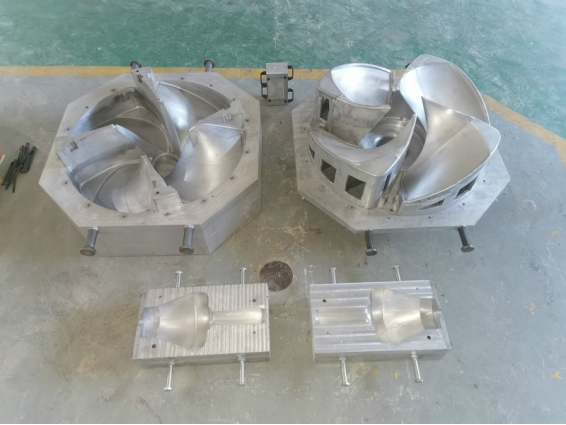
What is the Casting Process for Delivery Pump Impellers?
The “delivery pump impeller casting process” is the technological route for manufacturing impeller components in delivery pumps, primarily encompassing the fabrication of the intended shape and material structure of the impeller through casting. It is one of the significant processes involved in impeller manufacturing with a direct effect on the quality and performance of the impeller.
Briefly, a delivery pump is a device that is typically used to move fluids (such as water, oil, chemical fluids, etc.). The impeller, which is the core of the pump, is used to transform mechanical energy into the liquid’s kinetic energy in order to achieve liquid movement. Impeller casting is done through casting molten metal into a specially prepared mold (cavity), which will cool and harden into the impeller.
Key Links in Quality Control of Delivery Pump Impeller Casting
Raw Material and Melting Quality Control
The foundation of casting quality is raw materials utilized and regulation of the melting process. First, casting alloys for impellers need to be compliant with standards and possess stable compositions. The implementation of spectroscopic analysis in monitoring chemical elements precisely is an effective measure to guarantee alloy performance. Reasonable (proportions) and diligent furnace charge and flux management are essential in minimizing inclusions and impurities. Melting temperature real-time thermocouple monitoring ensures the alloy melts sufficiently enough to destroy inclusions without inducing non-uniform microstructure resulting from temperature changes. As a casting engineer, I personally advocate strict control of molten iron chemical composition and furnace charge purity, the basis for achieving stable impeller material performance.
Cavity Design and Sand Mold Manufacturing
Reasonable design of the cavity is the key guarantee to prevent casting defects. CAE simulation software can precisely optimize the gating system (gates and risers) and guarantee smooth liquid metal flow evenly and reduce the air hole formation and cold shuts. The air permeability and compactness of the sand mold directly impact the smooth discharge of gases. The selection of high-strength sand mold material and reasonable ventilation system design are key methods to control the air holes and sand holes. Apart from this, the precision of the core positioning is the basis for ensuring the dynamic balance precision and geometric dimensions accuracy of the impeller. I have applied CNC sand mold manufacturing and 3D measurement technologies a number of times to ensure the cores’ stability and avoid geometric error caused by offset.
Pouring Process and Temperature Control
Control of the pouring process has a direct relationship with the density of the cast and formation of internal defects. The temperature of pouring is to be strictly controlled within the ideal range of the molten state of the alloy. Excessive temperatures severely aggravate oxidation of the molten metal as well as the development of air pockets, while excessive temperatures easily create cold shuts and shrinkage cavities. Enhancing pouring speed and pouring practice to reduce turbulent effect of liquid metal on the surface of the sand mold and rule out inclusion mixing is key to improving casting density. In my practice, I emphasize that the gating system design should be effective in sound feeding, and the riser location must be sufficient to fully compensate for casting solidification shrinkage without high raw material wastage.
Heat Treatment Process Control
Heat treatment is a crucial process that enhances the mechanical characteristics and uniformity of the microstructure of the impeller. The parameters of preheating, quenching, and aging process must be precisely formulated to impart a fine internal structure and no localized internal stress to the impeller. Stress relief processes and heat treatment by fixing using fixtures completely eliminate the possibility of casting deformation as well as cracking. In my occupational practice, logical heat treatment not only raises the strength and wear resistance of the impeller but also significantly expands its fatigue life, which is a necessary part of quality control.
Defect Detection and Quality Assessment
Overall detection of internal and surface defects of impellers with the assistance of different non-destructive testing technologies (radiography, ultrasonic testing, magnetic particle inspection, etc.) is a mandatory way to ensure product quality. The use of coordinate measuring machines (CMM) and surface roughness testers to check geometric accuracy and surface quality to design requirements is a key guarantee for high impeller performance. Meanwhile, mechanical property tests (tensile, impact, hardness) can give integrated assessment of mechanical performance of the impeller. By means of setting strict detection standard and process, early detection of defects and effective treatment are realized.
Analysis of Casting Defects and Quality Control Measures
Air Holes
Air holes are the most commonly found defects of delivery pump impeller casting with varied shapes, mainly caused by factors such as water and impurities in the charge in the furnace, excessive moisture in the mould sand, and improper pouring temperature and rate. For control of air holes, I recommend strictly controlling molding sand and core sand water content, avoiding high water spraying during modeling and mold repair, maintaining proper drying and ventilation for cores. Simultaneously, the melt furnace charge must be clean to avoid the high development of oxide inclusions, controlling pouring temperature, using the appropriate inoculants and cryolite powder coverage to prevent iron oxidation when molten. Experience has indicated that such measures can greatly reduce the incidence of invasive and exudative air holes.
Sand Holes and Slag Holes
Slag holes and sand holes are generally due to insufficient molding sand strength, sand mold damage, irrational design of the gating system, or loose mold closing. Compacting and hardening the sand mold and core, complete washing of free-floating sand and core burrs within the cavity, are good means to prevent sand holes. When it comes to slag holes, prevention of oxidation of molten iron, proper control of dosage of inoculant and nodulizer, rational design of pouring operation, and the use of effective filter screens (retain) slag are necessary. Also, regulation of sulfur content within molten iron and the rising of the treatment temperature also lowers slag holes significantly.
Residue Defects
Residues are usually caused by slow decomposition of pattern materials (e.g., EPS patterns), forming wrinkled defects on the surface of the cast. Good air permeability of the coating and the molding sand, proper elevation of pouring temperature and negative pressure, density and compactness adjustment of EPS material, and pouring range expansion are all beneficial to reduce residue defects.
Shrinkage Cavities and Porosity
Porosity and shrinkage cavities are pores formed as a result of solidification shrinkage in the thick sections of the casting. Reasonable control of wall thickness and alloy composition, especially reasonable control of magnesium content, designing a scientific gating system for easy feeding, reasonable control of inoculant dosing, and avoiding molten iron oxidation are significant precautions for preventing porosity and shrinkage cavities.
Cracks
Cracks are hot and cold cracks, basically caused by internal stress higher than the material yield point during solidification. Controlling elements such as sulfur and phosphorus content in molten iron, sensibly designing cooling rate, avoidance of local overheating, waiting for the mold opening until the casting temperature is lower than a safe limit, and designing the optimal casting configuration are all fundamental measures to prevent cracks.
Uneven Hardness
Irregularity in hardness is mostly caused by irregular cooling and improper use of inoculants. Correction of improper tapping temperature of molten iron, control of addition of inoculants, and improvement of gating system design to ensure uniform cooling of cast can effectively avoid local irregularity in hardness.
Non-spheroidization and Poor Spheroidization
The mechanical properties of the impeller are directly influenced by spheroidization quality. A strict control of addition ratio of nodulizer and reaction time, reducing sulfur content of molten iron, preventing oxidation of molten iron, and controlling anti-spheroidizing elements strictly in pig iron is required to avoid poor spheroidization.
Conclusion
Delivery pump impeller casting quality control not only is a key link ensuring pump equipment operation performance but also the source of enhancing the entire pump industry’s competitive strength. Based on raw material to finished product complete-process quality control, accompanied by scientific process designing and contemporary detecting instruments, we can efficiently lower the defect rate and improve the structural intensity and service life of the casting. As a front-line technician, I am convinced that it is only by continuously improving and innovating quality control methods that we can match more stringent application requirements. With further fusion of intelligent and digital technologies in the future, quality control in impeller casting processes will certainly be driven to a new level, a sound basis for the success of the delivery pump industry.


