
Being a key rotating component of aero-engines, the performance of aviation impellers is directly related to the stability and efficiency of the entire power system. Due to the fact that their geometries are complex and the precision of their production requirements is extremely high, traditional contact measurement methods cannot handle current requirements for digital, high-precision, and automated quality testing. This paper critically examines the fundamental position of high-precision laser measuring technology in aviation impeller manufacturing, its significant value in realizing efficient inspection, traceability of data, and intelligent manufacturing from technical principles, common application scenes, closed-loop control of quality, case study, and challenge optimization.
Introduction
High-precision laser measurement is a newly emerging technology that utilizes laser beams as measuring light sources to realize non-contact and high-resolution measurement of the position, size, shape, topography, etc., of an object. Non-contact high-precision laser scanning technology, with the advantages of high speed, full-field, visualization, and automation, has evolved step by step into the mainstream technique of quality inspection for aviation impellers. It is employed heavily in industries with extremely high precision requirements, such as manufacturing in industries, precision machining, aviation, electronic assembly, and automated inspection.
Overview of Laser Measurement Technology Principles
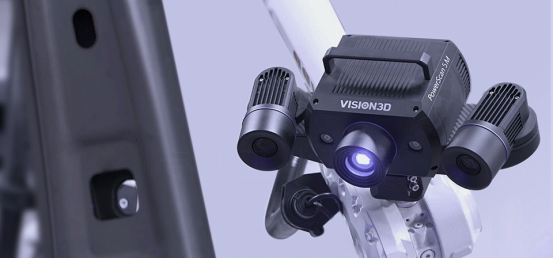
High-precision laser measurement is chiefly based on laser triangulation or structured light principles: Measurement system projects laser or stripe light onto the target workpiece surface through a laser emitter, surface reflection signal is detected by the receiver, and calculates spatial point coordinates according to trigonometric geometric relationships or image processing algorithms, thus creating high-density 3D point cloud data. These point cloud data can fully describe the microscopic topography of the impeller’s complex profile and support error fitting, deviation analysis, and visual output against the CAD model. General equipment such as laser scanning arms, blue light scanners, and LiDAR systems have been widely used on intelligent manufacturing production lines.
Key Inspection Links Applied to Aviation Impellers
Geometric Dimension and Form-Position Error Detection
In actual inspection, laser scanning can be used to measure the complete spatial geometric data of the entire impeller simultaneously, including blade thickness, pitch uniformity, profile twist, coaxiality, hub runout, and radial error. Comparing the high-accuracy point clouds to the CAD model, the system can also automatically produce deviation cloud maps and color error distributions so that out-of-tolerance areas can be easily and intuitively located. For example, I once participated in a Φ180 mm Inconel 718 impeller laser inspection project. Laser scanning took only 3.5 minutes, while error result accuracy could achieve ±12 μm, and there was excellent guidance for the path correction of the subsequent finishing.
Surface Profile Comparison and Error Visualization
Free-form surface features are typically possessed by impellers, and their profile errors must be examined by high-order fitting of high-density point cloud data. Laser measurement not only can determine the trend of contour lines, 凹凸 (concave-convex) change, and rim deformation but also generate deviation distribution maps with color spectra labeled thereon, significantly enhancing the understanding of engineers regarding the spatial distribution of errors. I believe that this graphical error analysis method is particularly suitable for process control in five-axis machining and additive manufacturing, and it indeed makes up for the insufficiency of coverage of curved areas by traditional methods.
Digital Traceability and Closed-Loop Control
By correlating measurement data of each workpiece with its serial number and generating a digital twin quality file, end-to-end traceability of entire processes from raw material to finished products can be ensured. In the course of a production process optimization of an impeller I undertook, through statistical analysis of over 50 impellers’ measurement data, we found systematic topographical deviations in the machining trajectory. Following this, we adjusted the tool axis vector and feed parameters and saw dramatically improved uniformity in subsequent workpieces to be followed. More importantly, the measurement data could be fed back into the CAM system reversely to achieve adaptive path optimization, establishing a production closed-loop through measurement feedback and greatly reducing the unqualified rate.
Technical Advantage Analysis of Laser Measurement
| Index Dimension | Laser Measurement Technology | Comparison with Contact Measurement |
| Measurement Efficiency | Full-field scanning completed within minutes | Point measurement, taking hours for inspection |
| Non-contact Characteristics | Avoids scratches and soft deformation | Mechanical pressure risk exists in contact mode |
| Data Integrity | High-density point cloud (million-level) | Sparse point measurement, easy to miss surface features |
| Automation Capability | Can be integrated with robots for unattended operation | Mostly requires manual alignment and operation |
| Adaptability to Working Conditions | Can measure dead corners, arc surfaces, and complex shapes | Difficult to cover free-form surfaces |
| Precision Level | Typically reaches ±10-20 μm, and some equipment <±5 μm | High precision but susceptible to operational errors |
Practical Case Analysis: Application of Blue Light Laser Measurement System in Impeller Quality Control
On the manufacturing surface of a large portion of an aero-engine, we used a blue light automatic 3D measuring device to conduct batch quality inspection on a batch of aviation titanium alloy impellers. Using an automatic loading and unloading device and turntable in combination, omni-directional scanning was achieved. The measurement contents included key parameters such as blade thickness, blade tip profile, internal flow channel deviation, and end face chamfer topography. Through statistical analysis of batch inspection data, it was found that about 8% of the blades had leading edge profile offset issues. Based on the deviation distribution analysis, we optimized the rough machining path and blade root cutting angle, reducing the rework rate by about 45% and manual re-inspection man-hours by nearly a third. In addition, the inspection results are stored in the MES system as traceable sets of data, realizing the interconnection management of follow-up maintenance and traceability.
Application Challenges and Optimization Suggestions
Although laser measurement technology has numerous advantages, some technical hurdles still need to be solved for practical use:
- Treatment of highly reflective surfaces: Titanium alloy and single-crystal superalloy surface are super reflective, affecting the stability of data. Blue light scanning and anti-glare agent spraying are recommended to be applied for measurement;
- Insufficient big data point cloud processing capability: Billions of point clouds need huge amounts of computing capacity. It is recommended to incorporate GPU-enabled algorithms and AI-assisted registration;
- On-site measurement stability issues: Ambient light disturbance and vibration are severe. It is recommended to place the measurement station in a temperature-controlling room and incorporate vibration-damping equipment.
Along with engineering usage, we recommend the adoption of a multi-source fusion measurement method, e.g., laser scanning combined with structured light and interferometric measurement, to achieve the best integration of measurement range, efficiency, and accuracy.
Conclusion
Precision laser measurement technology has come step by step into the forefront of the digital quality control system of aviation impellers. Its contactless, full-data acquisition, and high-speed characteristics have greatly upgraded the visualization level of the manufacturing process and quality closed-loop response rate. The multi-case and multi-dimensional analysis in this article proves that high-precision laser measurement not only improves inspection efficiency but also promotes aviation manufacturing’s intelligent evolution from experience-based to data-based. In the next few years, with continued development of accuracy of laser scanning devices and the widespread application of AI algorithms to identify errors and register models, I believe that this technology will more and more be an indispensable element in building a “zero-error, fully digital” aviation intelligent manufacturing system.


