
Over the last several years, in line with the continuously increasing demand of the global automotive market for power performance, emission control, and fuel economy, turbocharging technology has been one of the primary engine development trends. The turbocharger impeller, as the main component, has intricate blade structures, variable curvature distributions, and thin flow channel structures, which renders traditional machining techniques difficult to meet the production requirement of high efficiency and quality. especially after integral milling replaces traditional casting processes, precise tool path control has become a key element for improving the quality of final products.
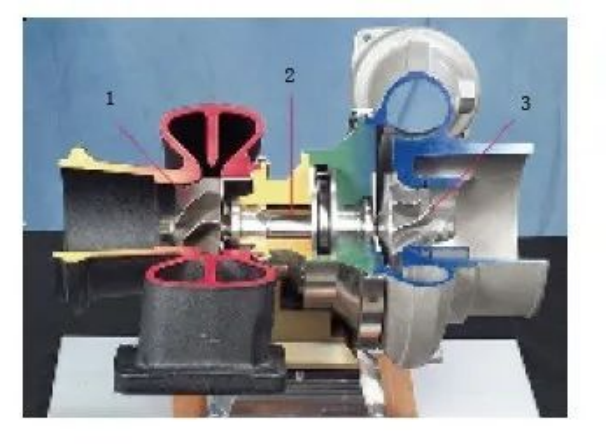
In practice, we deeply believe that streamlined machining paths have better surface conformability and interference avoidance than traditional contour or equidistant methods and have become more of a required core strategy for five-axis machining. This article aims to combine engineering practice and CNC programming theory to study systematically the construction principles, implementation means, and engineering effects of streamlined paths, in order to provide effective process support for machining of automotive turbocharger impellers.
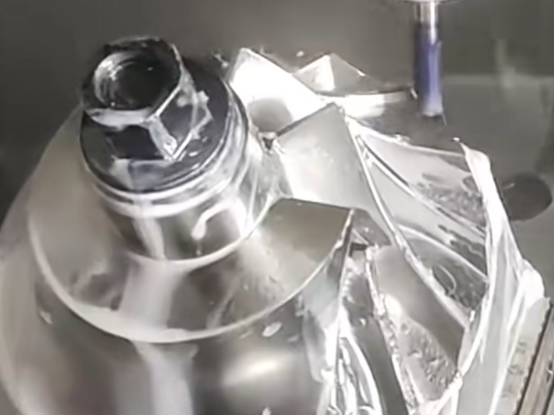
What is Streamlined Machining?
Streamlined machining is a widely used tool path planning method for CNC machining (especially five-axis or multi-axis linkage machining). The core idea of streamlined machining is to allow the tool to machine following the natural flow lines (streamlines) of the workpiece surface, thus achieving smoother, more efficient, and more stable machining results.
In simple terms, you can imagine the surface of the workpiece as a waterbed along which water flows, and the “streamline” is the path naturally formed by the flow of water. Streamlined machining is to allow the tool to cut along such paths ( move with the natural tendency), not with too many turns, hither-and-thither (return), or local vibrations.
Geometric Structure and Machining Challenges of Turbine Impellers
Turbocharger impellers are generally formed by nickel-based alloy, aluminum alloy, or titanium alloy by integral milling. Their typical structural features are:
- Twisted free-form surface blades: Extensive variation is given by the blade space, with multi-directional curvature coupling;
- Gradient flow channels: The outlet and inlet terminations of the flow channel are greatly dissimilar from one another, requiring high path consistency;
- Transition surface from blade root to tip: Requires surface continuity and precision consistency;
- High collaborative machining requirements for central holes and hub structures: Requires high concentricity and (finish) matching.
These structural features render it (very easy) to (occur) machining interference, rough surfaces, and (local) overcutting in conventional tool path designs. Therefore, constructing streamlined paths that accommodate surface curvature variation is the crucial technical connection to ensure machining quality and efficiency.
Design Principles of Streamlined Tool Paths
In five-axis linkage machining, reasonable tool path design is the most critical element to ensure the quality and efficiency of processing complex curved surface workpieces. Especially in high-precision titanium alloy impeller processing, the use of streamlined path design principles can effectively improve the surface consistency, reduce processing stress, and reduce tool wear. Effective path planning emphasizes “growing with the surface and moving with the shape,” and needs to reconcile tool posture continuity, reasonable cutting force distribution, and differences in functional areas of machining. That is why the following three essential principles are actually practiced in actual path planning.
Control of Surface Normal Consistency
In machining of complex free-form surfaces, regulation of the angle between the feed direction of the tool and the workpiece surface normal is extremely important. With a stable normal angle, lateral cutting force can be significantly minimized, preventing tool deflection, workpiece vibration, and warping deformation in thin-walled blade areas due to uneven forces. especially in titanium alloy material machining, its large elastic modulus will enhance the influence of transverse forces in machining, thus normal consistency control must be used to improve cutting stability and surface integrity. This method not only helps optimize the tool force state but also serves as a good basis for precision machining.
Continuity of Tool Contact Points
The preservation of continuous contact between the tool and workpiece surface in the five-axis linkage path is the most critical factor to ensure the dynamic stability and stability of machining texture. In case of abrupt path changes, it may cause instantaneous jumps in load when the tool penetrates and withdraws from the workpiece surface, hence creating spindle vibration, retardation in machine tool response, and even clear tool marks and discontinuous machining texture. Therefore, posture smoothing algorithms and path interpolation optimization must be used in an attempt to propel tool contact point continuous motion along the machining path, thereby reducing disturbances during machining and achieving high-quality surface effects.
Zonal Path Design and Multi-Strategy Integration
Titanium alloy impellers have intricate geometric shapes, and the different regions (e.g., leading edge, trailing edge, flow channel, hub) have diverse curvature distributions and force characteristics and therefore differentiated processing should be done using zonal path strategies. For example, at the leading and trailing edge of blades, projected streamlined curves are suitable to make the tool always (fit) the direction of the curve; in the general blade surface area, equidistant offset methods are suitable to make the tool load evenly; in the hub and root area, contour curves may be used to simplify the structure of the tool path. By integrating multiple path strategies into different regions of machining, not only can the local machining efficiency be improved, but optimization of the overall surface quality and contour accuracy can also be realized.
Construction Methods of Streamlined Paths
In the five-axis machining path planning of titanium alloy impellers, the streamlined path not only determines the fit degree of the tool with the curved surface but also directly affects the distribution of cutting forces, heat accumulation, and surface quality. In order to achieve high path matching with the impeller surface and improve machining stability, it is necessary to integrate the advanced CAM software functional modules and use a variety of path construction strategies for collaborative implementation. The most prevalent current mainstream methods are principal curvature-oriented strategies, projection path generation, and hybrid path methodologies, which prioritize different aspects in free-form surface machining and are able to balance cutting efficiency with quality assurance and promote path conformability.
Generation of Principal Curvature-Oriented Paths
In complex curved surface areas, especially in the middle mainstream surface area of impeller blades, curvature changes considerably, and in such cases, traditional contour or equidistant paths are prone to overcutting or local tool mark buildup. Because of this, the application of principal curvature-directed paths has proven to be a possible solution. By using the “Flowline” capability of CAM software like UG NX or PowerMILL, the main curvature direction of the target surface can be used to automatically extract it and build the path from this direction, such that the tool naturally follows along the surface shape. This type of path is rich in conformability and stability, which will be extremely effective in inhibiting lateral interference and fluctuations in cutting load and guaranteeing the continuity of cutting. Furthermore, with direction coincident with geometric features, the main curvature path also has intrinsic advantages in the subsequent error compensation and vibration control.
Path Generation Based on Projection Method
In the case of the complex flow channel structure or transition region of the leading/trailing edge of the impeller, the geometric structure is difficult to characterize with a single curvature and classical path strategies are difficult to achieve high-precision fit. In this stage, path generation technology by the projection method shows special value. The way is to first create an ideal path trajectory (e.g., a streamline or spiral) in two-dimensional space, and then project the path onto the three-dimensional model surface using geometry projection, thereby creating a stronger-fitting machining path. This method can effectively overcome problems such as path penetration and surface mis-cutting, and improve the accuracy of the path in the flow channel region of machining free-form surfaces with equidistant high-density machining needs.
Application of Mixed Path Strategies
In practical engineering applications, in order to meet the dual demands of efficiency and quality at the same time, in the majority of situations, it is necessary to integrate different path strategies, i.e., apply a mixed path design strategy. In the middle section of the blade, the equidistant path can ensure the uniform removal of the material and the balance of the cutting load; in the leading edge, trailing edge, and root transition section of the blade, the conformal streamlined path is adopted to ensure the finishing and shape accuracy of the machining. Such hybrid path strategy can realize differentiated optimization depending on the machining characteristics of different areas of the impeller, fully take advantage of five-axis linkage flexibility, and is the industry’s best practice widely used in CNC programming of titanium alloy impellers.
Interference Detection and Path Correction Technology
Although the streamlined path is more superior to the traditional method, the following interference factors should still be dynamically regulated in its generation process:
- Tool holder interference control: In slim flow channel or blade root, the tool posture should be optimized to avoid collision between holders;
- Dynamic optimization of tool axis inclination: Optimize cutting performance and machine tool moving range;
- Path transition smoothing treatment: Especially at the meeting point of multiple segments of paths, transition buffer is carried out through Bezier curve or NURBS curve interpolation for improving the stability of the compounded trajectory.
By the help of the CAE system of machining path simulation, potential interference areas may be found in advance and path parameters automatically optimized, increasing the path generation realizability.
Characteristics of Streamlined Machining
| Characteristics | Description |
| Conformity to Surface Shape | The tool movement trajectory coordinates with the surface contour without abrupt changes. This ensures that the cutting path naturally adapts to the workpiece geometry, avoiding sudden direction shifts that may cause machining defects. |
| Improved Surface Quality | Machined surfaces exhibit higher smoothness, with reduced tool marks and waviness. By following the natural flow of the surface, streamlined paths minimize irregularities, meeting strict requirements for precision components like impellers and blades. |
| Reduced Tool Load Fluctuation | The feed angle and contact points of the tool change more gradually during cutting, reducing vibration and dynamic load variations. This stability extends tool life and prevents premature wear caused by abrupt force changes. |
| Enhanced Machining Efficiency | Streamlined paths minimize air cutting and unnecessary direction changes, optimizing the machining cycle. By reducing idle movements and improving path continuity, they significantly increase production efficiency, especially for complex parts that require multi-axis 联动 (linkage) machining. |
| Suitability for Complex Free-Form Surfaces | Particularly well-suited for machining complex 3D curved parts such as impellers, blades, and molds. The strategy effectively handles multi-directional curvature changes and narrow flow channels, where traditional path planning may cause interference or surface defects. |
Programming and System Implementation
During programming of NCs, we use hyperMILL along with RTCP five-axis motion control to ensure stability of the tool center trajectory in space and reduce the complexity of multi-axis interpolation programming. At the same time, automatic interference checking function enhances the path verification process, ensuring stable (guarantee) for the entire machining process.
From a system implementation perspective, apart from high-speed path calculation ability, an excellent CAM software should be able to perform residual analysis of the tool paths, feed rate optimization, and adaptive tool holder interference adjustment. These functions are directly indicative of the program quality and the machining efficiency in actual machining.
Summary
Through the systematic research on turbocharger impeller streamlined machining path design in this paper, we can infer that reasonable path design is not only related to surface quality but also directly influences production efficiency and cost control. With the advantage of naturally conforming to complex surfaces, the streamlined path is becoming one of the key technologies in high-performance five-axis machining.
Personally, I believe that simulation and intelligence of impeller machining paths will be the way of future development. Assembling artificial intelligence algorithms to achieve automatic path planning and integration with digital twin technology for end-to-end virtual verification is more than likely to further reduce programming time, improve automation, and truly achieve precision manufacturing of “what you see is what you get”.


