
Hastelloy, having superior corrosion resistance and good mechanical strength, is widely used in the key equipment of the petrochemical industry, especially as an important component in the field of impeller manufacturing. As the core component of petrochemical equipment, the performance of impeller has a direct impact on the safety and stability of equipment. The article focuses on the research of corrosion resistance and machining technology of Hastelloy impellers in complex corrosive environments, and combines advanced machining processes and surface strengthening technologies to explore effective ways of improving the corrosion resistance and extending the service life of impellers.

Introduction
The petrochemical industry is characterized by complex and changing environments. Equipment generally endures harsh working conditions such as high temperature, high pressure, and corrosive media containing acids and alkalis. As one of the crucial transmission components, the working environment of impellers in the petrochemical industry is particularly poor, with fluid corrosion and abrasion being most obvious, which imposes extremely high requirements on materials. Hastelloy, as a nickel alloy, by virtue of its excellent corrosion resistance, chloride corrosion resistance, and high-temperature strength, is widely used in the petrochemical industry, where it achieves particularly excellent results in chemical pump impellers.
However, Hastelloy is high in hardness and significant work-hardening characteristics, and thus its machining process is quite difficult with high tool wear rate and hard-to-guarantee surface quality and dimensional accuracy. Additionally, Hastelloy has the characteristics of low thermal conductivity, which can readily lead to high temperature in the cutting area during machining, and further add to the machining difficulty. Therefore, how to remove all sorts of difficulties in Hastelloy machining and ensure its machining quality and performance is one of the pressing technical problems to be solved in the current petrochemical industry.
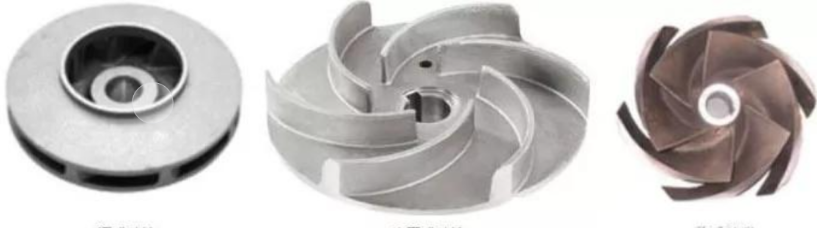
Corrosion Resistance Characteristics of Hastelloy Impellers
Hastelloy is chiefly made up of nickel-based alloys with the inclusion of elements like molybdenum, chromium, and iron that cause Hastelloy to display superior corrosion resistance under environments with high corrosiveness. Its corrosion resistance can be encapsulated as the following properties:
- Excellent Chloride Ion Corrosion Resistance: Hastelloy has the ability to withstand the corrosion of very corrosive mediums like hydrochloric acid and sulfuric acid, and finds suitability in acidic environments typically occurring in chemical pump impellers..
- Good High-Temperature Oxidation Resistance: Hastelloy exhibits good high-temperature corrosion resistance in the high-temperature and high-pressure working environment of petrochemical industry, can work stably, and minimize failures due to material fatigue or corrosion.
- Stress Corrosion Cracking Resistance: Hastelloy possesses excellent resistance to stress corrosion cracking, which significantly enhances its reliability in extreme working environments.
These characteristics render Hastelloy impellers long-term stable when operating under extremely poor working conditions, improving the safety and service life of petrochemical equipment.
Reasons for Using Hastelloy Impellers in Petrochemical Industry
The application of Hastelloy impellers in the petrochemical industry is not for the sake of using high-end materials, but because there are demands in several aspects. The detailed reasons are as follows:
Extremely Strong Medium Corrosion, Unbearable for Ordinary Materials
Petrochemical processes generally involve various strongly corrosive media, such as strong acids like hydrochloric acid, sulfuric acid, and phosphoric acid, corrosive media like chlorides, organic acids, amines, and sulfur compounds, and high-salinity wastewater and seawater. To these corrosive media, the ordinary materials such as stainless steel and carbon steel are prone to problems such as corrosion perforation, pitting corrosion, intergranular corrosion, and even stress corrosion cracking. Hastelloy (e.g., C-276, C-22), however, possesses very good acid resistance and pitting corrosion resistance, and can work stably for a long time.
High Demand for Continuous Equipment Operation, Infrequent Shutdown for Maintenance
In the key units of petroleum refining, cracking, hydrogenation, and desulfurization, the pump devices work for a long time and undertake crucial tasks. The breakdown of general impellers due to high frequency will lead to system shutdown with significant losses, and maintenance would be very inconvenient in the high-temperature and high-pressure system. Hastelloy impellers have a longer service life and longer maintenance cycle, which can effectively reduce the risks brought about by unexpected shutdown and device breakdown.
Performance Stability Under the Combined Action of High Temperature and High Pressure
The temperature of some processes in petrochemical systems can reach up to 200°C, and the pressure can reach over dozens of atmospheres. Under the condition of such an awful environment of thermal-chemical-force coupling, ordinary materials will break down, but Hastelloy has excellent high-temperature strength and thermal stability, and can adapt to such complex working conditions and maintain stable performance.
Special Process Requirements for Certified Equipment Using High-End Materials
The majority of petrochemical processes are constrained by national standards, industry specifications, and international certifications (e.g., ASME, API), and principal equipment must use certified corrosion-resistant alloys. For example, hazardous chemical storage and transport pumps need compliance with NACE standards, and seawater cooling systems recommend the use of chloride pitting corrosion-resistant alloys (e.g., Hastelloy). Therefore, during the design stage, Hastelloy impellers are stipulated to ensure equipment conformity and safety.
Lower Long-Term Comprehensive Costs
Although Hastelloy’s procurement cost is high, due to its high corrosion resistance and long-term stability, its service life is 3 to 5 times the life of ordinary materials. This means that the use of Hastelloy impellers can significantly reduce maintenance, replacement, production shutdown losses, and labor, thereby reducing the overall life cycle cost (LCC) of equipment. Therefore, from an economic perspective, Hastelloy impellers are a worthwhile long-term investment cost.
Analysis of Machining Difficulties of Hastelloy Impellers
Machining of Hastelloy impellers is faced with some technical challenges, which are mainly manifested in the following:
High Material Hardness and Significant Work Hardening
Hastelloy has high hardness and significant work-hardening characteristics, thus the cutting force in the cutting process is high, which will readily result in increased tool wear and even surface burning. This will not only affect the machining efficiency but also the dimensional accuracy and surface quality of the finished product.
Poor Thermal Conductivity
Hastelloy has low thermal conductivity, and the cutting heat generated in the machining operation is not easily conducted away quickly, thereby leading to the rise of the cutting zone temperature, which accelerates additional tool wear and even surface damage of the material. Therefore, active cooling and lubricating actions need to be taken in the machining operation to reduce this effect.
Complex Shape and High Dimensional Accuracy Requirements
As a precision component, the impeller has complex flow passage and thin-wall structure and requires very high machining rigidity and process stability. The slightest machining deviation will adversely impact the hydrodynamic property and corrosion-resistant life of the impeller, and thus the machining process must be under strict control.
Corrosion-Resistant Machining Technology Strategies
To improve Hastelloy impellers’ corrosion resistance and machinability, studies have proved it is crucial to adopt reasonable machining processes and surface strengthening methods. The following are some efficient machining technology approaches:
Optimization of Tool Materials and Geometric Parameters
Selecting cemented carbide tools, especially those with high-performance coatings (e.g., TiAlN, AlCrN), can greatly improve their wear resistance and heat resistance. This has a notable impact in reducing tool wear and improving machining efficiency. In the meantime, the reasonable design of tool geometric angles should be based on the characteristics of Hastelloy to ensure stable cutting and reduce the peak value of cutting force.
Reasonable Configuration of Cutting Parameters
During machining, properly regulating the cutting speed and reducing the temperature of the cutting area can greatly reduce tool wear. In addition, increasing the flow and pressure of the cutting fluid and using high-efficiency cooling and lubricating fluid can effectively improve the heat conduction and chip removal, and further improve the quality of machining.
Precision Fixtures and Rigid Clamping Systems
In order to reduce dimensional deviations caused by vibration or deformation of workpieces in the process of machining, fixtures with high rigidity should be utilized. The combination of dynamic fixture adjustment technology and online monitoring technology can improve the reliability of impeller machining and ensure the stability of the process.
Surface Strengthening and Post-Processing
Applying new surface strengthening techniques such as laser shock peening (LSP) and micro-arc oxidation (MAO) can effectively improve the surface hardness and corrosion resistance of impellers. In addition, corrosion-resistant coating spraying (e.g., Ni-based alloy coatings) on the surface can provide impellers with additional corrosion-resistant protection and further extend their service life.
Conclusion
Hastelloy impellers have wide applications in the petrochemical industry due to their high corrosion resistance. Its corrosion resistance, high-temperature resistance, and stress corrosion cracking resistance enable it to meet harsh working conditions, extend equipment life, and reduce the failure rate. In the meantime, although it is difficult to machine Hastelloy, by improving machining process, tooling, and surface strengthening technology, impellers’ machinability and corrosion resistance can be greatly improved, ensuring their long-term stable operation. With the progress of intelligent manufacturing technology, machining and application of Hastelloy impellers will be more effective and stable in the future and provide better technical support for the petrochemical industry.


