
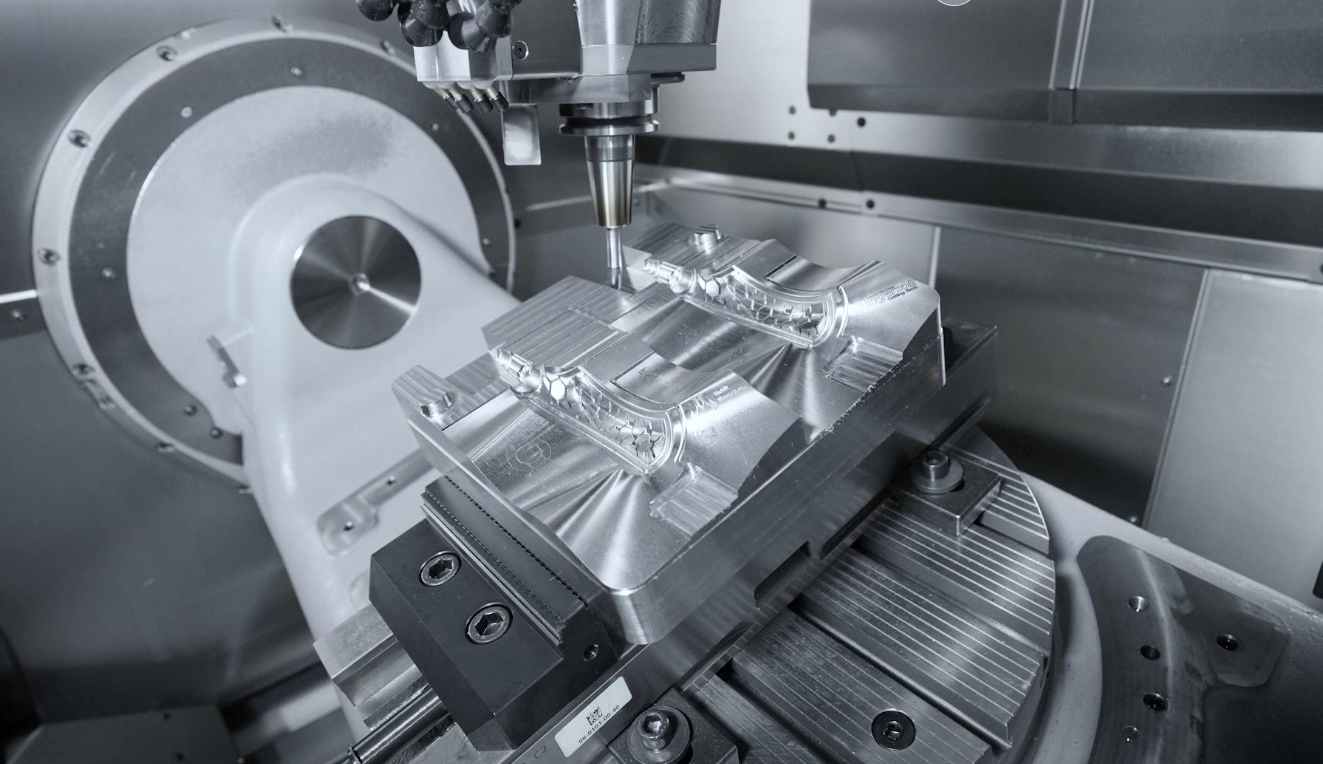
As a component of great importance for rotating equipment, manufacturing quality of impellers has direct influences on machinery performance efficiency and safety level. Faced with complex manufacturing conditions such as high-performance materials, multi-axis processing, and high-precision requirements, establishing an integrated system of quality control and standardized process flow has turned into a must to improve the consistency, traceability, and reliability of impellers.
Introduction
In recent years, prompted by the continuous growth of demand for high-performance impellers from aerospace, energy power, and high-end equipment sectors, the manufacturing of impellers is transforming from traditional experience-based to data-based and standardized. Compared to typical parts, impellers require more rigorous demands in complex geometric structure, multifarious processing routes, and precise assembly. Any tiny manufacturing defect will have an impact on the performance of the entire machine or even create severe safety hazards. Therefore, establishing a full-process systematic quality control system and transforming it into an implementable and executable standardized process system is a crucial guarantee to ensure the high reliability and consistency of impeller products. This paper slices quality control into five significant connections, integrates the definition of full-life cycle management of product manufacturing, and discusses how to achieve high-quality development of impeller manufacturing through technical management and process improvement.
Key Links of Quality Control in Impeller Manufacturing
Quality control in the manufacture of impellers involves a number of critical connections from raw material to completion inspection, going through the entire production life cycle to ensure that final products meet design specifications and service conditions.
Material Control and Blank Quality Traceability
Raw materials are the starting point of quality control. Impellers typically make use of aluminum alloys, titanium alloys, stainless steel, nickel-based superalloys, and specific composite materials. Their composition, structure, and heat treatment state have a direct impact on subsequent processing performance and service life. For this, a material incoming inspection system should be complete, defining requirements such as material grades, melting lot, and level of flaw detection, and ensuring traceability of full-process quality by means of material labels and numbering schemes. At the same time, a warehousing book and raw material account must be set up, and a mutual quality management system with the suppliers has to be strengthened to ensure the stability and consistency of blanks.
Processing Process Control and Tool Management
In accurate manufacturing relationships such as five-axis processing, turning-milling compounding, and electrical processing, process simulation and virtual debugging must be employed to pre-inspect the tool path to prevent tool interference and overcutting. With a tool life management system, combined with RFID technology or CNC system tool numbering, state monitoring and early warning replacement can be implemented, and it reduces the dimensional deviations caused by tool fluctuation. Besides, a database of cutting parameters for various entities and structures should be established to encourage standardization of cutting parameters and avoid uncertainty of operators writing process parameters from experience. For processes with poor processing stability, the SPC method must be employed to continuously gather key dimensions data, analyze trends of fluctuation, and make improvements.
Quality Assurance for Heat Treatment and Surface Treatment
Heat treatment relationships such as solutioning, aging, and laser strengthening have far-reaching impact on the mechanical properties of materials, residual stress distribution, and fatigue life. In order to ensure heat treatment uniformity, simulation software has to be utilized to predict the temperature field and stress field, and the temperature curve should be verified in parallel with process measurements. After the workpiece is removed from the furnace, there should be hardness testing, metallographic inspection, and X-ray examination conducted to ensure that the heat treatment result conforms to process specification. Regarding surface treatment, e.g., shot peening, electroplating, coating, and precision polishing, standard operating procedures should be developed and supplemented with roughness meters and surface profilers for quality testing, in an effort to avoid surface defects from affecting dynamic performance.
Inspection and Dimension Control
Impellers are subject to precision control throughout the entire manufacturing process. Coordinate Measuring Machines (CMM) are used for high-precision checking of dimensions, and laser probes can be incorporated in the CNC machine for real-time detection and error correction. Concomitant utilization of optical profilers and surface measuring tools makes it possible to fully comprehend geometric errors and surface conditions. For batch or multi-model impeller products, making key characteristic control charts, evaluating process stability with process capability index (Cpk), and monitoring trend deviation in time are recommended. Additionally, conducting simulated clamping tests and interface precision detection before final assembly helps with assembly errors control and interchangeability and overall balance performance.
Dynamic Balancing and Final Inspection Verification
Impellers are extremely dynamic balance demanding during high-speed rotation operation. Dynamic balance testing needs to be done to maintain the unbalanced moment below the standard limit for reduced vibration and bearing load in operation. For the last factory inspection link, the verification of assembly, for example, interface matching test, key part fit precision re-inspection, and operation simulation analysis, should be conducted on the impeller assembly to make sure that the product is able to provide stable performance after reaching the customer location.
Path of Process Standardization
During the production process of the impeller, process standardization is the emphasis on ensuring the stability of product quality and improving the production efficiency. Through the formation of standard documents, information system integration, and process template development, human operation error can be controlled effectively, and the solidification and optimization of the manufacturing process can be ensured.
Documented and Guiding Standard Construction
Standardization is institutionalizing the process for guaranteeing high-quality production. Companies must establish consistent process cards, operation notes, and inspection standards, clarify process steps, processing conditions, inspection methods, and control intervals, and eradicate random operation-induced variations. For special processes (laser treatment, electroless plating, etc.), process key notes and quality caution should be added to allow for operation uniform process.
MES System and Process Solidification
Introduction of a Manufacturing Execution System (MES) involves digital management of process routes, tool codes, equipment parameters, operator details, and others, creating a whole manufacturing data chain to offer data support for traceability of quality and problem analysis. With the help of data interfaces, manufacturing information may be uploaded into the ERP system to facilitate inter-departmental collaboration and customer traceability response.
Establishment of Typical Impeller Process Templates
Create a template library of standardized process templates for impellers of different structures, sizes, and material types, including recommended blank sizes, datum setting methods, fixture selection, process parameters, and detection point configuration. Rapid deployment of process plans through templates can not only save programming and preparation time but also improve manufacturing consistency and scheduling efficiency between batches.
Full-Life Cycle Management Mechanism in Quality Control
New Product Development and Verification Stage
In the first stage of product development, an extensive Quality Assurance Plan should be written down to specify key characteristics, special processes, and quality control nodes. At the same time, organize technical communication between manufacturing, design, and quality departments to decide the manufacturing difficulties and loopholes in detection, and implement manufacturability optimization plans in advance. Major characteristics need to be included in the control plan, and entire-process control and verification need to be implemented.
Sample Trial Production and Initial Flow Management
Sample production should be as close to mass production conditions as possible in order to verify the stability of production and practicability of inspection. Sample inspection must be accompanied by self-inspection reports, materials lists, and process parameter records, and technical appraisal testings must be undertaken. After entering the initial flow management stage, enterprises should implement more stringent process monitoring and quality inspection, collect data and compute Cpk values, and make quality controllable before moving on to mass production.
Batch Management and Change Point Control
In the batch stage, identification of batches, parts marking, and production history need to be controlled integratively to ensure product traceability. At locations where change points such as process changes, material changes, and personnel changes take place, a change point review and verification procedure needs to be established so that systematic quality fluctuations due to out-of-control changes are avoided.
Integrated Application of Digital Quality Tools
Current impeller production quality control depends crucially on digital means. Digital twin modeling technology allows simulation of clamping, prediction of thermal deformation, and analysis of processing errors to be carried out in the virtual space, providing priori grounds for optimization of the process. Industrial vision inspection can realize automatic defect detection and online monitoring of defects like blade burrs, notches, and scratches. Quality data platform can collect data such as tool wear, equipment drift, and measurement data and predict quality risks by big data analysis to improve preventive control capability.
Conclusion
Impeller manufacturing quality control is a systematic work of full process and multi-dimension with both material source control and standardized procedure implementation such as heat treatment, assembly, and inspection. By improving process standardization building, standard template system building, and relying on advanced manufacturing technologies such as MES and digital twin, consistency, efficiency, and traceability of impeller manufacturing can be well enhanced. In the future, after the extensive convergence of industrial Internet of Things, artificial intelligence, and big data, the quality control of impeller production will evolve towards a more intelligent and platform-based direction, which is well-positioned for the quality upgrading of high-end equipment manufacturing industries.


