
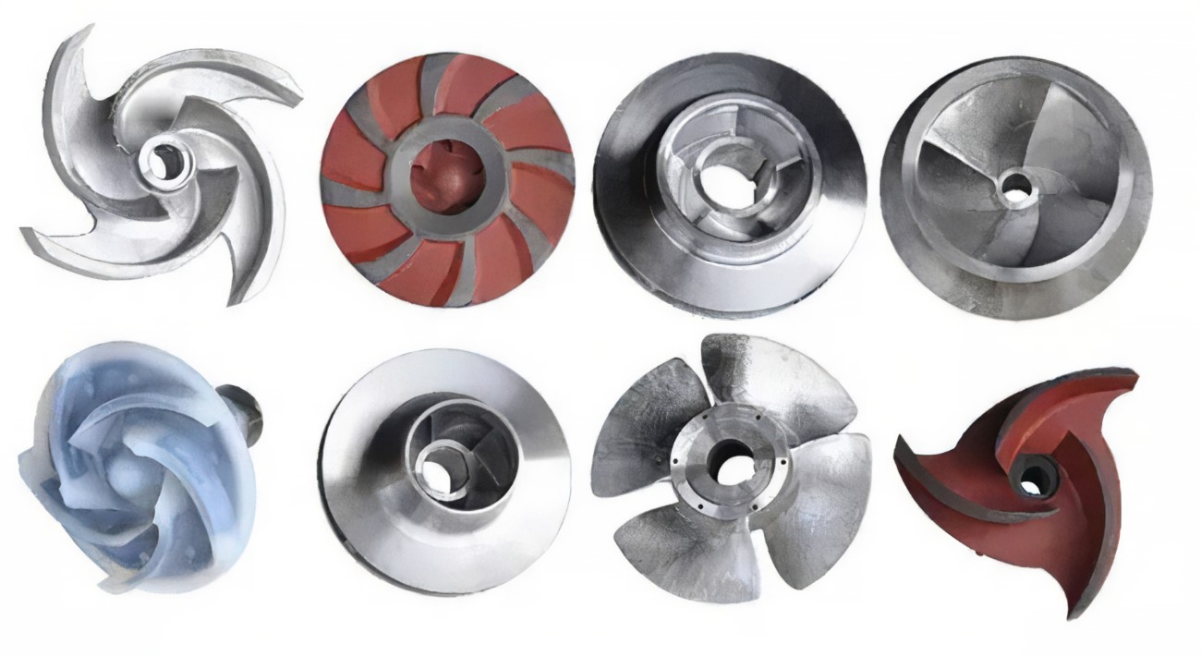
Being the heart of fluid machinery, the performance of an impeller directly affects the operating efficiency, stability, and service life of equipment. Material selection is a key link to ensure the structural strength, corrosion resistance, wear resistance, and economic efficiency of the impeller. This paper comprehensively summarizes the performance of common impeller materials in four areas: working conditions, material properties, manufacturing processes, and economic efficiency, and proposes material selection strategies under different application conditions, with the aim of providing scientific guidance for material selection in engineering practice.
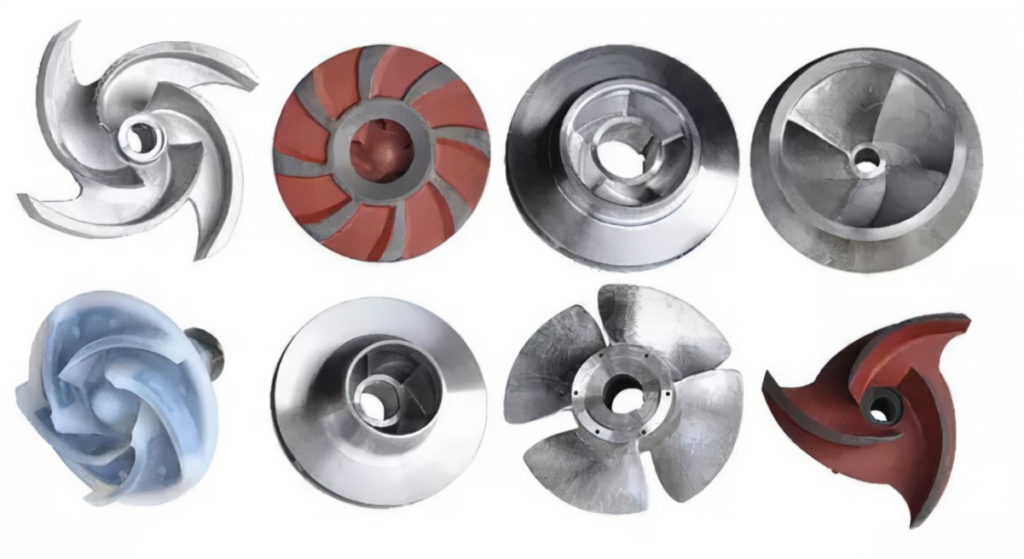
Introduction
Impellers are key components in rotary fluid machinery such as pumps, compressors, blowers, and turbines, which operate under high-speed rotation and complex fluid forces. Their working conditions could be extreme such as high temperature, high pressure, severe corrosion, high-speed erosion, or particulate medium. Proper material selection not only concerns product quality and operation safety but also directly impacts maintenance cycles and production cost. Therefore, the right impeller material for the right application is very critical.
Key Influencing Factors for Impeller Material Selection
When choosing impeller materials, the nature of the working medium is as follows and should be considered thoroughly:
- Nature of the working medium: Such as water, air, seawater, acid-base solutions, fluids with particles, etc. Different media have essential differences in their corrosiveness, cavitation sensitivity, and wear ability to materials.
- Temperature and pressure environment: High temperatures can lead to reduced material strength or even creep failure for these high-temperature compressors and turbine equipment. High-pressure environments require materials with high yield strength and fatigue strength.
- Rotational speed and dynamic load: The rotational speed of the impeller determines its centrifugal force. High-speed rotating equipment prefers materials with high strength, high toughness, and good dynamic balance.
- Corrosion and wear resistance requirements: Solid-particle or chemically corrosive media will enhance impeller wear or corrosion failure. In such a case, surface strengthening treatment or materials with inherent corrosion resistance have to be favored.
- Manufacturability and processability: The materials must be easy to cast, weld, heat-treat, and CNC machine for ensuring the geometric accuracy and structural integrity of the impeller.
- Economic efficiency and availability: Not only the price of the material itself, but also its processing price, procurement cycle, and maintenance/replacement frequency must be considered.
Types and Characteristics of Common Impeller Materials
Carbon Steel and Alloy Steel
Carbon steel and alloy steel are traditional impeller materials with acceptable cost control, and they perform well in neutral and non-corrosive media. They have excellent mechanical properties and are process-friendly, either being castable or machinable. Carbon steel impellers are commonly used in agricultural irrigation pumps, fire fighting pumps, and municipal water supply systems. Their biggest limitation, however, is their poor corrosion resistance, as they easily rust and fail. Therefore, they are not recommended for corrosive or seawater operating conditions.
Stainless Steel (e.g., 304, 316, 2205)
Stainless steel materials have widespread usage in chemical, pharmaceutical, food processing, and wastewater treatment industries due to their higher corrosion resistance, high strength, and moderate temperature resistance. 316 stainless steel has higher performance in corrosion resistance of chloride ions, while 2205 duplex steel has a combination of strength and corrosion resistance with specific applicability in high corrosive environments containing chloride ions. Welding and heat treatment of stainless steel materials require rigorous control of process parameters to avoid intergranular corrosion or embrittlement of the heat-affected zone.
Copper Alloys (e.g., Brass, Bronze, Aluminum Bronze)
The copper alloys possess a special suitability for highly corrosive media such as seawater and brine. It is also an ideal material for applications such as marine cooling systems and underwater pumps because of its natural cavitation and biological fouling resistance. Aluminum bronze impellers are particularly common in marine engineering, with good corrosion resistance to chloride ion and erosion by marine life.
Aluminum Alloys
Aluminum alloys are used in wide-ranging applications in weight-critical equipment such as air conditioning compressors, portable pumps, and small fans due to their lightweight. With a density of about one-third that of steel, they can significantly reduce overall structural weight while delivering modest strength, with the added benefit of improving energy efficiency and response time. Corrosion resistance of aluminum alloys depends greatly on their alloy composition, and in general, they are suitable for clean and non-corrosive media.
Titanium Alloys (e.g., Ti-6Al-4V)
Titanium alloys have extremely high specific strength and excellent corrosion resistance in seawater, strong acids, and chlorinated media. These alloys find extensive use in high-performance seawater desalination equipment, aircraft compressors, and deep-sea pumps. These alloys are expensive and difficult to process but offer unmatched advantages in systems demanding performance reliability and longevity.
High-Temperature Alloys (Nickel-Based, Cobalt-Based)
High-temperature alloys used in high-temperature devices such as gas turbines and aero-engines have such characteristics as good oxidation resistance and high creep strength, and can endure long-term stable operation in temperatures above 800°C. Nickel-based alloys such as Inconel and Hastelloy are widely used in aviation compression systems. Although the manufacturing cost is high, they can effectively extend service life and reduce maintenance frequency.
Engineering Ceramics and Composites
Ceramics and composites have great corrosion and wear resistance, e.g., suitable for working conditions of high particulate media or high corrosive liquids, e.g., slurry pumps and chemical centrifugal pumps. Their weak aspects are high brittleness, easy fragmentation, and high processing costs, such that they are used primarily in customized or special requirement (scenarios).
Performance Comparison and Application Scenario Matching
| Material Type | Strength | Corrosion Resistance | Wear Resistance | Temperature Adaptability | Cost | Typical Applications |
| Carbon Steel | Medium | Low | Medium | Medium | Low | Industrial water pumps, agricultural irrigation |
| Stainless Steel | High | High | Medium | Medium-High | Medium | Chemical pumps, paper pumps, food-grade pumps |
| Copper Alloy | Medium | Extremely high | Medium-High | Medium | Medium-High | Seawater pumps, marine cooling systems |
| Aluminum Alloy | Low | Medium | Low | Medium | Medium | Civil portable pumps, lightweight pumps |
| Titanium Alloy | High | Extremely high | Medium | High | High | Offshore platforms, highly corrosive environments |
| High-Temperature Alloy | High | High | Medium | Extremely high | Extremely high | Aero-engines, high-temperature compression systems |
| Ceramic/Composite | Medium | Extremely high | Extremely high | Medium-High | Extremely high | Strong corrosion, high wear conditions, chemical pumps |
Material Selection Strategy Recommendations
- General water treatment and municipal engineering: Suggest choosing carbon steel or 304 stainless steel with effective cost control, taking into account both economy and performance.
- Moderate corrosion conditions: 316L stainless steel or 2205 duplex steel can be used to meet anti-corrosion performance and facile processing as well as maintenance.
- Seawater and marine industries: Aluminum bronze or titanium alloys are optimum materials, which can significantly improve chloride corrosion resistance.
- High-temperature and high-pressure fields: Recommended to employ Inconel series high-temperature alloys to withstand long-term high-temperature working conditions.
- Lightweight applications: Aluminum alloys or titanium alloys have to be selected in aviation and portable devices for the purpose of reducing load and increasing efficiency.
- Heavy wear and corrosive liquid scenarios: Engineering ceramics and composites can be employed in dangerous environments such as slurry and acid-base solutions, which can greatly extend service life.
Conclusion
Scientific impeller material selection is the most important link to improve equipment performance and economic efficiency. In designing and selecting, the engineer ought to overall consider the mechanical property, corrosion resistance, and processability of materials based on some working conditions, requirements of service life, manufacturing technical conditions, and cost budget, and work out proper material selection strategies. With the creation of new alloy materials, composite technology, as well as new fabrication technologies such as 3D printing, impeller materials will continue to move towards high performance, long life, and intelligence, and provide more reliable support and guarantee for the fluid machinery industry.


