
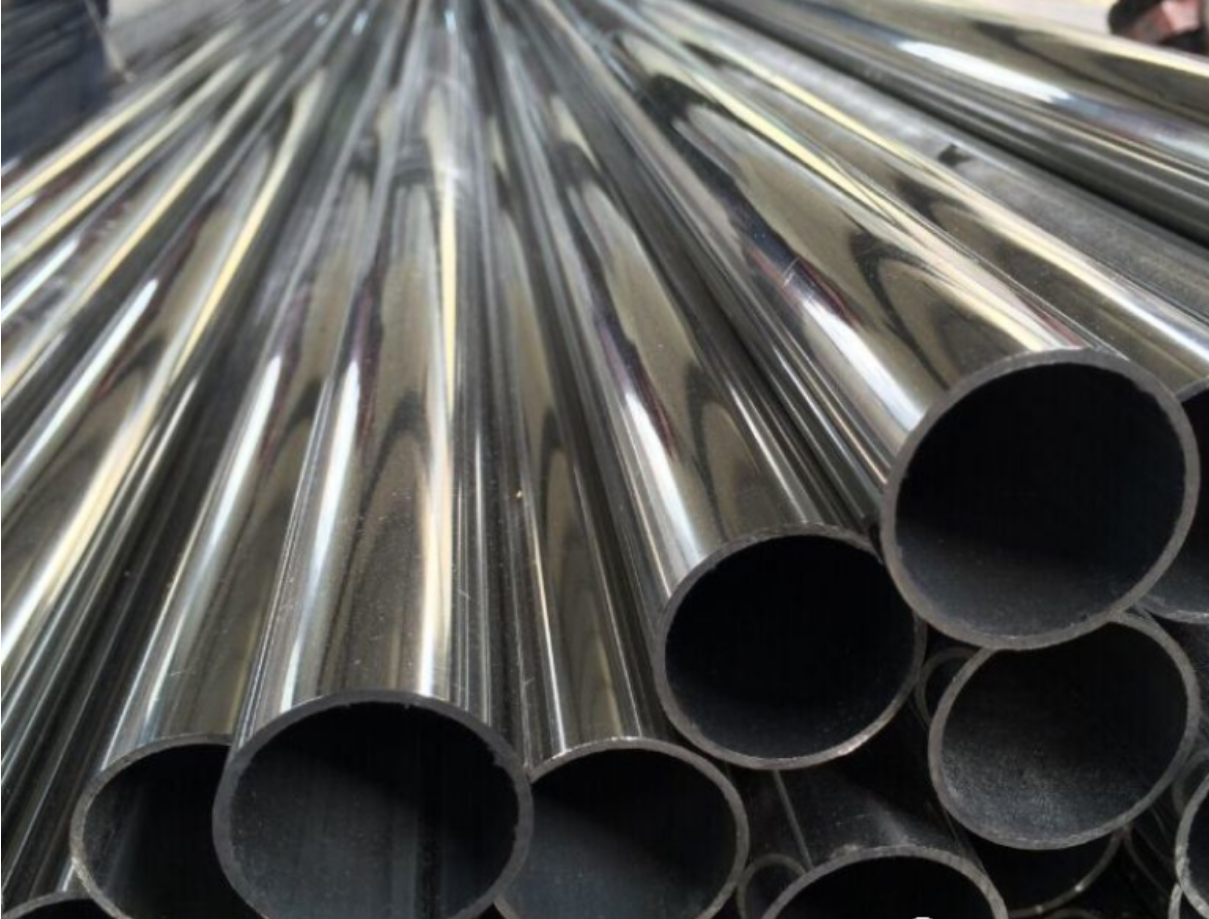
Stainless steel as a material for impellers has wide application potential in corrosive environments. Its excellent corrosion resistance, mechanical properties, and workability make it a widely used material in chemical processing, petrochemicals, seawater transportation, pharmaceuticals, and municipal engineering. The paper introduces comprehensive analysis of typical stainless steel grades used on impellers, corrosion mechanisms, environmental factors of influence, common modes of corrosion failure, and practice in choosing engineering materials.
Introduction
Impellers are axis components to energy transfer and fluid flow in compressors and pumps, whose service conditions are often accompanied with complicate factors such as liquid corrosion, cavitation, and chemical erosion. Due to their typical film structure of passivation and high resistance to the medium, stainless steels have emerged as a first-rate material for impeller manufacture in highly corrosive conditions. Having witnessed recurrent equipment failure for repeated corrosion in actual projects as a mechanical engineering practitioner, I can testify strongly to the significance of material resistance to corrosion for safe equipment operation.
Main Material Types of Stainless Steel Impellers
There are a wide variety of stainless steel types with wide variability in their applicability to corrosive mediums. The main stainless steel materials suitable for impeller manufacture are as follows:
- Austenitic Stainless Steels (e.g., 304, 316, 316L): Exhibiting good oxidation resistance and moderate chloride corrosion resistance, they find extensive application in home water supply, sewage pump, and light chemical industry.
- Duplex Stainless Steels (e.g., 2205, 2507): With the combined advantage of both austenitic and ferritic phases, they exhibit high pitting and crevice corrosion resistance, extensively applied in high-chloride conditions such as seawater pump and desalination plants.
- Precipitation Hardening Stainless Steels (e.g., 17-4PH): Having improved mechanical properties, they are suitable in high-stress and high-temperature applications, although the corrosion resistance is reduced, requiring reasonable use in terms of specific working conditions.
In my practice, selection of duplex stainless steel is a relatively sure choice in applications with complex corrosion conditions or ill-defined medium compositions.
Analysis of Corrosion Resistance Mechanisms
The intrinsic reason behind stainless steel being resistant to corrosion is the formation of a passivation film on its surface. The passivation film is primarily composed of chromium-rich oxides (Cr₂O₃), which acts as a good barrier by isolating the metal matrix from corrosive media. If the passivation film is broken, it will restore itself quickly and again retain its protective character if there is oxygen or oxidants present in the environment.
Second, the addition of alloying elements such as molybdenum (Mo) and nitrogen (N) considerably enhances the pitting corrosion resistance of stainless steel. For instance, 316L also includes 2–3% Mo, which substantially stabilizes corrosion resistance in the chloride environment.
Influence of Working Conditions on Corrosion Resistance of Stainless Steel Impellers
Under actual engineering application, stainless steel impeller corrosion resistance is defined by a collection of working condition factors that interact to directly influence the material’s service life and structural integrity. These include:
- Chloride Ion Concentration (Cl⁻): Cl⁻ is one of the key media responsible for pitting and crevice corrosion. Its localized concentration effect (easily) causes local degradation of the passivation film, especially at areas of fluid stagnation or micro-flows. With a Cl⁻ concentration higher than the material’s critical pitting temperature (CPT), the rate of corrosion significantly rises.
- pH Value: Acidic environment corrodes the passivation film of stainless steel surfaces. Particularly below pH < 3, the corrosion resistance of austenitic stainless steels (such as 304, 316) is greatly lost, prone to intergranular corrosion or general corrosion.
- Temperature: High temperatures of operation not only enhance the rate of metal electrochemical processes but also lower the stability of passivation film. In heat chloride environments, risks of pitting and stress corrosion cracking are elevated tremendously.
- Synergistic Effect of Flow Velocity and Erosion: A high flow can cause fluid scouring of the metal surface passivation film to trigger flow-accelerated corrosion (FAC), particularly evident at impeller inlets and impact-leading edges.
Take a seawater transfer pump project I undertook as an example: an impeller made of 316 stainless steel showed characteristic pitting damage at the edge. Site inspection showed that in this area, there was a long-term micro-flow stagnation condition, and the environment’s chloride ion concentration was over 3000 ppm, more than ten times the requirement for the 316 pitting tolerance. This shows that even with high-quality materials of stainless steel, failure will happen prematurely if the working condition adaptability is poor.
Common Corrosion Failure Modes and Engineering Case Analysis
Stainless steel impellers can suffer various kinds of corrosion failures in long-term service, largely including:
Pitting Corrosion:
Generally resulting from Cl⁻-induced localized passivation film perforation, with tiny corrosion pores but deep penetration. It is extremely difficult to forecast in advance through conventional testing methods, a form of very hidden damage.
Crevice Corrosion:
Common in gap areas such as between impeller and shaft sleeve, or fasteners. Due to limited medium flow within the crevice, localized oxygen depletion results in a concentration cell, speeding up the corrosion process.
Intergranular Corrosion:
Mainly with grain boundary carbide precipitation and Cr depletion, common in welded parts not solution-treated or with large heat-affected zones. In severe conditions, it may result in total impeller fracture.
Stress Corrosion Cracking (SCC):
Triggered by the repeated action of tensile stress coupled with corrosive environment (e.g., Cl⁻, lye). The damage occurred typically in intergranular or transgranular mode, at high crack growth rates, significantly affecting structure integrity.
For another project, a 2205 stainless steel duplex impeller used in one of the municipal sewage treatment plants developed visible crevice corrosion cracks after approximately 18 months of continuous operation. Failure analysis indicated that the impeller didn’t reasonably control the gap in the assembly, and no sufficient surface passivation treatment was provided, resulting in serious crevice environment deterioration and subsequent formation of a local Cl⁻-enriched region that led to serious corrosion damage. This case once again highlights the absolute necessity of structural design and surface process treatment for anticorrosion and corrosion control.
Application Suggestions in Engineering Practice
By incorporating site-specific knowledge, I would believe that the following ought to be high on the list in terms of material selection and operation-maintenance of stainless steel impellers:
- Precise material selection based on medium characteristics: For example, duplex stainless steel or 904L is preferred for seawater systems, avoiding the use of ordinary 304;
- Optimize structural design to reduce crevices: Avoid dead corners and stagnant flow areas to reduce local corrosion risks;
- Strengthen control over welding and heat treatment processes: Prevent intergranular corrosion sensitivity;
- Implement regular inspection and passivation maintenance: Especially in industries with high corrosion risks (such as petrochemicals, salt production, and metallurgy), establish a periodic inspection system.
In some of the big equipment maintenance programs under my management, through changing the impeller material and applying along with cathodic protection measures, the annual equipment failure rate reduced by over 60%.
Conclusion
Stainless steel impellers possess excellent application advantages in corrosive operating conditions, whose anti-corrosion capability is defined by various factors such as material type, alloying elements, operating conditions, and structural configuration. Through scientific material selection, accurate machining, and standardized operation-maintenance management, their material performance can be totally unleashed, equipment operating life extended, and system operating safety improved. In the future, with the popularization of newly developed high-alloy stainless steel materials, the potential for application of impellers in even more extreme environments is worth looking forward to.


