

With growing needs for lightweight and high-efficiency mechanical equipment, the selection of impeller materials—critical to rotating machines—is faced with new technological needs and challenges. For light metals, aluminium alloys possess significant merits in most engineering applications due to exceptional specific strength, processability, and cost competitiveness. Leaving aside my years of experience in impeller design and integration, this paper explains step by step the intrinsic merit of aluminum alloy impellers in rotational inertia saving, energy efficiency, and speed responsiveness from the material property perspective. It explores their true performance through engineering cases and discusses rationally their applications range and limitations, hoping to provide the practical experience guidance for the relevant engineers.
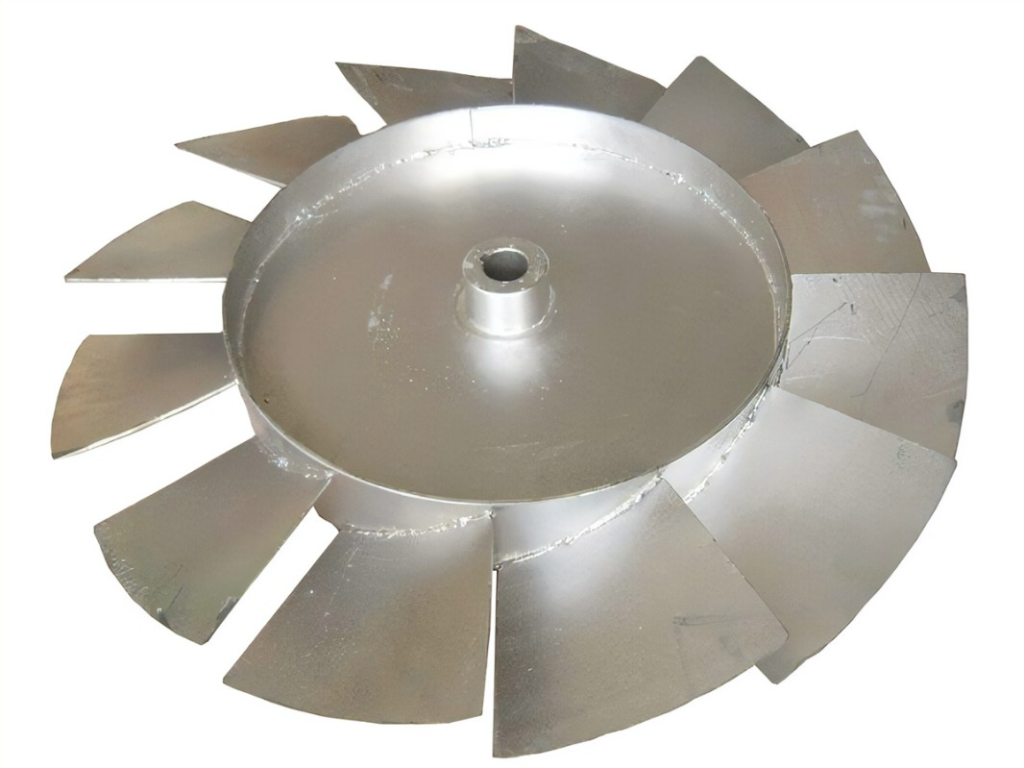
Introduction
Through my prolonged research in impeller structural design and system matching, it has become increasingly apparent: lightweight design is emerging as a major direction for equipment optimization. Among numerous lightweight materials, aluminum alloys have become an increasingly important material choice for impellers due to their high strength-to-weight ratio, good machinability, and low manufacturing cost. This essay aims to explain how aluminum alloy impellers not only exist but are also a cheaper option in most cases by combining technical analysis with hands-on experience.
Engineering Demands for Lightweight Impellers
As demand for equipment with high speed, low inertia, and high energy efficiency continues to rise, the extent of lightness in impellers—prime components with direct influence on system dynamic characteristics—takes on a pivotal role in determining overall equipment performance. Not only will a lighter impeller make the equipment lighter in total weight, but it will also reduce bearing loads and motor torque requirement, enhancing the service life of heavy-duty components and hence the reliability and economy of the entire machine.
Analysis of Aluminum Alloy Material Properties
Engineering aluminum alloys like 6xxx and 7xxx series are widely used in various rotating parts due to the following properties:
| Property | Description | Engineering Implication |
| Low Density | Approx. 2.7 g/cm³ (≈ one-third the density of steel) | Significantly reduces component mass and rotational inertia |
| Mechanical Strength | High rigidity and strength after heat treatment | Maintains structural integrity under dynamic and mechanical loads |
| Thermal Conductivity | Excellent heat conduction capability | Facilitates rapid heat dissipation in high-speed or thermally active systems |
| Corrosion Resistance | Moderate corrosion resistance in freshwater and neutral environments | Suitable for HVAC, marine air systems, and other mild conditions |
| Machinability | High machining efficiency with minimal tool wear in CNC operations | Reduces production costs and improves dimensional precision |
These material properties make aluminum alloys particularly suitable for applications with strict requirements for structural lightweighting without sacrificing basic strength.
Key Advantages of Aluminum Alloy Impellers
Reduction of Rotational Inertia
According to my earlier performance tests, one of the most striking advantages of aluminum alloy impellers is their extreme reduction in system rotational inertia. When operating under conditions such as variable-frequency fans and high-speed centrifugal experimental apparatus, the reduction in rotational inertia enables greater speed and controllable acceleration and deceleration processes, enhancing the dynamic response ability of the entire system.
Improvement of System Energy Efficiency
It is a common sense engineering logic that the lower the mass, the lower will be the driving torque. Compared to stainless steel or cast iron impellers, aluminum alloy impellers typically allow the drive motor to operate at lighter loads and therefore reduce the energy expenditure. In certain systems that I worked on, the change to aluminum alloy impellers reduced average power consumption by 8%–15%. Under some operating situations, “lightweight synchronization” of the drive system was even achieved by optimizing supporting motor specifications.
Enhancement of Dynamic Response Capability
In applications such as precision fluid control and electronics cooling, the responsiveness and sensitivity of the system to rapidly switch operating regimes are significant. The lightness of aluminum alloy impellers increases the responsiveness and smoothness of fluid systems in repeatedly starting and stopping or load switching. This I have verified in a number of test stands and small-batch prototype programs, especially in small high-speed pumps and DC-drives cooling fans.
Corrosion Resistance in Specific Environments
While aluminum alloys are not suitable for any corrosive system, they perform well under neutral or slightly alkaline aqueous conditions. Their corrosion can be further enhanced by surface treatment in the form of anodizing or powder coating. In certain sea breeze heat exchange system projects that I handled, aluminum alloy impellers with proper surface treatments showed stable performance without catastrophic corrosion failure.
Limitations and Application Considerations
No material is without boundaries, and aluminum alloys are no exception:
- Limited Chloride Ion Corrosion Resistance: Aluminum alloys will pit when exposed to chloride ion (Cl⁻)-containing environments. They require special protection or more corrosion-resistant grades to be used for use in seawater, industrial waste liquid, or some chemical environments for prolonged periods..
- Low Melting Point (Approx. 660 °C): With a lower melting point than steel materials, aluminum alloys are not suitable for high-temperature applications, such as heat exchangers, combustion systems, or pyrotechnic devices, where there may be safety hazards.
- Relatively Low Fatigue Strength: As compared to high-strength materials like stainless steel, aluminum alloys have a lower fatigue limit. Under service with vibration loads or high-frequency alternating loads, their life must be accurately estimated, and appropriate structural design or surface treatment along with it must be employed in order to encourage durability.
Hence, in material choice, the environment of working conditions should be completely analyzed. In the case of strong acid, strong alkali, or abrasive particle-contained fluid mediums, more hardened materials like stainless steel or titanium alloy are suggested.
Sharing of My Engineering Practice Cases
I previously worked on a renovation project of a solar cooling system. The system was originally implemented with conventional cast iron impellers with high energy consumption and prolonged startup. After their replacement with CNC-machined aluminum alloy impellers, not only was the impeller’s weight itself reduced by more than 60%, but startup time for the system was lowered by approximately 35%, and power consumption was lowered by 12%. Of greater significance, thanks to the reduced mass of rotating components, bearing wear was significantly slowed, and future maintenance workload was greatly reduced.
Conclusion
From both end-user and engineer perspectives, aluminum alloy impellers have attractive overall advantages in lightweighting, energy efficiency optimization, cost containment, and processing convenience. Although suitable for no working condition, their performance benefits are evident and quantifiable in systems with demanding speed response requirements, portability, and dynamic balance. As surface modification technologies and aluminum matrix composites continue to develop in the future, I believe that aluminum alloy impellers will be playing a major role in more quick-response fluid machines and middle-low pressure equipment.


