
Created in Europe and America in the late 19th century as a consequence of the Second Industrial Revolution, jet skis were initially for water racing and quickly gained popularity all over the world. The American Power Boat Association was founded in 1903, and the International Jet Sports Boating Association (IJF) was founded in Belgium in 1922, fostering the development and standardization of racing competitions. The sport gained immense popularity with the launch of outboard motors in 1924. The OJ-class racing boat achieved a speed of 111.72 km/h in 1980. Jet skis were brought into China in the 1950s, and official competitions started in 1956. In 2002, Peng Linwu won a world championship title, breaking China’s gold medal breakthrough. Jet ski sports are currently enjoyed worldwide.

The Role of Impellers in Jet Skis
Jet skis use a water jet propulsion system, with the impeller being among the basic parts. It functions by turning at a high rate to compress the entering water and then forcefully expel it, propelling the jet ski forward. The impeller generally turns at incredibly high speeds and is always connected directly to the engine. Its shape and performance have a direct impact on the efficiency of the jet pump, acceleration response, as well as stability in handling.
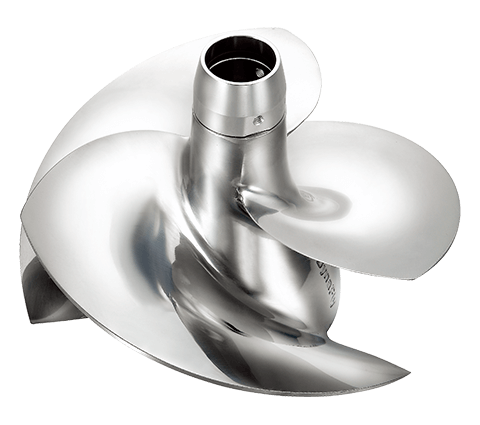
Common Causes of Jet Ski Impeller Damage
Though generally made of aluminum alloy, stainless steel, or high-strength composite material, jet ski impellers still are prone to wear, deformation, or even breakage in complex water conditions. The main reasons are:
- Foreign Object Ingestion
In shallow water, sand bottoms, or fields of aquatic vegetation and gravel, trash can be ingested into the intake, become entrapped in the high-speed revolving impeller, and cause scratches, nicks, or even blade breakage. - Dry Running (Air Rotation)
If the intake is blocked or the boat is started before submersion, the impeller revolves at high speed without water, causing overheating, frictional melting, and eventual failure of the bearings. - Corrosion and Metal Fatigue
Prolonged use in saltwater or filthy water will cause corrosion, pitting, or material fatigue on the impeller, which is made of metal. Even stainless steel impellers will fail if not serviced and cleaned from time to time. - Improper Installation or Axial Misalignment
Incorrect installation during repairs or replacements, or axial misalignment caused by worn-out bearings, will lead to vibrations, blade-to-housing contact, and subsequent cracking or imbalance.
Common Signs of Impeller Damage
As a key component of the propulsion system, a damaged impeller will severely impact the operation of a jet ski, with direct consequences on handling and navigation safety. Typical signs of impeller damage are described below to help operators with early problem identification and correction:
- Significantly Reduced Thrust
In spite of a properly functioning engine and wide-open throttle, the jet ski may be slow to accelerate, have slow acceleration, reduced gliding distance, or struggle to tow objects (e.g., water skiers or inflatable toys). This is most often due to worn, cracked, or deformed blades that reduce water flow efficiency and thrust. - Unusual Vibrations or Metallic Noises
Recurring shuddering on acceleration or high-speed operation, or loud “clanking,” “rattling,” or sharp metallic blows from the hull bottom, are generally indications of an unbalanced impeller, partial breakages, or foreign objects imbedded in the blades. Continued operation of the craft can lead to disastrous pump damage. - Air Rotation or Stalling
If there are high engine revs with no forward movement of the jet ski, with intermittent “buzzing” air rotation sounds or sudden engine cut-offs, it may be a sign of excessive clearance between housing and impeller, loose connections, or a damaged impeller that is unable to draw water effectively, resulting in total loss of propulsion. - Overheating or Abnormal Pump Temperature
Impeller air rotation (low water) or blocked intake (e.g., fouled filters) can cause improper pump cooling. The pump housing will quickly overheat, becoming extremely hot or even hot to the touch. Further operation without an immediate shutdown and inspection can cause impeller melt or bearing failure. - Unstable Handling or Difficulty Steering
Damaged blades may result in irregular water flow, which will make the jet ski drift, pull off course, or be difficult to steer. This affects not only control but also increases operational risks. - Reduced Water Flow at Intake or Nozzle
Intermittent bursts of water jets, decreased flow, or foamy/noisy discharges can indicate obstructed waterways due to broken blades or damaged debris. Stop and examine immediately.
Countermeasures and Maintenance Tips
A damaged impeller not only affects performance but can lead to catastrophic mechanical failure or safety problems if not resolved. Proper responses and routine maintenance are required:
Stop Immediately and Inspect to Prevent Further Damage
If there is unusual thrust, vibration, or spinning of air, shut down the engine and dock the boat for inspection. Never run with a damaged impeller or debris trapped to avert more pump damage or impeller separation that can increase repair costs and endanger personnel.
Disassemble the Jet Pump and Inspect the Impeller Thoroughly
After ensuring safety, remove the jet pump’s rear cover to examine the impeller for cracks, eroded edges, blade distortion, loose center shafts, or uneven wear. Immediately replace very badly damaged impellers to avoid unbalanced operation and premature wear on the other drivetrain components.
Clean Intake and Pump Cavity of Foreign Objects
Check the intake grate and impeller passages and remove all blockages such as stones, weeds, shells, and plastic bags for unobstructed water flow. For those jet skis that spend a lot of time in lakes, shallow water, or debris-laden areas, check and clean both prior to and after use to prevent re-ingestion and secondary damage.
Replace with High-Quality, Properly Matched Impellers
When replacing impellers, choose high-strength and corrosion-resistant materials like high-quality stainless steel, carbon fiber materials, or brand-certified original parts. Ensure that the replacement is identical to the original model in size, weight, and structural parameters to maintain efficient and stable propulsion.
Enhance Routine Maintenance to Prevent Issues
Good maintenance habits and regular maintenance can significantly extend pump and impeller life:
Freshwater Flush: Freshwater flush the pump and intake after each use in saltwater to prevent salt buildup and metal corrosion.
Regular Inspections: Check the intake grate and jet pump for clogging, cracks, or loose screws before and after each use and take action immediately.
Avoid Extreme Conditions: Refrain from high-speed riding in shallow water, dense weed beds, or unknown underwater terrain, especially sudden accelerations or turns that ingest garbage or cause grounding damage.
Lubrication Maintenance: For jet skis with grease-lubricated impeller systems, add lubricant or inspect bearings every now and then as recommended by the manufacturer.
Conclusion
Though small but the “heart” of the propulsion system, the jet ski impeller can experience damage that can vary from performance degradation to craft breakdowns with serious safety consequences. By adhering to a routine of regular maintenance, regular inspection, and safe operation, you can optimize impeller life and ensure safe, trouble-free operation under all water conditions.


